May 18, 2026 · by Stachi · 3 min read
Companion planting table for raised beds — the pairings that matter
A companion-planting table to print: good neighbours, bad neighbours, three all-rounders. Plus the five pairs that get you 80 % of the effect — if you only want to remember five.
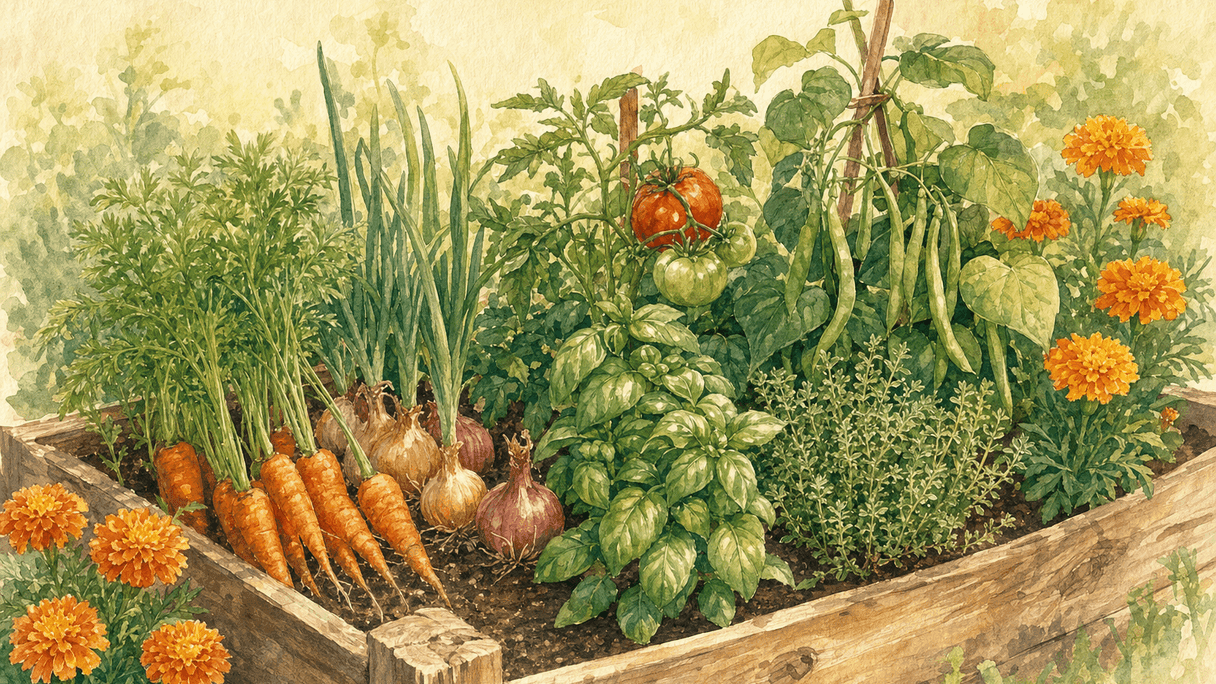
There are companion-planting tables with 60 plants and 3,000 combinations. I printed one once, pinned it to the shed, and never looked at it again. Too much. Nobody checks 3,000 combinations while standing in front of the bed with a trowel in hand.
What you actually need fits on half a page. Here it is — to print, with the pairs that really come up in a raised bed.
If you only remember five rules
My neighbour in Zürich-Affoltern put tomatoes next to potatoes in 2023. Both got blight, both of them. He'd never heard of companion planting. These five rules would have saved him half the harvest:
- ✅ Tomato + basil — basil keeps pests away, both like the same conditions
- ✅ Carrot + onion — the onion repels the carrot fly, the carrot repels the onion fly. Mutual protection.
- ✅ Lettuce + radish — radishes loosen the soil, lettuce shades it. Fast + fast, good gap-fillers.
- ❌ Tomato + potato — both nightshades, both get blight. The classic mistake.
- ❌ Bean + onion — beans don't like alliums nearby, they sulk.
The rest is bonus. Follow just these five and you avoid the most common raised-bed disasters.
The table: good neighbours
| Plant | Likes next to it | Why |
|---|---|---|
| Tomato | Basil, lettuce, parsley, onion | Basil repels pests, lettuce uses the shade |
| Cucumber | Bean, lettuce, dill, pea | Bean brings nitrogen, dill attracts beneficials |
| Carrot | Onion, leek, lettuce, radish | Onion/leek repel the carrot fly |
| Lettuce | Radish, carrot, pea, cucumber | Gap-filler, shades the soil |
| Bean | Cucumber, lettuce, cabbage, carrot | Beans fix nitrogen for heavy feeders |
| Onion | Carrot, lettuce, strawberry | Smell repels the neighbours' pests |
| Pea | Carrot, cucumber, radish, lettuce | Nitrogen fixer, leaves good soil behind |
| Radish | Lettuce, carrot, pea, cucumber | Fast, loosens, harvested before others get big |
The table: bad neighbours
| Plant | Does NOT like next to it | Why |
|---|---|---|
| Tomato | Potato, cucumber, fennel | Blight (potato), competition (cucumber) |
| Bean | Onion, garlic, leek | Alliums inhibit bean growth |
| Pea | Onion, garlic, leek | Like bean — legumes dislike alliums |
| Carrot | Dill (in quantity) | Competes for the same space, can stunt growth |
| Cucumber | Tomato, potato | Competition for water/nutrients, disease pressure |
| Cabbage | Strawberry, tomato | Cabbage pests go for the neighbours too |
The three all-rounders
Some plants get along with almost everything. If you have a gap and don't want to think, these are your safe choice:
- Lettuce — fits almost anywhere, shades, fast to harvest
- Radish — the gap-filler par excellence, four weeks and gone
- Marigold / nasturtium — not vegetables, but they attract beneficials and keep aphids off the neighbours. One plant at the bed edge pays off.
The three loners
And some do better alone or with only a few friends:
- Fennel — gets along with hardly anything, best its own spot
- Potato — a blight cannon, away from tomato, its own corner
- Garlic/onion in bulk — good as protection planted singly, but not as a block next to beans or peas
How to actually use the table
Not every combination in the bed is a decision. You don't have to check 66 pairs for 12 plants. Do it like this:
- Place the big fruiting vegetables first (tomato, cucumber, courgette) — they set the structure.
- For each, only check the "bad neighbours" column. If nothing there is already in the bed: it fits.
- Fill the gaps with the all-rounders (lettuce, radish). You don't have to check those.
Three steps, no biochemistry degree.
What Erntezeit does with this
You pick your plants, I check every combination automatically against the companion rules and warn you if you try to grow tomato next to potato. I also suggest what fits the gap as a follow-on crop after harvest. But the table above works without me too — print it, pin it to the shed, and quickly check the "bad neighbours" column before each planting.
Plant something nice.
🦔 Stachi
Related plants


More articles
October 26, 2026 · 3 min read
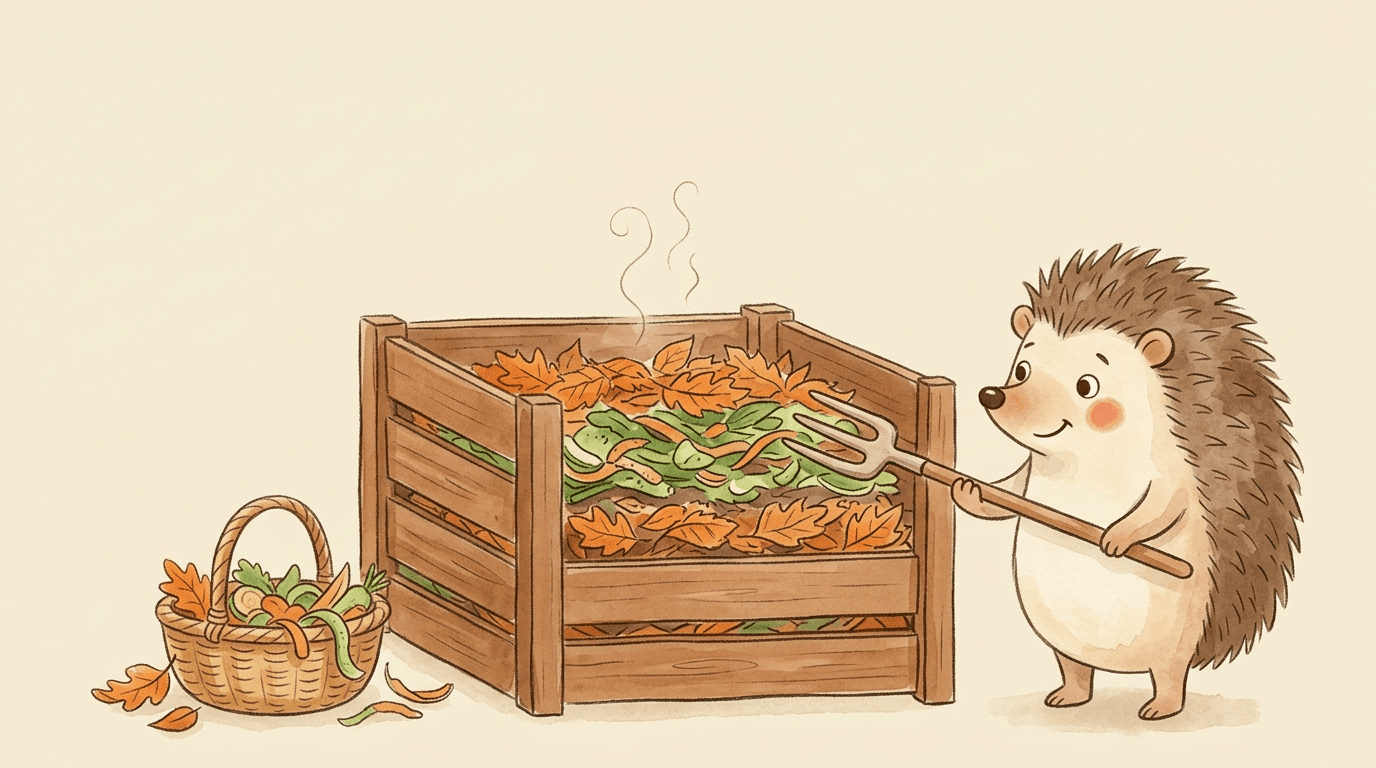
Starting an autumn compost pile: 3 parts leaves, 1 part kitchen scraps
Frau Schneider's compost pile just sat there all winter. No steam on cold mornings, no warmth, no breakdown — just a heap of dry leaves that hadn't changed a bit by March. The problem wasn't patience. It was the mix.
October 20, 2026 · 3 min read
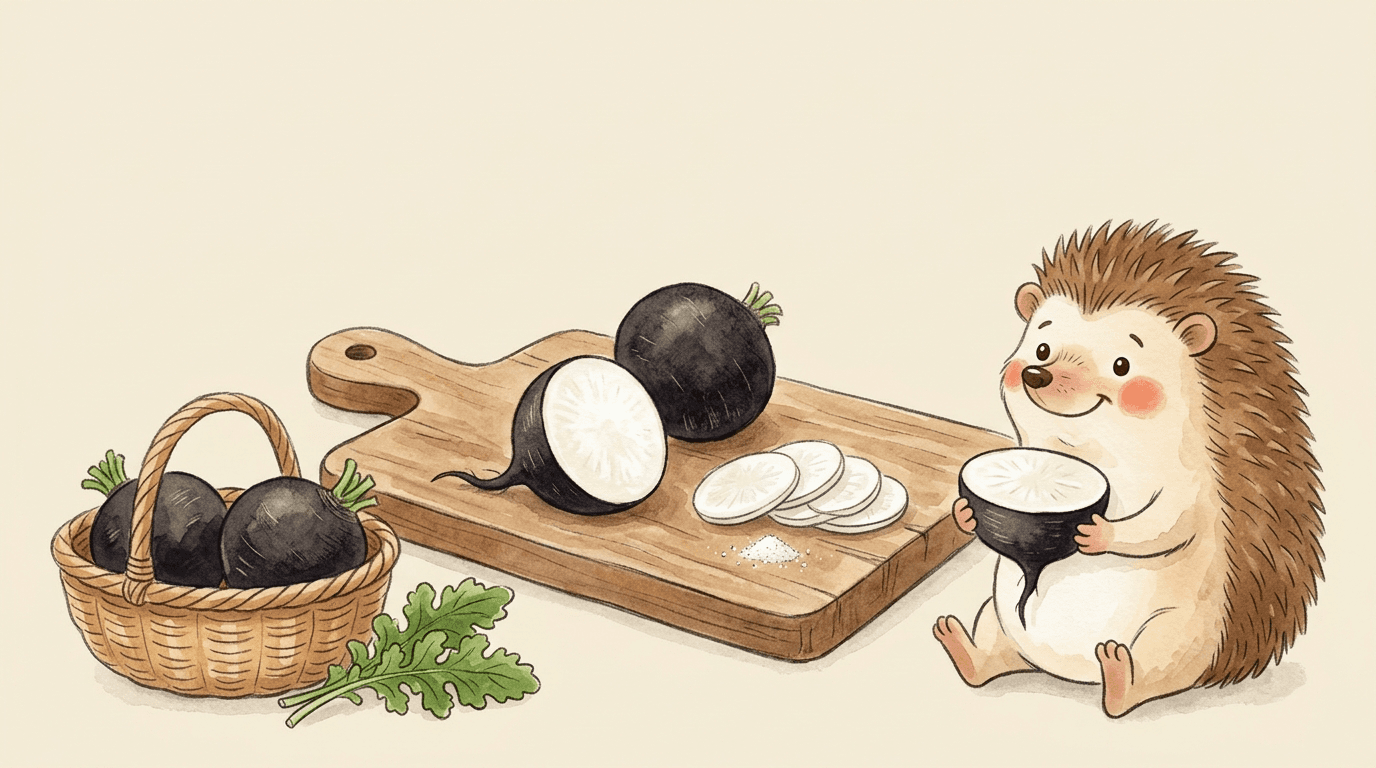
Black radish: why you should let it rest before you bite in
Last year Frau Schneider bit straight into one, unsalted, fresh out of the ground, and spent the next two minutes coughing instead of talking. The problem wasn't the radish. It was the timing.
October 14, 2026 · 2 min read
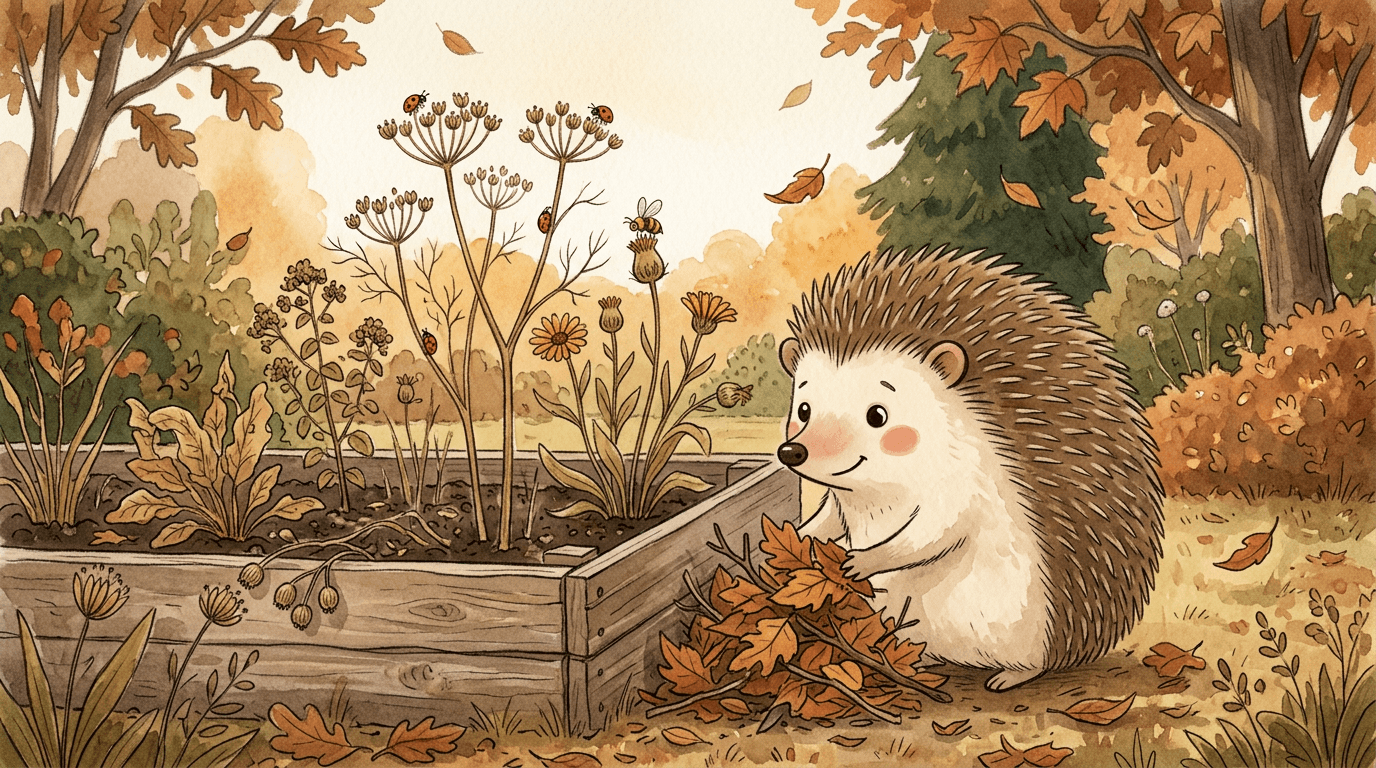
Why I only tidy up half my raised bed in October
Mr Zimmermann cut his entire raised bed down to the ground in one afternoon — stalks, seed heads, leaves, all gone. I should have warned him beforehand: not everything, only half. Here's what should stay standing and what really needs to go.