
November 5, 2026 · by Stachi · 4 min read
Winterising your rain barrel and hose before the first frost hits
Two winters ago I left my rain barrel standing in December, full to the brim, tap closed. In January there was a crack running the whole side wall, finger-wide, low on the left — exactly where you never look. Here's the 15-minute round I now do every year to stop that: barrel, hose, outdoor tap.
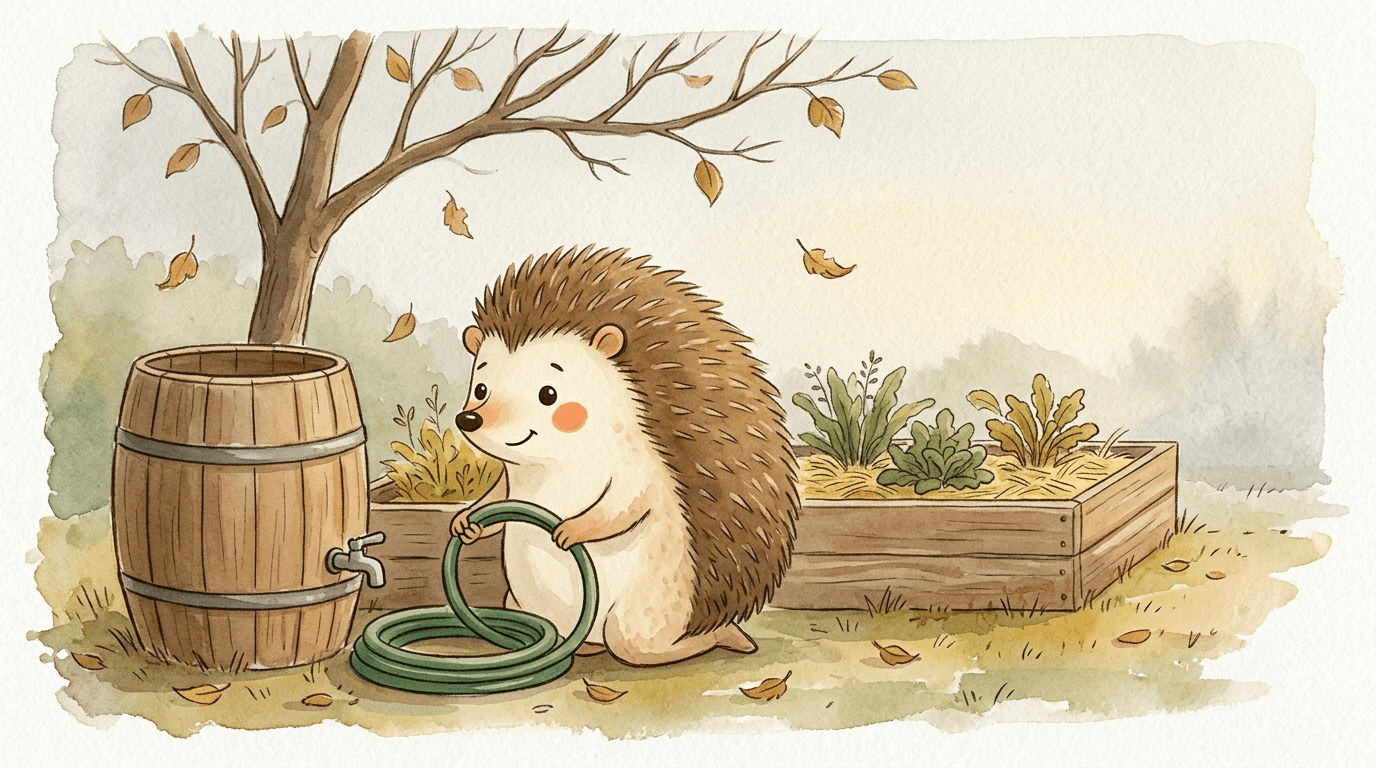
Two winters ago I left my rain barrel standing in December. Full to the brim, tap closed, lid on, thinking: plastic can take it. In January the first real cold snap hit, minus eight for three nights. In March, when everything thawed again, water came trickling over the patio stones as I walked out — a crack running the whole side wall, finger-wide, low on the left, right where you never look while filling it. The barrel was done. Not because of the cold itself, but because water expands as it freezes and doesn't care about the shape I'd prefer it to keep.
The same thing happens to garden hoses, to drip-irrigation lines, and to the pipe feeding your outdoor tap — except there the damage often only shows up in spring, when water suddenly sprays from a joint that was fine last year. In the Swiss Mittelland the first real frost usually lands somewhere between late October and mid-November. So this is exactly the moment for the round I now do every year — fifteen minutes, three stops.
Stop 1: the rain barrel
Empty it completely, don't just open the tap. A half-full barrel with the lid shut freezes from the outside in and still builds pressure on the walls — the ice has to go somewhere. Open the tap, scoop out the rest with a watering can or run it through the hose into the bed; your raised bed is usually still happy to take a last drink in November.
Disconnect or redirect the downpipe diverter. Most rain collectors have a small flap or diverter built into the downpipe. Leave it open over winter and every bit of rain or melting snow refills your empty barrel anyway — and you're back to a half-full, frozen barrel in January. Switch it so the water bypasses the barrel straight into the drain or onto the bed.
Store it empty and on its side, not standing upright. An empty barrel standing upright still collects rainwater in the base seam and can crack there too. Laid on its side or turned over somewhere under a roof, it stays dry all winter.
Stop 2: hose and drip line
A garden hose left full of water in the shed over winter goes brittle — not visibly at first, but next summer you'll suddenly find three new leaks along ten metres. Hold one end up, let the water run out the other, give it a loose shake, then coil it loosely and store it indoors — never wind it tightly, that stresses the material even more.
If you switched to drip irrigation last May: the thin lines are more frost-sensitive than a thick garden hose, because there's less material between the water and the cold air. Pop the end caps off, blow the line through or just leave it open so leftover water can drain instead of freezing inside. Bring the pressure regulator and the watering computer indoors without fail — the electronics handle frost even worse than the hose itself.
Stop 3: the outdoor tap
This is the spot that causes the most trouble, because the damage usually isn't at the tap itself but in the pipe behind it, inside the wall. Two questions to ask yourself now:
Do you have a frost-proof outdoor tap (the kind with a long pipe running back into the warm interior of the house)? Then closing it and disconnecting the hose is usually enough — the valve sits deep enough in the warm zone.
Do you have the simple kind, where the valve sits right at the wall? Then also close the indoor shut-off valve feeding the line, and let the remaining water between the shut-off valve and the outdoor tap drain out through the open tap. Takes thirty seconds, and it's the difference between a dry winter and a burst pipe inside the wall that you only notice in spring when the damp patch shows up on the wallpaper.
What I do differently this year
The cracked barrel cost me a new one, plus the hassle of a flooded patio for two days. Since last year I've had a calendar reminder set for the first weekend of November — barrel empty, hose in, outdoor tap closed, all in one afternoon. The replacement barrel is now in its fourth winter without a single crack.
What Erntezeit does with this
Your yearly plan shows you when the last plants in the bed still need water and from when on nothing's really growing anymore — the most honest way to decide when to shut the watering down completely, instead of guessing by feel.
Build your raised-bed yearly plan →
🦔 Stachi
Products mentioned in this post
- Gardena Classic planting trowelQuality steel, corrosion-protected — bed all-rounder.
- Gardena flower trowel, large
- Bosch hand fork, stainless steel
- Draper sturdy hand fork, stainless steel

More articles
November 20, 2026 · 4 min read
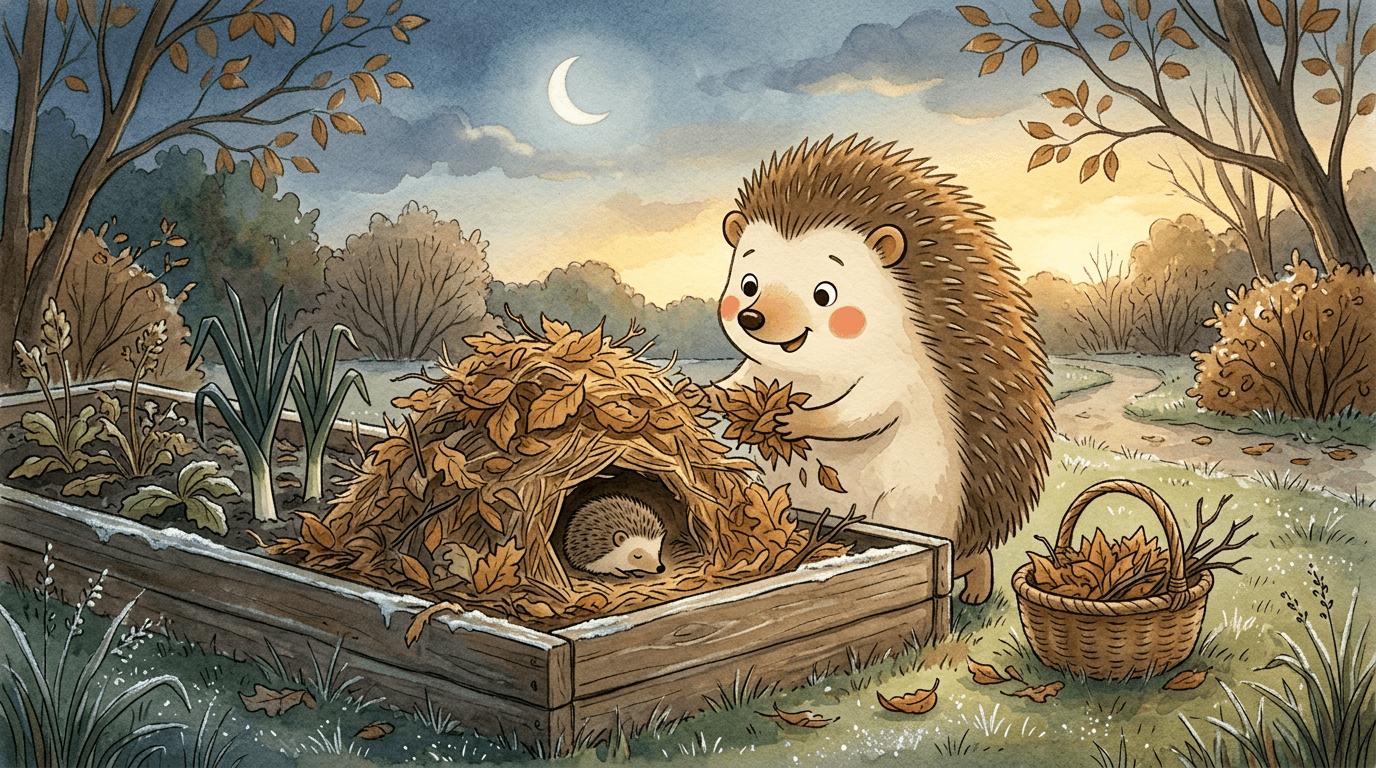
Build a hedgehog winter shelter: why this week is the deadline, not December
Last year I cleared the leaf pile behind my raised bed on December 2nd because it looked untidy. Three days later the first hard frost hit. It wasn't until spring that I realised what I'd actually destroyed. Here's what to do this week, before it's too late.
November 15, 2026 · 4 min read
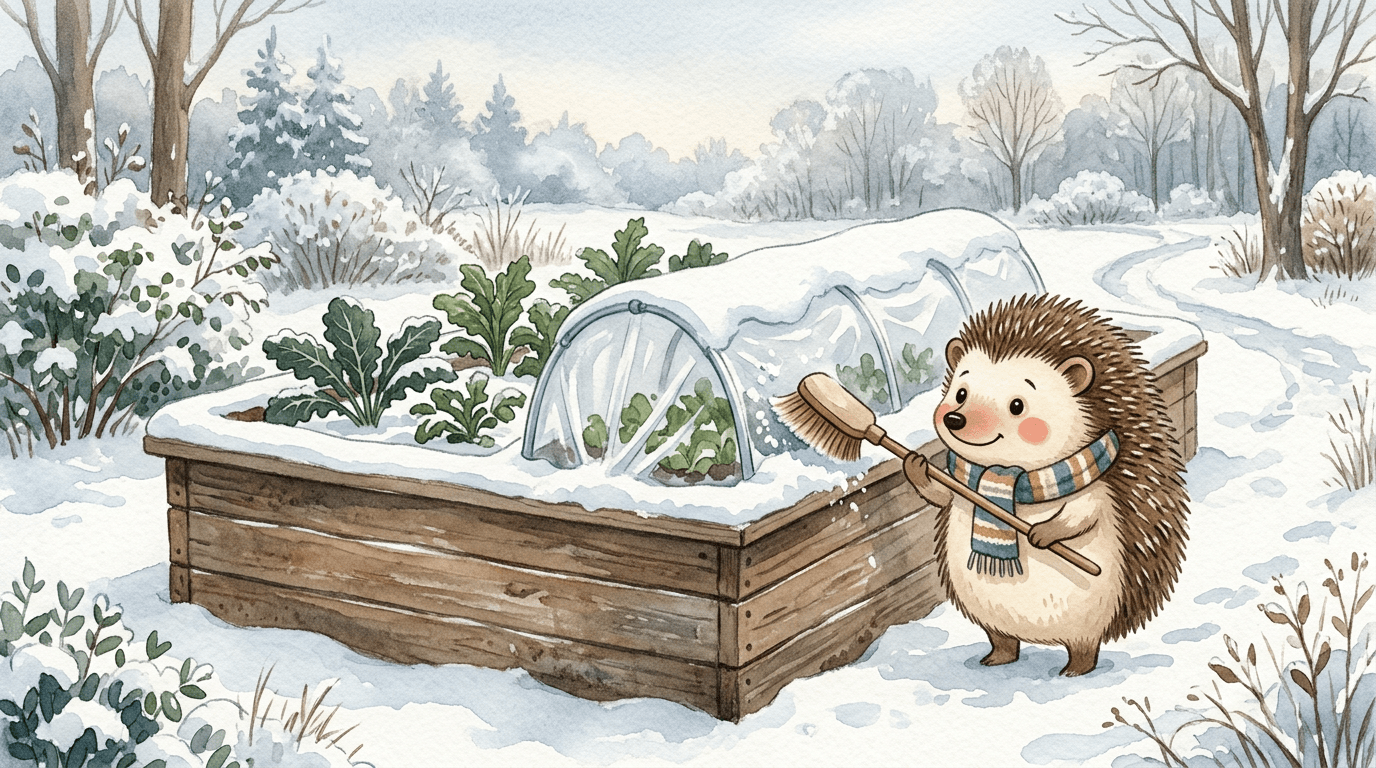
Snow on the raised bed: when it protects, and when it snaps a hoop
Two years ago I walked out one morning and my hoop tunnel over the kale had collapsed flat into the bed, two hoops snapped, the fleece underneath torn. The snow itself wasn't the problem — the exact same amount sat right next door on open soil and did exactly the right thing there. The only difference was whether it landed on earth or on a frame.
November 10, 2026 · 4 min read
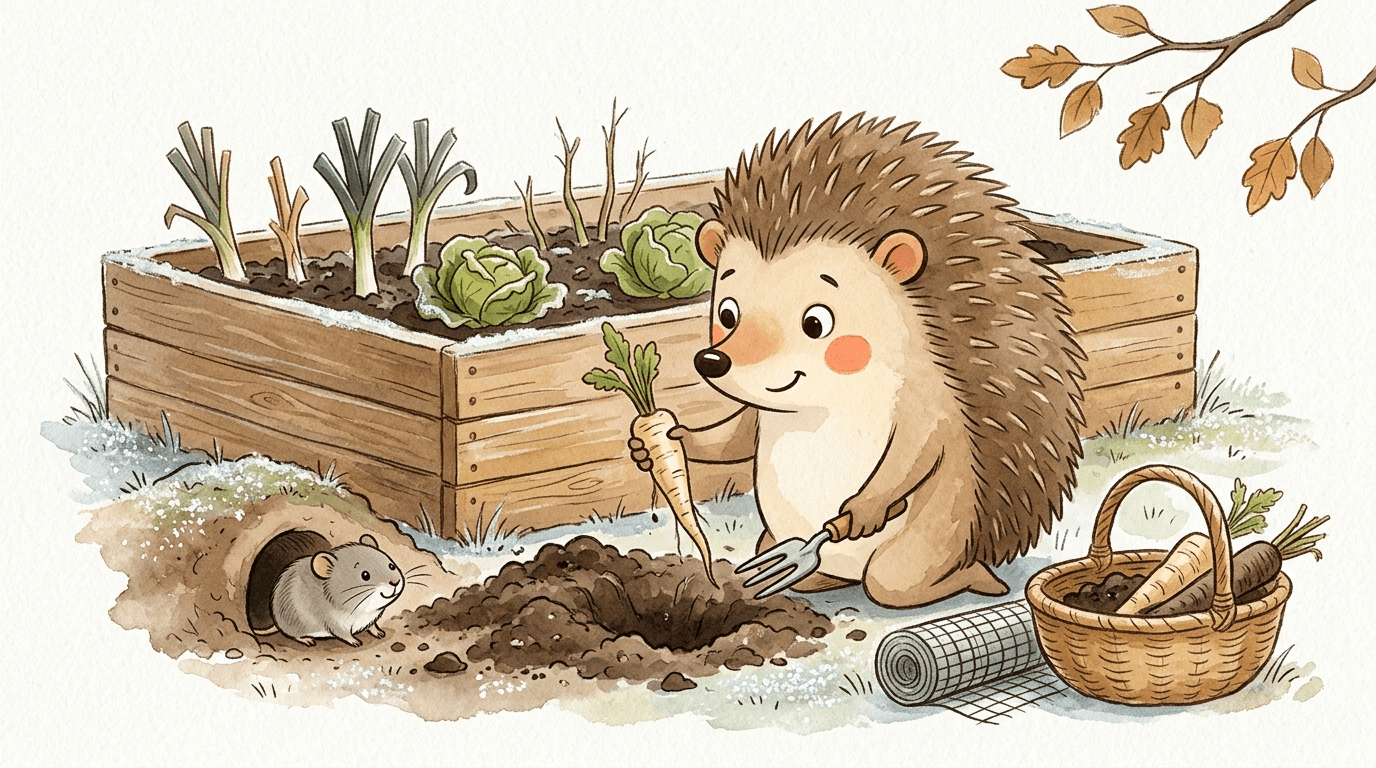
Voles in the winter raised bed: protecting what's still in the ground
Last December I went to dig up my parsnips and found mostly holes. No parsnip, no mound of earth, nothing — just a tunnel system, as if someone had sucked the roots out from underneath. Someone had, almost. Here's what matters right now, while root vegetables are still sitting in the bed.