May 8, 2026 · by Stachi · 7 min read
Cucumbers in the Raised Bed — Where Beginners Go Wrong and What Actually Helps
Cucumbers are my favourite raised-bed plant. And the one where the most things go wrong. Four mistakes I watched Mrs Schneider make last summer — and how to avoid every single one.

I'll admit it: cucumbers are my weakness. Not because they're easy. Because they make such a clear statement when they're happy — those long, dark-green fruits hanging from the net, cool water still dripping from the morning watering, and that unmistakable cucumber smell from two metres away.
Last summer I dropped by Mrs Schneider's garden in Berikon almost every day. She'd planted three cucumber seedlings in April, full of hope. By August she'd pulled two of them out. The third survived stubbornly, but the fruits were bitter.
Four mistakes. All avoidable. Here's exactly what happened.
Why the Raised Bed Is Nearly Perfect for Cucumbers
Before the mistakes, a quick word on why cucumbers and raised beds are such a good match — if you get a few things right.
Cucumbers love warmth. Not just air warmth, but especially soil warmth. A raised bed heats up faster than garden ground, retains heat better, and from the start the cucumber roots are in a comfort zone where they genuinely want to grow.
Add wind protection to that. Cucumber leaves are big and hollow — strong wind tears them open, dries them out, and gives fungal spores the ideal entry point. A raised bed, often positioned against a house wall or fence corner, typically has far less wind exposure than an open plot.
Plant spacing: 60 cm between plants. Not 40, not "looks about right". 60. Cucumbers need air circulation — without it, powdery mildew is almost guaranteed.
Slicing Cucumber or Snack Cucumber — Which Fits Your Bed?
This isn't a question of taste, it's a question of space.
Slicing cucumbers (the long, dark, classic salad cucumbers) grow as climbers. They want to go up, need a support structure, reach 1.5 to 2 metres tall. They work well in a raised bed as long as you put up the trellis from the very start. Not once the plant is already spreading in every direction.
Snack or mini cucumbers (short, crisp types, 8-12 cm) come in both climbing and bushy forms. The bushy variety stays more compact, needs no trellis, and is often the better choice for small raised beds. Less yield per plant, but more plants per square metre.
Mrs Schneider had slicing cucumbers — without a trellis. That was mistake number one.
Trellis Support: More Yield from Less Space
I say this often because it's so obviously correct and so rarely done: growing vertically doubles the yield per square metre.
A cucumber plant sprawling flat on the ground needs up to a square metre of space. The same plant trained upright on a net takes 30 cm of bed width. You can fit three plants in one metre of bed width instead of one.
On top of that: fruits that hang are straighter, stay cleaner, and are much easier to spot. Nothing gets missed and left too long because the cucumber isn't hiding under a pile of leaves.
Three trellis options that actually work:
A bamboo wigwam (three or four canes tied at the top) costs nothing at the garden centre and lasts several seasons. Sturdy enough for two plants.
A net strung between two posts. The close-mesh version from a hardware shop (15 cm mesh size) works well — cucumber tendrils attach themselves without tying.
A wire mesh panel against a house wall or fence. The most durable option. Cucumbers climb reliably on wire and keep sending new shoots upward.
Important: Put the trellis in the bed before you plant, not after. Otherwise you'll trample the roots when you hammer the posts in.
Watering: Plenty, Regularly, and Always at the Root
Cucumbers are 95% water. That water has to come from somewhere — from you.
In high summer, from mid-July through late August, I water my cucumbers every one to two days. Not with the overhead watering-can technique that Mrs Schneider used in July — she watered the leaves from above, the way you'd water a normal salad. That was mistake number two.
Wet leaves plus heat plus tight spacing equals powdery mildew. Every time.
The rule: water goes to the root, not the leaf. Water in the morning so the soil stays warm through the day and the surface dries out by evening. If you water at night, the moisture sits there all night long.
A sign you're not watering enough: the leaves look wilted in the morning but recover by midday. That's still OK. If they're still drooping at noon, you're too late — the plant is stressed, and stressed cucumbers produce bitter fruit (more on that in a moment).
Feeding: Cucumbers Are Heavy Feeders, Not Lightweights
The third thing Mrs Schneider was missing: feeding. Her cucumbers had a good start in the compost-rich bed, but from June onwards no extra nutrients arrived.
What cucumbers need:
When planting, a good load of mature compost in the planting hole. That's the starter battery.
From the first flower — typically late June or early July — feed every two weeks. I usually use nettle liquid fertiliser (home-made, diluted 1:10) or tomato fertiliser from the shop in a pinch — it has a similar nutrient profile and works well for cucumbers.
No excess nitrogen in autumn. The foliage goes lush but the fruits stop coming.
The Four Most Common Cucumber Problems — and What's Behind Them
1. Wilting Leaves Despite Regular Watering
This was Mrs Schneider's problem in late May. Freshly planted, watered regularly, leaves drooping anyway.
Diagnosis: Soil temperature too low. Cucumbers don't tolerate root temperatures below 18°C. When the soil is too cold, the roots simply can't absorb water — no matter how much you add. The plant wilts regardless.
What helps: patience and black mulch film over the soil to trap heat. Or simply wait two weeks — late May is still often too early for outdoor cucumbers in Switzerland, even in a raised bed.
2. Bitter Cucumbers
The classic cucumber trauma. You look forward to the first cucumber of the season, take a bite, and it's so bitter you spit it out.
Cause: Stress. Cucumbers produce cucurbitacin — the bitter compound — under stress. Triggers include irregular watering (wet-dry-wet), heat stress, and certain susceptible varieties.
Solution: Alongside consistent watering, I always recommend F1 varieties for slicing cucumbers that are explicitly labelled "bitter-free". Breeding has reduced the cucurbitacin content to virtually zero. Tanja F1, for example, or Passandra F1.
Cheap seed assortments without variety names are usually the main source of bitter cucumbers. That was mistake number three I noticed with Mrs Schneider: a bargain mixed-seed packet with no variety labelling.
3. Powdery Mildew from August
White coating on the leaves that spreads quickly. Powdery mildew is almost unavoidable with cucumbers in Switzerland — the question isn't whether, but when.
Prevention is everything:
- Choose varieties with mildew resistance (shown on the seed packet as "MR" or "tolerant to powdery mildew")
- Keep the plant spacing (60 cm!)
- Water at the root only, in the morning
- From mid-August, harvest early and don't let new flowers develop
When mildew is present: Remove the affected leaves immediately (don't compost them — bin them). The plant can keep producing for weeks — mildew attacks the oldest lower leaves first, the growing tip at the top is often still healthy.
4. Cucumbers Turning Yellow at the Stem End
This happens when cucumbers hang on the plant too long. From mid-July I check daily. A cucumber left three days too long turns yellow, develops seeds, and loses its flavour.
The plant notices too: when a cucumber is ripe and not picked, it sends a signal that seed production is needed — and slows down new fruit development. Regular harvesting doesn't just keep the quality up; it triggers new flowers and more fruit.
Three Varieties That Work Reliably in Switzerland
Tanja F1 — my recommendation for beginners. Bitter-free, mildew-tolerant, long harvest window. Slicing cucumber, 20-25 cm. Needs a trellis. Available at most Swiss garden centres.
Burpless Tasty Green F1 — an English variety, odd name, but excellent flavour. Very thin skin, almost no seeds, mild taste. Climbing habit, similar size to Tanja. Great for snacking without peeling.
Mini Munch F1 — a true snack cucumber, 8-10 cm, bushy growth habit. No trellis needed, starts producing at 1.2 m plant height. Good for small raised beds or when you can't harvest every single day (the small cucumbers forgive a little extra waiting time).
What a Good Cucumber Season Looks Like
With Tanja F1, consistent watering, biweekly feeding, and regular harvesting: 30 to 40 fruits per plant in a season. That's a realistic target.
My personal record in 2024: 47 cucumbers from a single Tanja F1 plant. The bed was on a west-facing house wall in Berikon, trellis net from ground to roof eave (1.8 m), daily watering from early July through mid-September.
Mrs Schneider is having another go this year. I brought her two Tanja F1 and one Mini Munch. And a bamboo wigwam, already set up before the plants go in.
If you haven't planned your cucumber setup for this year yet — Plan your bed for free → /en/planer/standort. Erntezeit calculates plant spacing, trellis space requirements, and the right sowing and planting dates for your location automatically.
For more on companion planting around cucumbers, see Why Tomatoes Love Basil and Hate Cucumbers. And if you're just getting started with a raised bed: the Raised Bed Beginner's Guide answers the most common starting questions.
🦔 Stachi
Related plants


More articles
October 26, 2026 · 3 min read
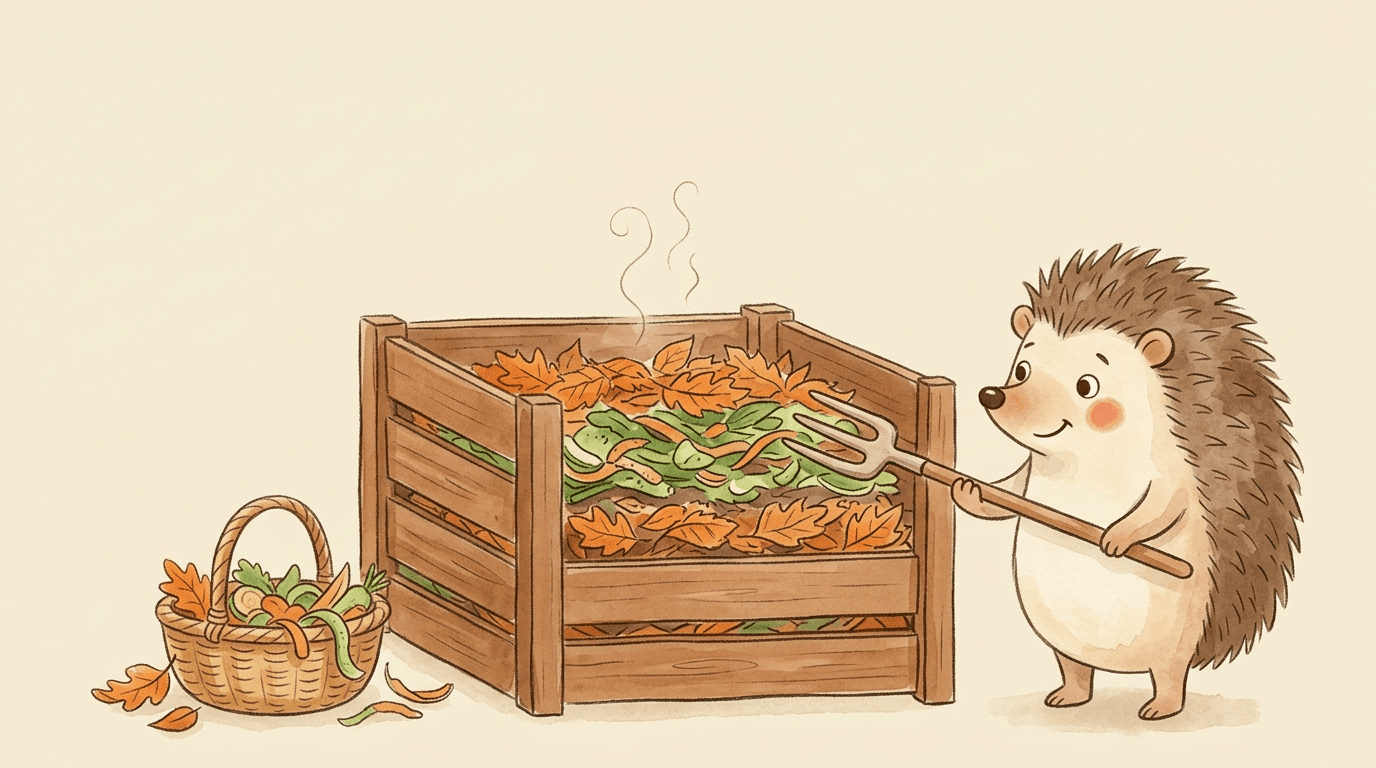
Starting an autumn compost pile: 3 parts leaves, 1 part kitchen scraps
Frau Schneider's compost pile just sat there all winter. No steam on cold mornings, no warmth, no breakdown — just a heap of dry leaves that hadn't changed a bit by March. The problem wasn't patience. It was the mix.
October 20, 2026 · 3 min read
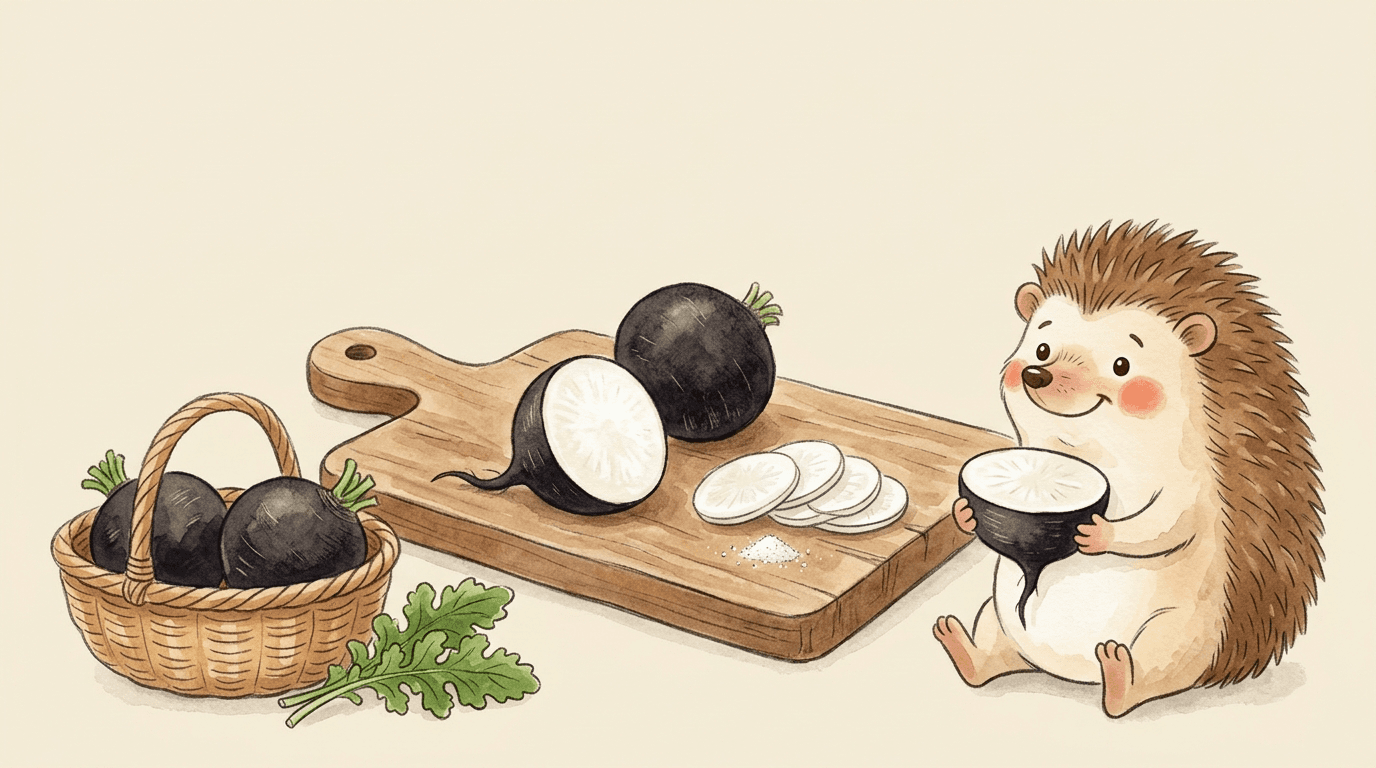
Black radish: why you should let it rest before you bite in
Last year Frau Schneider bit straight into one, unsalted, fresh out of the ground, and spent the next two minutes coughing instead of talking. The problem wasn't the radish. It was the timing.
October 14, 2026 · 2 min read
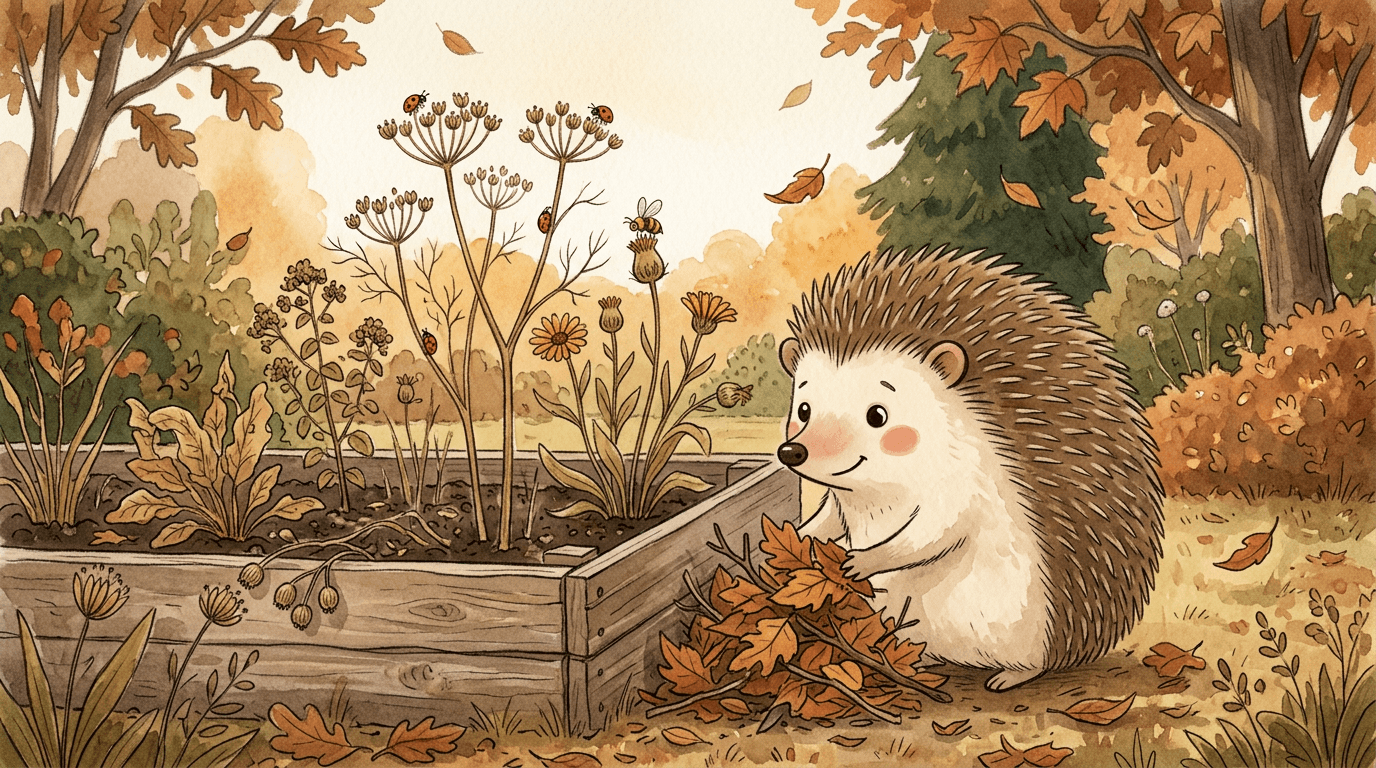
Why I only tidy up half my raised bed in October
Mr Zimmermann cut his entire raised bed down to the ground in one afternoon — stalks, seed heads, leaves, all gone. I should have warned him beforehand: not everything, only half. Here's what should stay standing and what really needs to go.