May 3, 2026 · by Stachi · 7 min read
Raised bed or ground bed — what's actually better?
Mrs Schneider got a raised bed for her birthday and asked me whether it's really better than the ground bed she's had for twelve years. My honest answer: not necessarily. A fair six-round comparison.

Mrs Schneider had her birthday in April. Her son built her a lovely larch-wood raised bed — 120×80 cm — in the garden in Berikon, Switzerland. Now she's standing in front of me — metaphorically, I'm a hedgehog — asking: "Stachi, is this really better than my ground bed that I've been using for twelve years?"
I paused for a moment. Because the honest answer is: not necessarily.
A raised bed isn't an upgrade for everyone. It's a different way of gardening. Better at some things, worse at others, and for some people simply too expensive to justify. I don't do sales pitches, so let's look at this fairly.
1. Back-friendliness
The raised bed wins here with no argument.
A raised bed at 80–90 cm height means you stand upright, weed upright, plant upright. No kneeling, no bending, no "let me straighten up very slowly and hope my back cooperates". For anyone with back problems, knee arthritis, or limited mobility, that's a genuine gain — not cosmetic, but functional.
A ground bed requires crouching, bending, or at minimum a kneeling pad on the soil. If you're young and your back is fine, you barely notice. If you're not so young or regularly experience back pain, you notice it very much after two hours of weeding.
Verdict: Raised bed, clearly. For anyone with physical limitations, the raised bed buys real quality of life.
2. Soil quality control
This is the technical advantage of the raised bed, and the one most often underestimated.
When you build a raised bed, you fill it yourself. You layer branches, leaves, green waste, compost, and good garden soil — you're in charge of soil quality from day one. No compacted clay, no waterlogging, no stony subsoil. You start with an optimal substrate that you compose yourself.
With a ground bed, you're a guest in whatever soil you find. Heavy clay stays heavy clay, even if you pour in ten bags of compost. Building good soil in a ground bed takes years — with consistent mulching, compost applications, and patience. Done properly, you reach genuinely good soil after five to eight years. Until then, the raised bed has the edge.
But: if you already have good garden soil, you don't need this control. Mrs Schneider has been working in compost for twelve years. Her ground bed is now loose, humus-rich, and well-structured. She doesn't actually need the raised bed for that.
Verdict: Raised bed ahead with poor starting soil or a fresh start. A ground bed with good established soil catches up and eventually surpasses it.
3. Warmth in spring
The raised bed warms up faster in spring. Noticeably faster.
Elevated beds absorb solar heat from above and lose less heat downwards — the substrate literally sits in the air, ventilated on all sides. In Berikon, that means the raised bed is typically plantable about two to three weeks earlier than a ground bed in the same spot. Radishes, spinach, lettuce, pak choi — they can go in during March when the ground bed is still too cold.
For anyone wanting early harvests or living in a cooler location (higher elevations, Alpine foothills), those weeks matter. For tomatoes and peppers it makes no difference — they can't go out until after the ice saints anyway, by which point the head start is gone. But for everything cool and early, it makes a difference.
Verdict: Raised bed 2–3 weeks ahead in spring. Anyone with a short season or wanting early harvests will appreciate this.
4. Water requirements
Here the tables turn.
A raised bed sits exposed on all four sides. Wind evaporates moisture through the wooden walls, sun heats the substrate from above, and water drains faster than through compacted garden soil. In summer in the DACH region (Germany, Austria, Switzerland), a raised bed typically needs watering every one to two days — morning or evening, at the root.
A ground bed evaporates more slowly. The soil below acts as a buffer, capillary action draws moisture up as needed, and the soil surface stays cooler. In a dry August week, three waterings might suffice where the raised bed needs six.
That sounds like a detail, but in hot summers it's a real advantage. If you don't have an irrigation system and you're away for three days in August, you'll come back in better shape from a ground bed than from a raised bed.
Verdict: Ground bed needs less water in summer. Raised bed needs more consistent watering or a drip system.
5. Setup costs
The ground bed wins here, and clearly.
A ground bed costs you time and effort — loosen the soil one autumn, work in compost, done. Material costs: zero to minimal if you have your own compost. If you need to buy soil, perhaps 20–40 CHF for a few bags.
A raised bed costs materials. A simple wooden raised bed at 120×80 cm starts at around 80–100 CHF, a decent one in larch or Douglas fir (more durable, no treatment needed) runs 150–300 CHF. Add the soil: for a 120×80×80 cm raised bed you need roughly 300–400 litres of substrate. Raised bed compost runs at 3–5 CHF per 50-litre bag, so 20–40 CHF. If you do the layering approach (branches, leaves, compost, soil on top), you pay less but need to source the materials.
Bottom line: a decent raised bed costs 200–400 CHF to set up. The ground bed costs almost nothing.
Lifespan: a larch raised bed lasts 15–20 years, a cheaper spruce one 5–8 years. The investment spreads across many seasons — but it needs to be made upfront.
Verdict: Ground bed nearly free. Raised bed 200–400 CHF starting investment.
6. Pests and summer heat stress
The raised bed has two opposing effects here.
Slugs and voles: the raised bed wins clearly. Slugs are reluctant to climb dry wooden edges. Anyone who also lays a vole grid (wire mesh) as a floor insert protects the raised bed completely against burrowing rodents. In a ground bed, both are a genuine problem — slugs come up from the soil or across the lawn, voles dig in from below.
Heat stress in summer: the raised bed loses. Elevated substrate heats up to 40°C and beyond in a hot July. Shallow-rooted plants like lettuce and radishes get heat stress before watering even helps. In a ground bed, the root zone stays cooler because the soil goes deeper and draws shade from itself.
Also: raised beds occasionally invite slugs over the outer wall — less than ground beds, but not complete protection. A copper strip along the upper edge helps.
Verdict: Raised bed better against slugs and voles. Ground bed cooler and more stable during summer heat stress.
Which is right for whom?
Three quick portraits:
Beginner with back problems, poor garden soil, or limited space: raised bed. The start is more defined, the soil controlled, and the working height kind to your body. The initial investment pays for itself across many seasons.
Experienced gardener with established, good soil: ground bed. You've built your soil, you know its quirks, and you don't need outside soil quality control. The ground bed is cheaper to run, more flexible in area, and less demanding to water. You might lose two weeks of spring — but you'll appreciate it in August.
Renter with a terrace or balcony: raised bed or pot. A ground bed isn't an option. The raised bed is the logical choice, from window boxes to planters to an 80×60 cm terrace raised bed. The main limitation is weight — substrate is heavy, and balconies have load limits.
Renter with no outdoor space — no balcony, no terrace: A rental allotment is the simplest solution. meine ernte offers rental plots across the DACH region — you rent a ready-prepared bed, bring your tools, plant your vegetables, and tend it through the season. No building, no hauling substrate, no conversation with your landlord. Particularly good for anyone who wants to try gardening before investing in their own bed.
Mrs Schneider's solution
After I'd walked through all six points with Mrs Schneider, her response was: "Well, I'm keeping both."
That's the best answer.
Her ground bed now takes the large, space-hungry plants — tomatoes, courgette, squash. Things that root deep and need lots of water in summer; the ground bed suits them well. The new raised bed gets the herbs, lettuce, and early radishes. Everything she'd have to bend for, and everything that can get started early in the year.
Two beds, two roles, no competition.
A raised bed is not a status symbol; a ground bed is not a poor substitute. Both are routes to the same goal: vegetables you've grown yourself, where you know exactly what went into them. Which route is right depends on where you're starting from — and on your back.
If you're figuring out what to plant in which bed, Erntezeit can help — whether for a raised bed, a ground bed, or both. Enter your location, I pull the frost data, and together we work out what goes where and when.
Plan your bed for free → /en/planer/standort
If you're just getting started with your first bed, the beginner's guide to planting a raised bed walks through the three steps from location to bed size to plant selection.
And if your raised bed has been through a few seasons and the soil is looking tired, refreshing your raised bed in spring shows how to revive the substrate without buying everything new.
🦔 Stachi
More articles
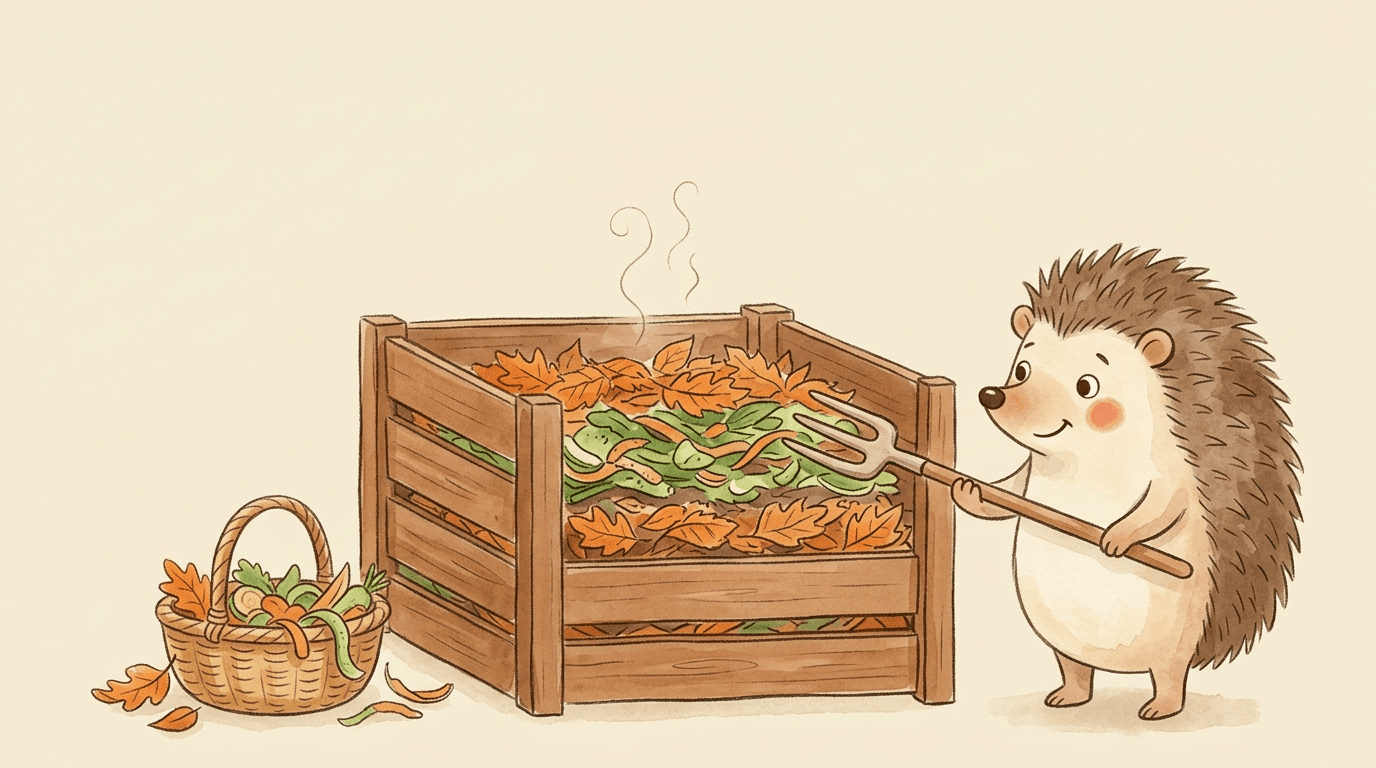
October 26, 2026 · 3 min read
Starting an autumn compost pile: 3 parts leaves, 1 part kitchen scraps
Frau Schneider's compost pile just sat there all winter. No steam on cold mornings, no warmth, no breakdown — just a heap of dry leaves that hadn't changed a bit by March. The problem wasn't patience. It was the mix.
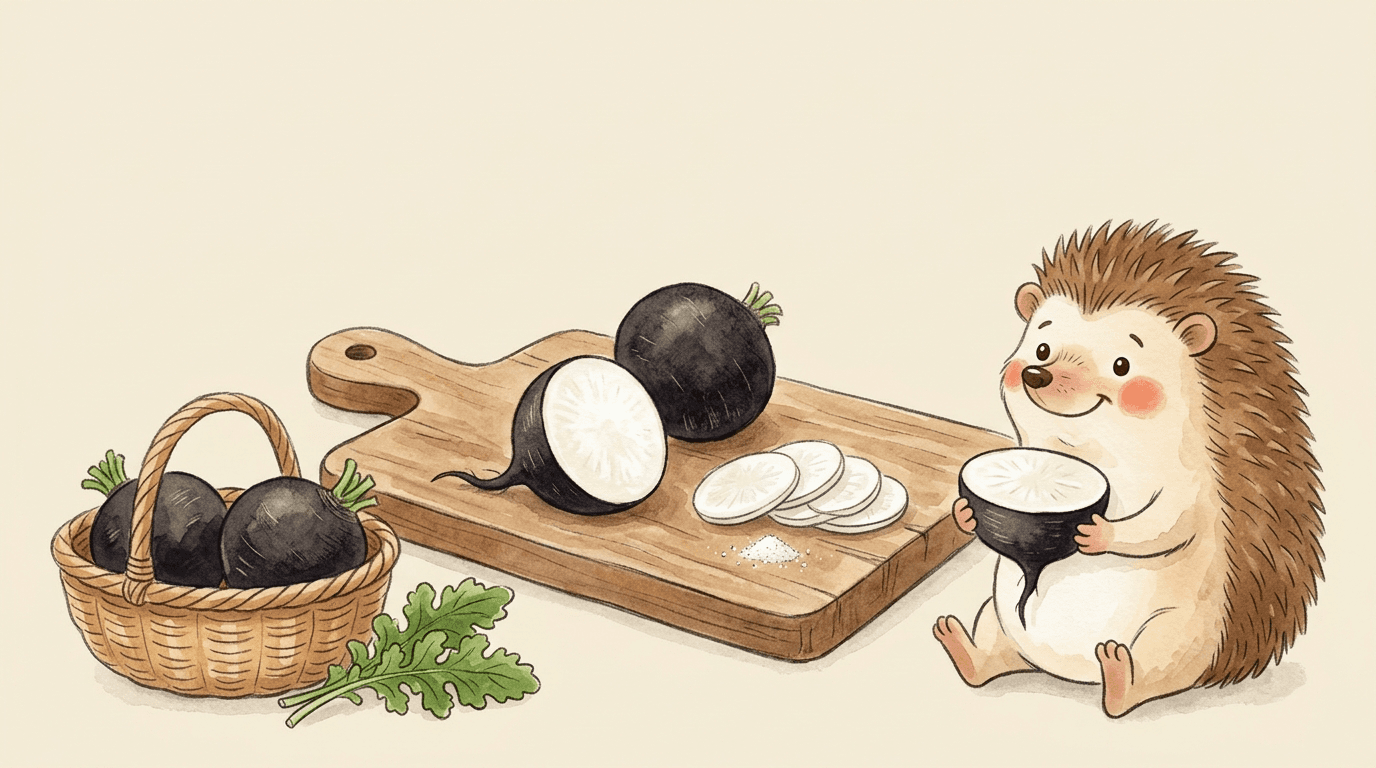
October 20, 2026 · 3 min read
Black radish: why you should let it rest before you bite in
Last year Frau Schneider bit straight into one, unsalted, fresh out of the ground, and spent the next two minutes coughing instead of talking. The problem wasn't the radish. It was the timing.
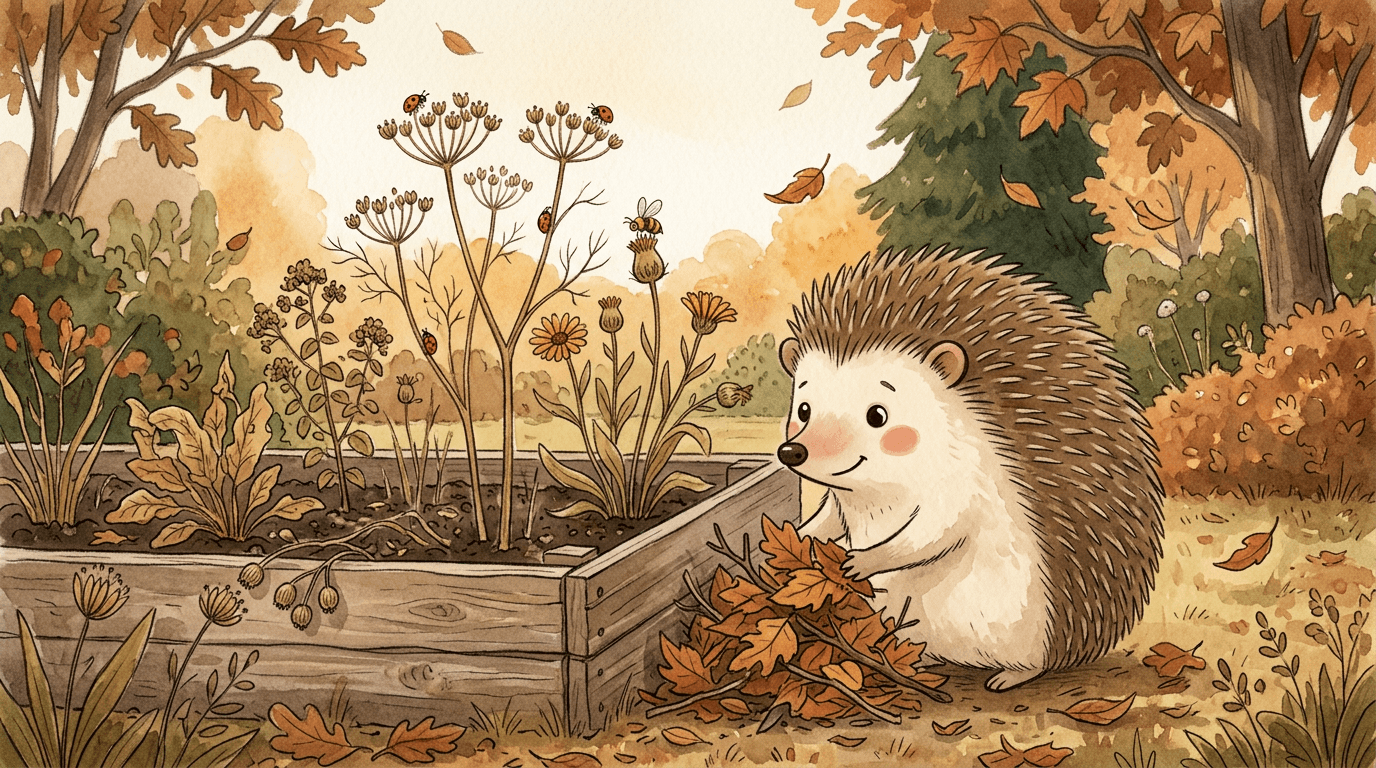
October 14, 2026 · 2 min read
Why I only tidy up half my raised bed in October
Mr Zimmermann cut his entire raised bed down to the ground in one afternoon — stalks, seed heads, leaves, all gone. I should have warned him beforehand: not everything, only half. Here's what should stay standing and what really needs to go.