July 21, 2026 · by Stachi · 4 min read
Garlic from the raised bed: how to tell it's truly ready — and how to store it for a year
Garlic has a small harvest window. Pull it too early and it moulds in three weeks. Leave it too long and the bulb splits open. Here is the one sign I watch for — and how to store it so it lasts until next summer.
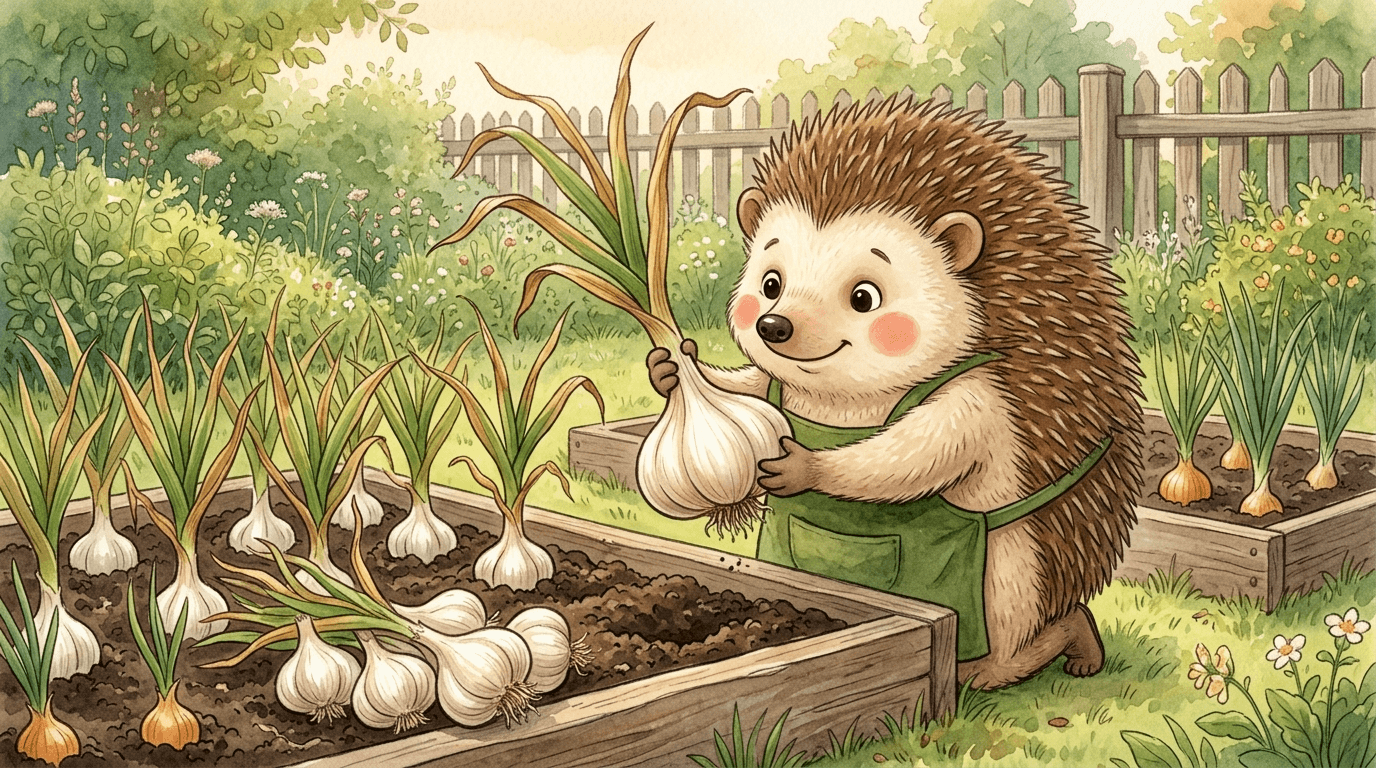
Last year I pulled my garlic two weeks too early. The heads looked perfect — firm, white, with tight papery skin. I braided them, hung them up, felt quite pleased with myself. Six weeks later, half were soft. The first sign of mould. Frau Schneider from next door heard about it and — after a pause — told me exactly what I'd done wrong.
That was the year before last. Last year I harvested the same amount, dried it properly, and in May I was still pulling firm heads out of the cellar.
How to tell your garlic is ready
Garlic tells you when it's done. You just have to look at the right thing.
The main sign: the leaves. Starting from the bottom, they turn yellow and dry out. When roughly half to two thirds of the leaves are brown and the top ones are still green, the timing is ideal. The energy is concentrated in the bulb, the outer skin is still intact enough to protect it, and the cloves have developed their full flavour.
Not ready yet: more than half the leaves are still green. The heads are smaller than they could be, and the cloves haven't fully separated inside.
Too late: almost all the leaves are gone, the skin is splitting, the heads are exposed. This sometimes happens with hardneck varieties if I leave them too long. They then barely last two months.
If you're not sure: pull one head and cut it open. You'll see immediately whether the cloves are firm, well-defined, and plump — or whether they've already started to merge.
How to harvest without damaging the heads
Don't pull the stems. That's the one sentence I remember.
If you just tug on the stalk, cloves break off or you crush the base — and that's exactly where rot starts. I use a hand fork, push it in about 10 cm from the head, and lever the whole clump upward. Then I take the head in my hand and ease it free. I leave the leaves attached — I need them for braiding or bundling later.
In a raised bed the soil is usually looser than in the ground. The fork is still worth it — one damaged head doesn't keep.
Drying: the step I got wrong for years
This was my mistake. Not the harvesting itself — what came after.
Freshly lifted garlic isn't ready to store. It needs two to four weeks to cure. During this time the outer skin closes up, the husk dries out, and the moisture inside evaporates slowly.
What I need:
- Airflow: No plastic bag, no crate. I hang the heads in loose bunches in a dry spot, or lay them in a single layer on a rack or grid.
- Dry and shaded: Direct sun bleaches the skin and makes it brittle. My preference: an attic or shed. Otherwise a covered terrace or a well-ventilated basement.
- Warm: 18–24 °C is ideal. Cool nights slow the process but don't hurt it.
After three weeks the outer leaves feel papery. The stalk is dry and snaps when you bend it. Then it's ready.
Storage: three months or a year?
How long garlic lasts is almost entirely decided by how you store it.
Braid or bundle — the most traditional approach. The stalks are still pliable right after curing, so that's the moment to braid. Hang in a cool, dark, well-ventilated spot. In my Berikon cellar: 8–12 °C, no direct moisture. Keeps up to a year.
Net or basket — if you don't want to braid. Loose layers in a mesh bag, moisture needs to escape. Similar shelf life.
Paper bag or cardboard — works for a few months, but no airflow. I use this only for heads I plan to use quickly.
What doesn't work: plastic bags. The fridge for the whole harvest (short-term is fine, but condensation is the enemy). And no warm, damp room — that's a direct recipe for mould.
Is garlic in a raised bed worth it?
I don't run the numbers, because they don't really matter. Garlic costs about 50 centimes a head in the supermarket sometimes. But when I open my harvest in April — nine months after lifting — and it smells like fresh garlic rather than nothing at all, that's just not the same thing.
Also: I don't have to do anything in midsummer. The garlic has been in the bed since October, I gave it one feed in spring, and now I lift it. Barely any maintenance, zero pests in my experience, and it keeps all year.
One more thing: always save one head from the best row. Replant it in October. From one clove you get a new head. I've been doing this for four years now, and my Berikon garlic is so well adapted to the local conditions that it beats any variety in the shop.
What Erntezeit does with this
When you know when your last frost in Berikon, Innsbruck, or Lyon was, you also know when to plant in October. I calculate that in the planner — location, climate zone, frost dates — and I tell you to the week exactly when to plant each variety and when to harvest. Free for one bed.
My Berikon garlic is braided and hanging in the cellar now. Frau Schneider asked if she could have one braid. I said yes, but I'm keeping the best row for myself. For October.
🦔 Stachi
Related plants


More articles
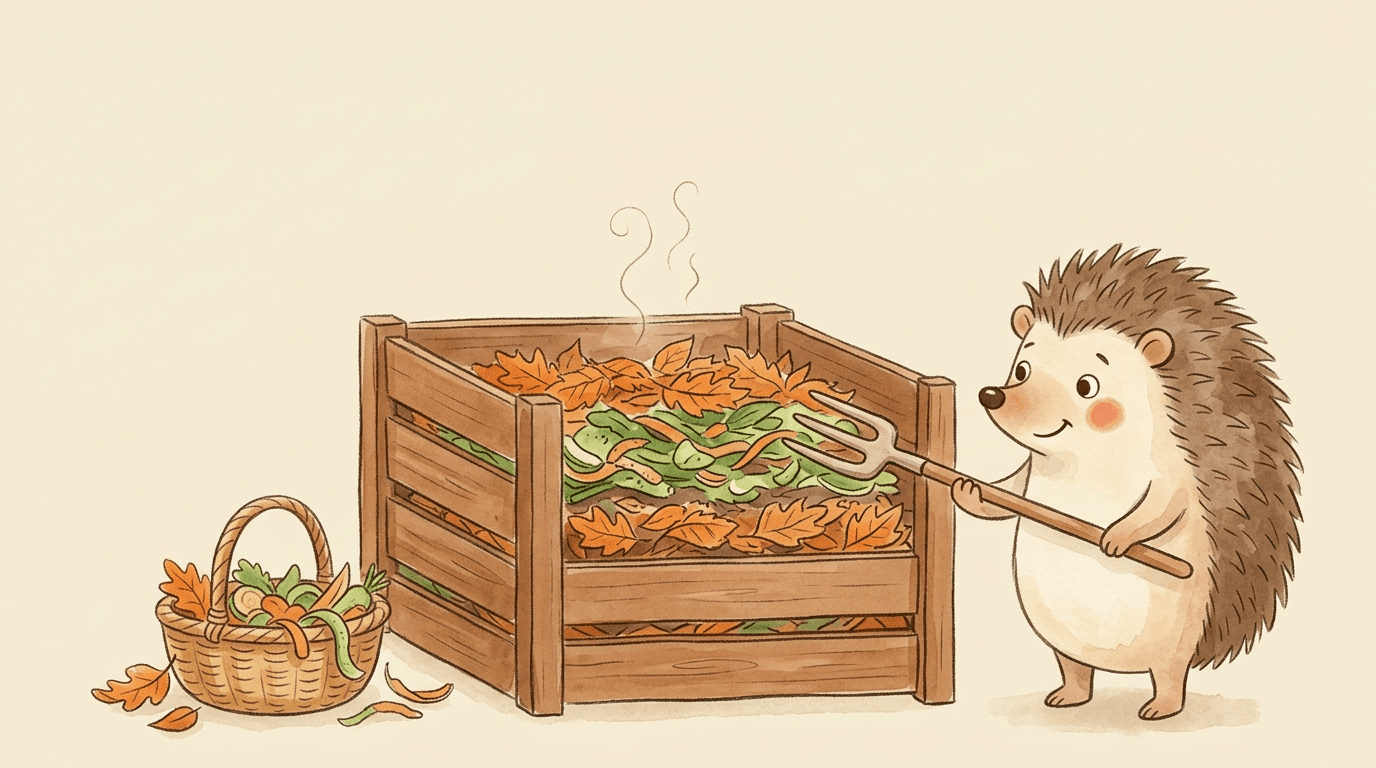
October 26, 2026 · 3 min read
Starting an autumn compost pile: 3 parts leaves, 1 part kitchen scraps
Frau Schneider's compost pile just sat there all winter. No steam on cold mornings, no warmth, no breakdown — just a heap of dry leaves that hadn't changed a bit by March. The problem wasn't patience. It was the mix.
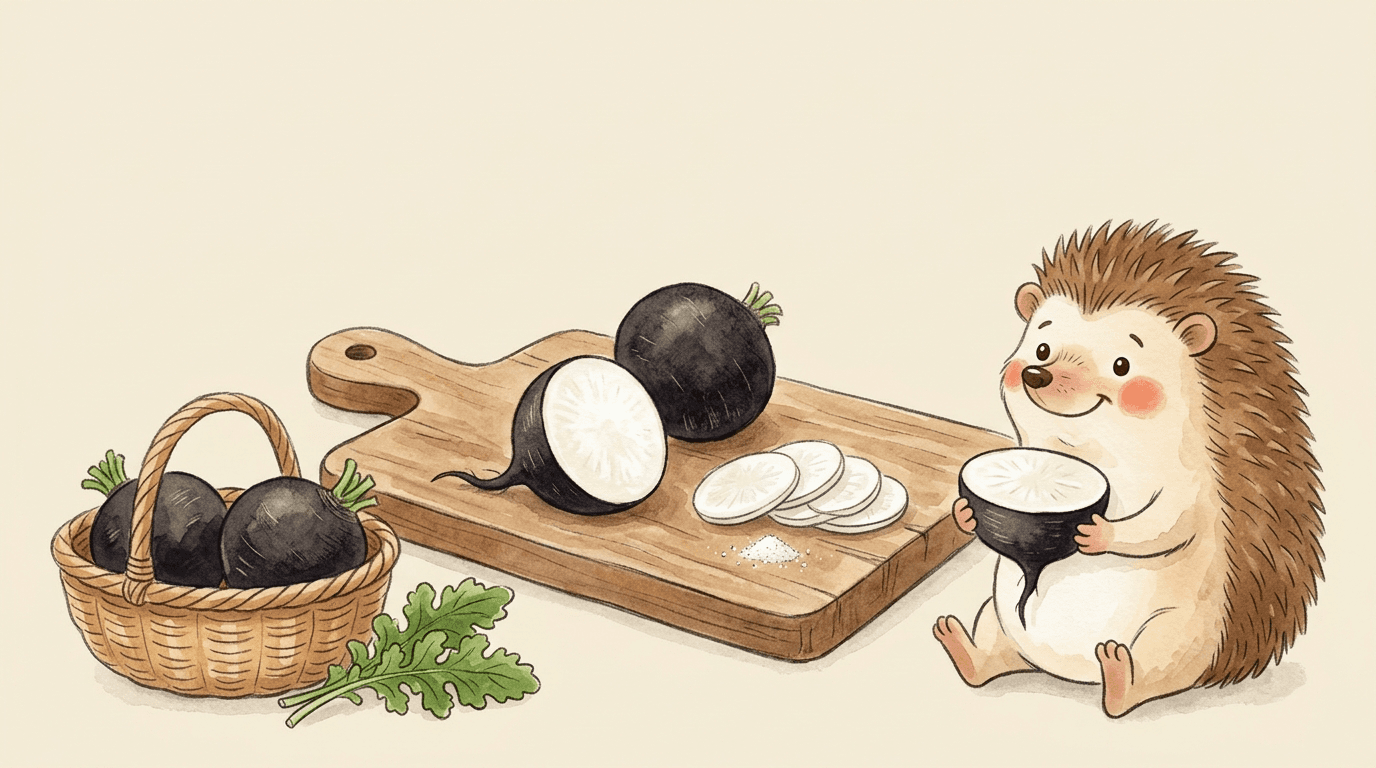
October 20, 2026 · 3 min read
Black radish: why you should let it rest before you bite in
Last year Frau Schneider bit straight into one, unsalted, fresh out of the ground, and spent the next two minutes coughing instead of talking. The problem wasn't the radish. It was the timing.
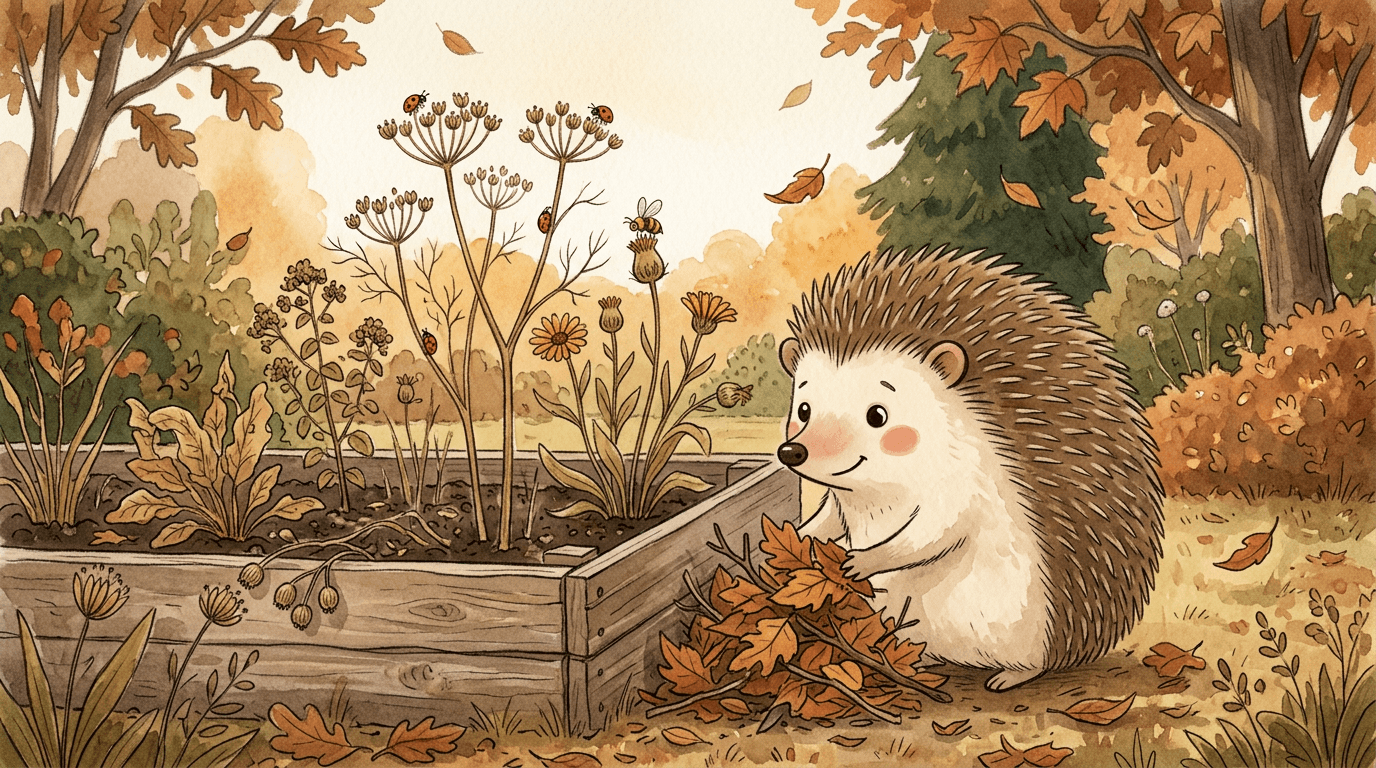
October 14, 2026 · 2 min read
Why I only tidy up half my raised bed in October
Mr Zimmermann cut his entire raised bed down to the ground in one afternoon — stalks, seed heads, leaves, all gone. I should have warned him beforehand: not everything, only half. Here's what should stay standing and what really needs to go.