September 3, 2026 · by Stachi · 4 min read
Planting garlic in September: how to start now for the 2027 harvest
Garlic is one of the few crops where you do the work in autumn and collect the reward in summer. Plant now and you'll have large, aromatic bulbs by next July — or wait until October if you prefer the sweet spot.

My last batch of garlic has been out of the ground since mid-August — dried, and now hanging on a string in my cellar. I'd like the same abundance next summer. And that means starting now.
September is the earliest reasonable time to plant autumn garlic in the Swiss Midlands. Not the ideal moment — October is often better — but if you're planning ahead, you can prepare the bed right now and have everything ready for early October.
Why you plant garlic in autumn, not spring
Garlic is what growers call a vernalisation crop. It needs a cold period to develop properly. Without that winter signal, it grows leaves but produces small, poorly-formed bulbs.
Autumn planting solves this. The cloves go in the ground, root lightly before the soil freezes, then spend the whole winter dormant. When days lengthen again in spring, they take off fast. Compared to spring-planted garlic, autumn-planted cloves have a four-to-six-week head start — and you can taste that difference in the bulbs.
Which variety to choose
Here's a common mistake: buying garlic from the supermarket and planting it. It sounds practical, but most imported garlic comes from warmer climates, is treated with sprouting inhibitors, and isn't suited to DACH winters.
Buy seed garlic (Steckknoblauch) from a garden centre or local nursery. Good varieties for Switzerland and Germany:
- Morado de Las Pedroñeras — mild, medium-sized, stores well
- Messidrome — robust, early-ripening, typical for central Europe
- Germidour — large cloves, intense flavour, plant in autumn
- Violet de Cadours — beautiful purple wrapper, traditionally French but hardy to Zone 6
For the safest bet: organic seed garlic from a Swiss nursery, selected for local winters.
When exactly to plant
The ideal window is mid-September to late October. Earlier than mid-September and the garlic sprouts too strongly before the soil cools, making it vulnerable to fungal disease and frost damage. Later than November and there's not enough time to root before the ground freezes.
For Berikon and the Swiss Midlands, I recommend early to mid-October as the sweet spot. Plant in September if you're impatient and your nights are already cool — but prepare the bed either way.
A rough guide: plant when soil temperature is consistently below 15°C, but before the ground freezes. In most Swiss Midlands raised beds, that's from October onward.
How to prepare the bed
Garlic isn't demanding, but it wants loose, well-drained soil. Compacted or waterlogged ground is the fastest route to rotting cloves.
What to do now:
- Clear summer crops — tomatoes, courgettes, anything still standing.
- If the soil feels compacted: loosen with a garden fork, don't dig deep. Deep turning destroys soil life you'll need until spring.
- Work in some mature compost. Not too much nitrogen — that encourages leaves, not bulbs.
- Mark the area. Obvious advice, but garlic beds look like empty beds in winter. I've accidentally worked over mine before.
Depth and spacing
Each clove goes in tip-up, roughly twice the depth of the clove — usually five to eight centimetres.
Spacing: ten to twelve centimetres between cloves, fifteen centimetres between rows. In a raised bed where you can plant more intensively, twelve by twelve works fine.
Don't crowd them. Garlic needs air circulation to stay healthy. Tight rows are one of the most common beginner mistakes.
What happens in winter — and what you need to do
Honestly? Almost nothing. Garlic looks after itself.
It may push up a few centimetres of green before winter settles in. That's normal. The small shoots handle frost without trouble. In very exposed spots, a thin layer of mulch (straw, dry leaves) can protect against hard freezes — but in a raised bed, it's usually unnecessary.
In spring, once temperatures rise, you'll see the first shoots. Then: water normally, but not heavily. Garlic prefers dry over waterlogged.
About garlic scapes
If your variety produces a flower stalk — typical of hardneck varieties — you'll see stems curling into a loop in late spring or early summer. These are called scapes.
Cut them off as soon as they start to curl. The plant then puts all its energy into the bulb rather than the flower head. The scapes themselves are edible and taste like mild garlic — delicious in a pan or briefly roasted.
When to harvest next year
In the Swiss Midlands: late June to mid-July 2027. Watch the leaves: when two-thirds have turned yellow and only the top third is still green, it's time. Don't wait until everything is yellow — by then the cloves will have split apart.
Frau Schneider harvested her first garlic last summer. She wrote to me: "It smells ten times stronger than supermarket garlic. Is that normal?" — Yes, Frau Schneider. That's exactly what it's supposed to be like. The difference between garlic that spent three weeks in transit and garlic that was still in your soil yesterday.
Start now. Next summer you'll know why.
🦔 Stachi
Products mentioned in this post
- Plantura organic tomato seed set (10 varieties)Open-pollinated, good germination — robust for raised beds.
- Organic tomato seed set, 14 varieties
- Organic heirloom tomato seed set (Demeter, 12 varieties)
- Organic vegetable seed set, 10 varietiesCucumber, tomato, beetroot, broccoli, carrot, chard & more.
Related plants


More articles
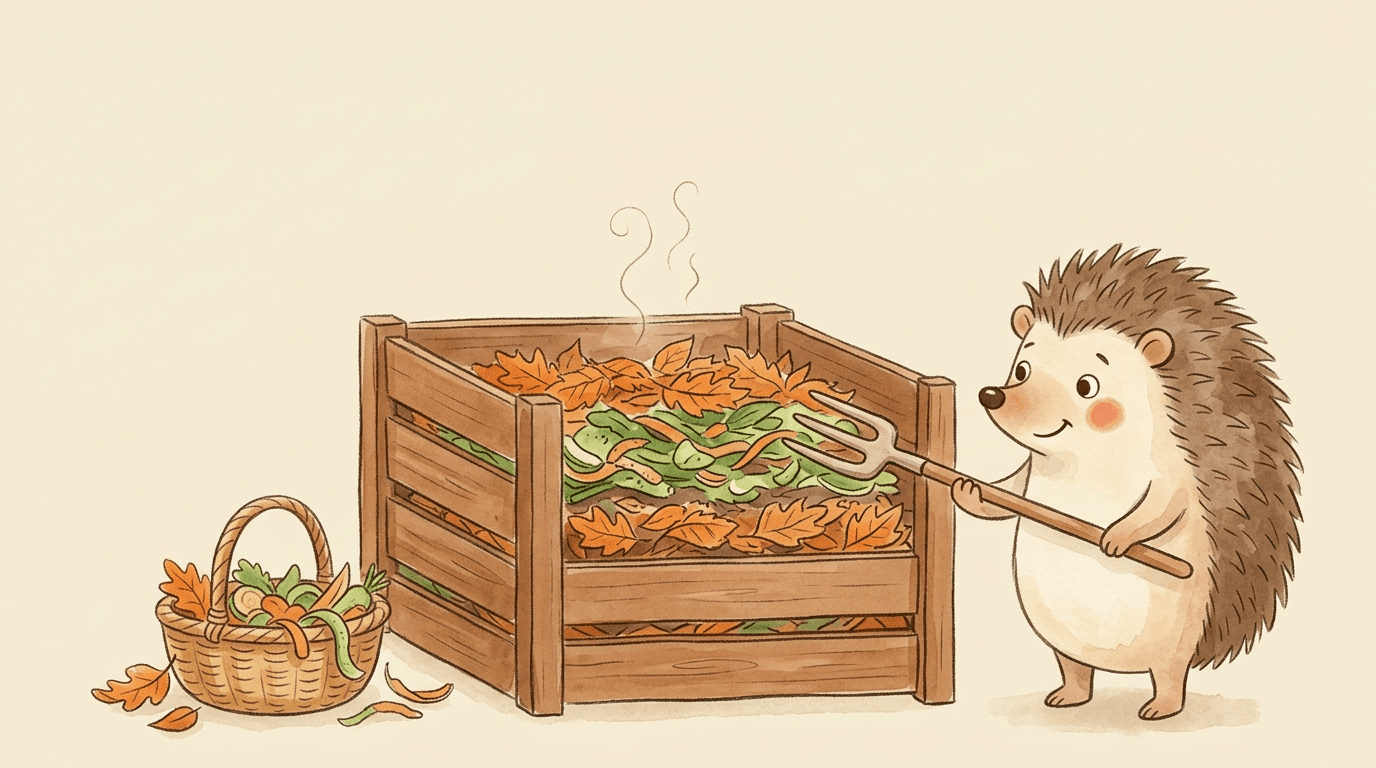
October 26, 2026 · 3 min read
Starting an autumn compost pile: 3 parts leaves, 1 part kitchen scraps
Frau Schneider's compost pile just sat there all winter. No steam on cold mornings, no warmth, no breakdown — just a heap of dry leaves that hadn't changed a bit by March. The problem wasn't patience. It was the mix.
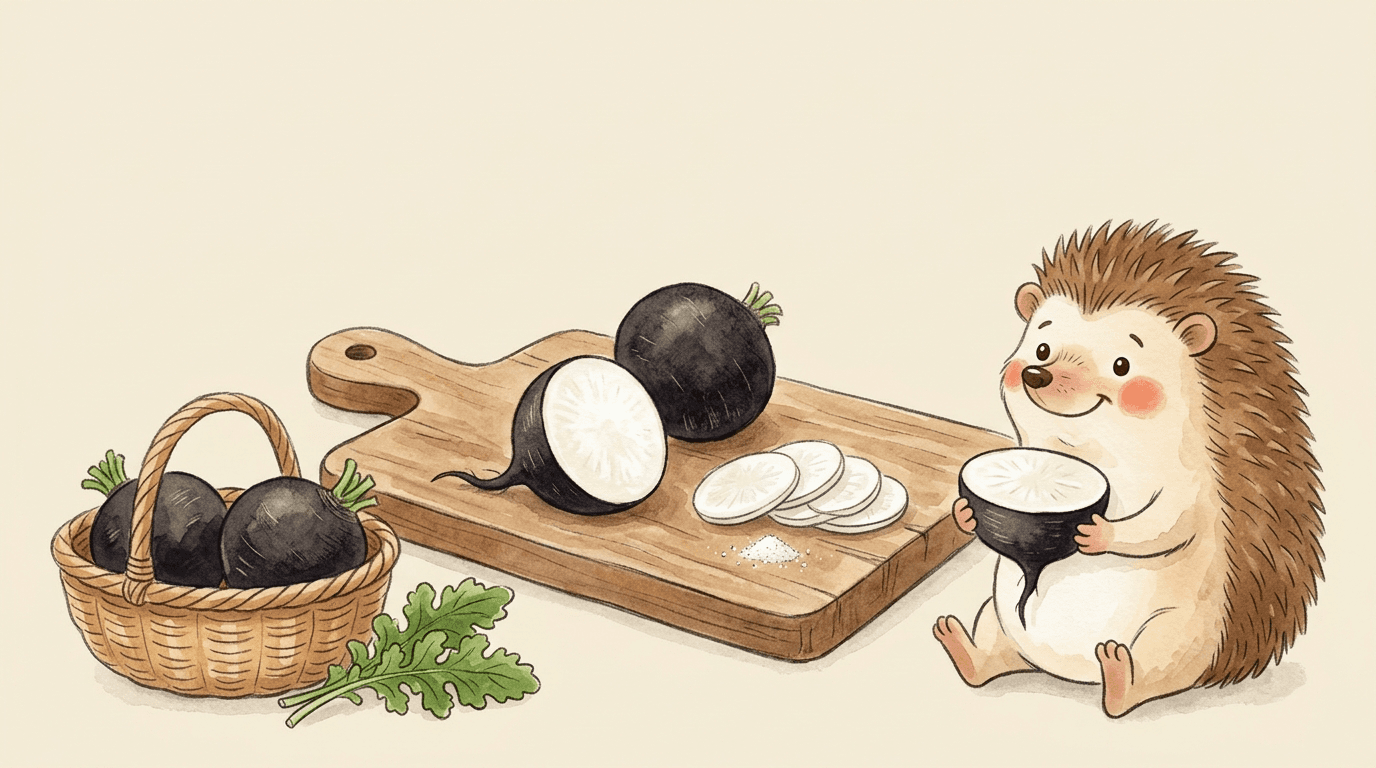
October 20, 2026 · 3 min read
Black radish: why you should let it rest before you bite in
Last year Frau Schneider bit straight into one, unsalted, fresh out of the ground, and spent the next two minutes coughing instead of talking. The problem wasn't the radish. It was the timing.
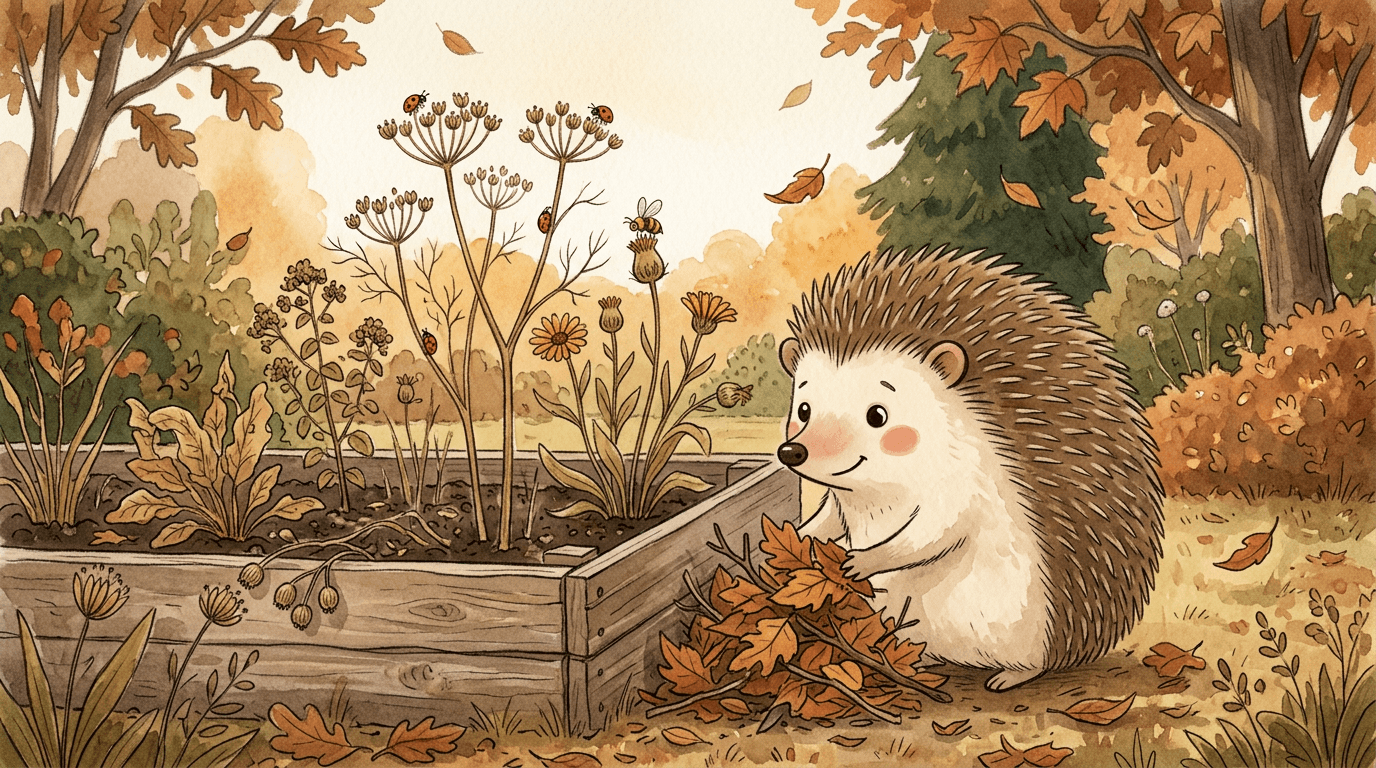
October 14, 2026 · 2 min read
Why I only tidy up half my raised bed in October
Mr Zimmermann cut his entire raised bed down to the ground in one afternoon — stalks, seed heads, leaves, all gone. I should have warned him beforehand: not everything, only half. Here's what should stay standing and what really needs to go.