April 18, 2026 · by Stachi · 5 min read
Plants that talk to you
Some plants suffer in silence and just die on you. Others start waving when something's off. Here are six varieties that are beginner-friendly because they tell you what they need.
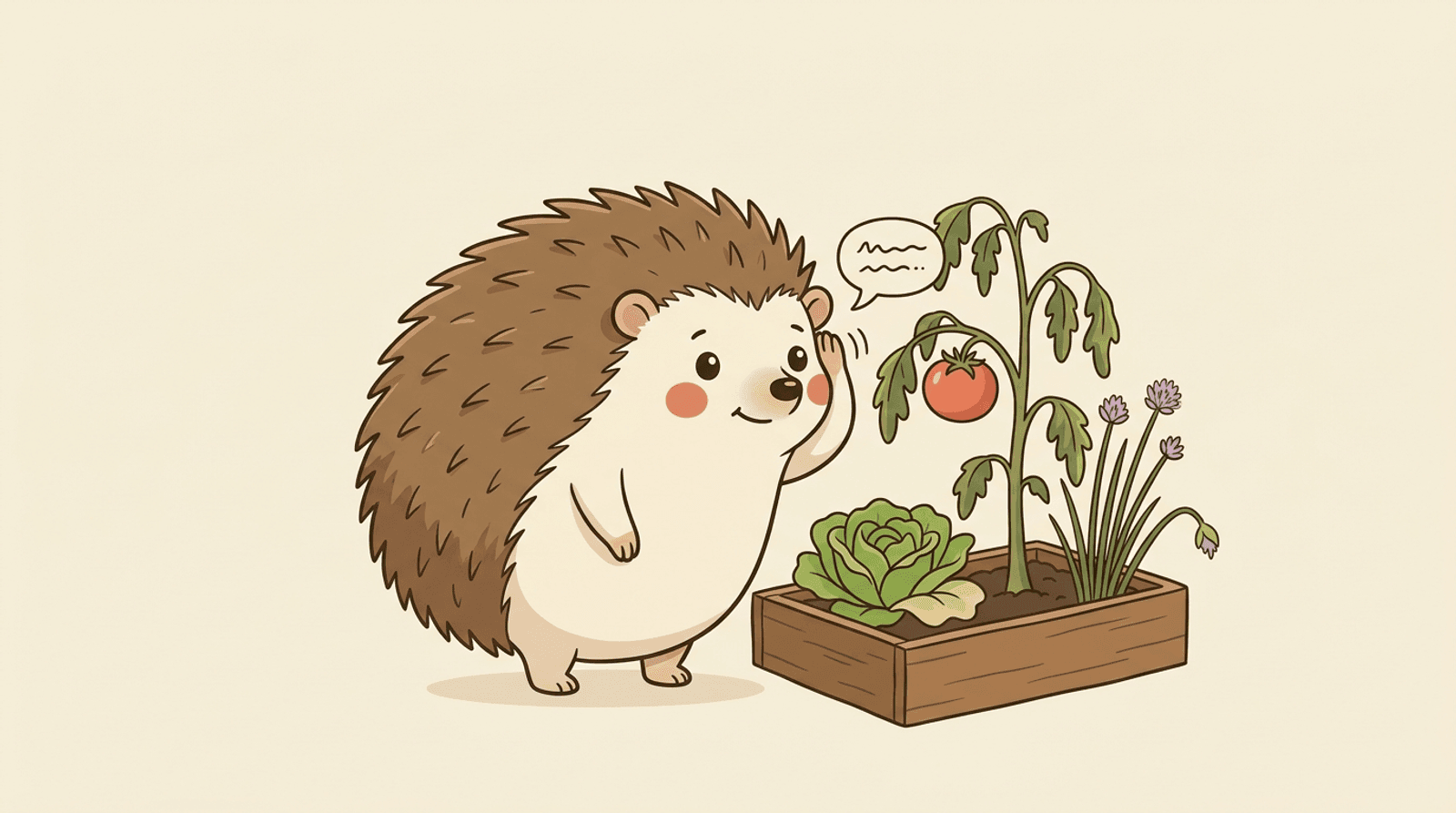
There are two kinds of beginner-friendly plants.
The first kind is robust. You can neglect them a little and they keep growing. I wrote about those in an earlier post.
The second kind is beginner-friendly for an entirely different reason: they communicate with you. When something's off, they make it visible. They droop, they yellow, they curl, they change colour. You can learn what they're saying and adjust before it's too late.
That's gold for a beginner. You'll make mistakes — everyone makes mistakes in their first year — but you'll catch them early enough to react.
Here are six.
1. Tomato — the queen of expressions
The tomato is a terrible poker player. She shows you everything:
- Drooping leaves at midday despite moist soil: heat stress. Goes back to normal as the sun moves on. Not an emergency.
- Drooping leaves in the evening with dry soil: thirst. Water immediately at the stem, not over the leaves.
- Yellow lower leaves: two possibilities. If only the bottom 1-2 leaves: normal, old leaves dying. If the whole plant turns pale: nitrogen deficit or over-fertilisation (paradoxical but true — both extremes show as yellow).
- Leaves curling upwards: drought stress over the past few days. Plant is waiting for water, trying to reduce evaporation.
- Black spots on leaf edges: late blight. Cut the affected leaves immediately, dispose in residual waste (NOT compost), watch the plant. More on that in a later post.
- Black, leathery patch at the bottom of the fruit (blossom end): blossom-end rot. Calcium deficiency or water swings. Fix: water more evenly, drop a handful of crushed eggshells into the bed.
You'll learn more from one tomato in one season than from all other plants combined. She makes it easy because she shows you.
2. Lettuce — instant water indicator
Lettuce is the fastest plant I know for water-status display.
- Curly, crisp leaves: all good, harvest now.
- Slightly limp, drooping leaves on a hot day: water shortage. A proper watering rescues it.
- Stem elongating, middle leaves shrinking: bittered out. Also called "bolting". From now on the lettuce tastes bitter, you have to harvest or compost it.
- Pale, light-green leaves: too little nitrogen. A bit of compost on top, done.
- Purple discoloration at leaf edges on cold nights: cold stress. Not an emergency, just a sign the season is winding down.
3. Basil — the sensitive friend
Basil is a bit of a mimosa among the herbs, which is exactly what makes it good for beginners — it shows its needs with drama.
- Limp, drooping leaves: thirst (about 90% of cases) or the root ball has dried out. A proper soak (pot in water for 10 minutes) saves it.
- Pale, small, top-clustered leaves: light shortage. Rare in a bed — more of a kitchen-pot thing.
- Black tips, limp plant: frost damage. Basil is Mediterranean, doesn't tolerate below 8°C. With ice-saint risk, bring inside or cover with fleece.
- Plant bolts (woody stem, flower spike): you haven't harvested enough. Basil needs constant pinching — pinch the tops every 2 weeks, otherwise it goes woody.
4. Courgette — the giant hangometer
Courgette leaves are so big you spot every stress reaction immediately. A stressed courgette looks like a drooping parasol.
- Midday droop in heat: normal, not necessarily a watering emergency if soil is still moist.
- Evening droop with dry soil: thirst, immediately.
- Yellow, soft fruit-set: pollination problem or magnesium deficiency. A handful of Epsom salts in the watering can for the next 2 weeks.
- Mealy white coating on leaves (summer): powdery mildew. A common beginner problem. Fix: water less often with wet leaves, check spacing, cut affected leaves.
5. Strawberry — the slow indicator
Strawberries are perennials that react slowly — which is an advantage: you have time to react.
- Two or three red leaves at the bottom early in the season: winter stress, normal. Pinch off, plant pushes through fresh.
- Plant getting smaller instead of bigger over weeks: root problem. Usually waterlogging — check the soil down low for a damp-musty smell.
- Pale berries instead of red: too little sun or harvested too early. Strawberries do NOT ripen after picking. If you've harvested pale ones: plant needs more light.
- Many small berries instead of fewer big ones: planted too close or potassium deficiency. A bit of wood ash on top helps.
6. Chives — the early-warning system for the whole bed
Chives are my favourite early-warning system for the entire bed.
- Stalks upright, dark green: all fine.
- Tips bending over (the first few cm from the top): water shortage starting. If YOU notice that and water immediately, every other plant in the bed is still salvageable. Chives are more sensitive than most.
- Yellow tips: nitrogen shortage or too-sunny midday spot in high summer. In the latter case: leave it, it passes.
- Stalks thin, pale, weak: bed too old. Chives should be divided every 3-4 years — dig up the root, halve, replant, done.
Why this matters so much
If you're a beginner, you'll make mistakes. Guaranteed. Too little water, too much water, wrong soil, planting too close, too cold too early, too much sun without water adjustment — every sin is on the table.
With communicative plants, you spot the mistake within hours to days. With silent plants, you spot it when they're already dead.
So in your first year, plant at least three of these six. You'll learn — without big losses — what plants need, when, and why.
What Erntezeit does for you
I can't peek into your bed, but I can give you the layout that puts the right teacher-plants in: a few tomatoes (very educational), a few lettuces (fast feedback), a bit of basil as a tomato companion, and chives between as the early-warning system.
Sowing dates, spacing, companion planting — all automatic. You just need to learn what your plants are trying to tell you.
Try the bed planner — we'll build the plan, you do the listening.
🦔 Stachi
More articles
October 26, 2026 · 3 min read
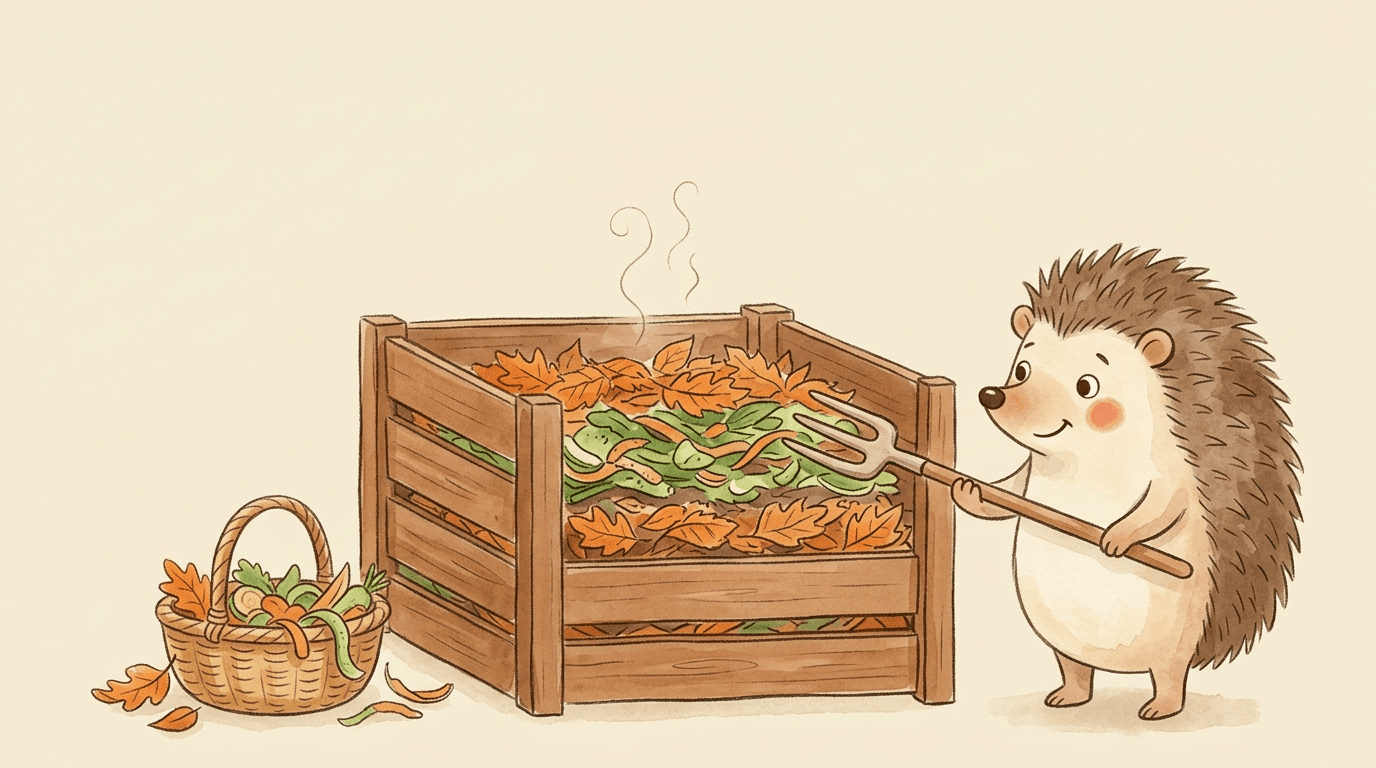
Starting an autumn compost pile: 3 parts leaves, 1 part kitchen scraps
Frau Schneider's compost pile just sat there all winter. No steam on cold mornings, no warmth, no breakdown — just a heap of dry leaves that hadn't changed a bit by March. The problem wasn't patience. It was the mix.
October 20, 2026 · 3 min read
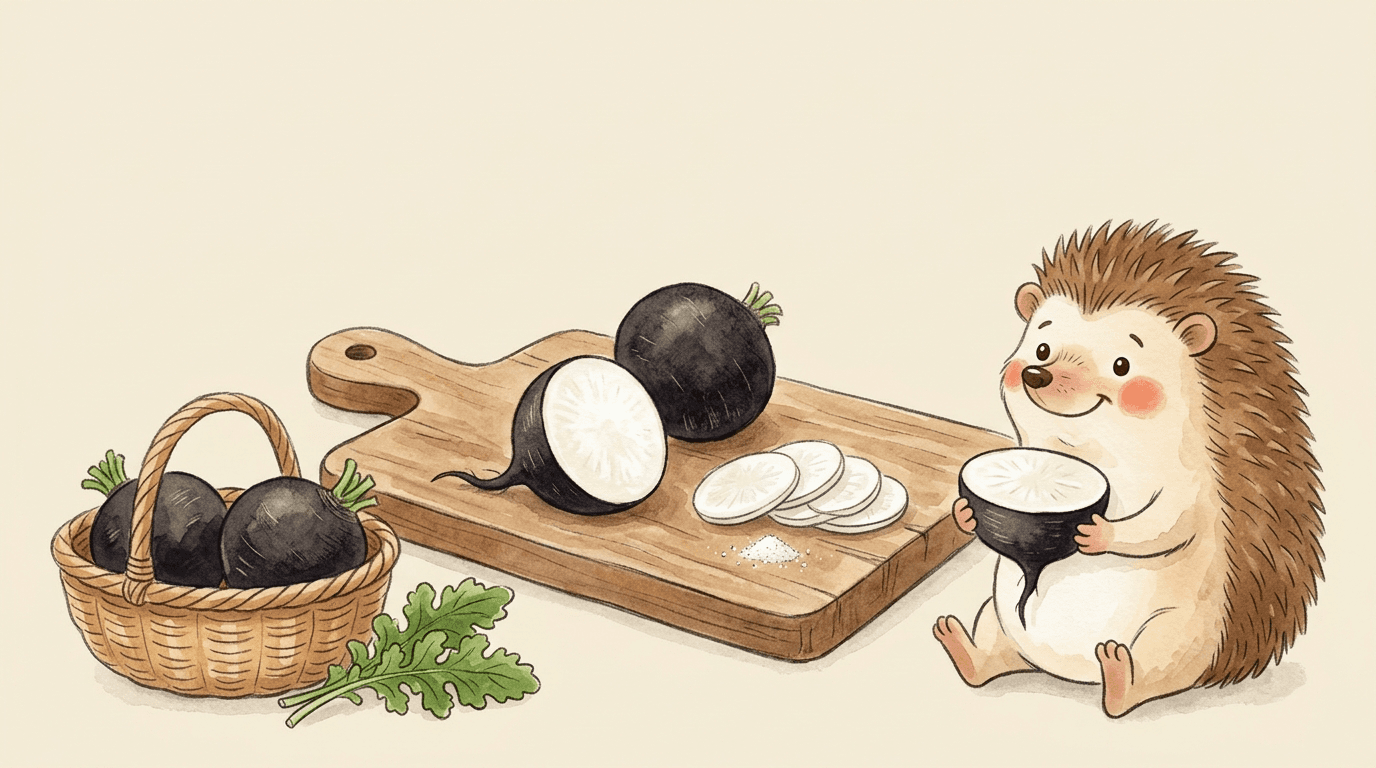
Black radish: why you should let it rest before you bite in
Last year Frau Schneider bit straight into one, unsalted, fresh out of the ground, and spent the next two minutes coughing instead of talking. The problem wasn't the radish. It was the timing.
October 14, 2026 · 2 min read
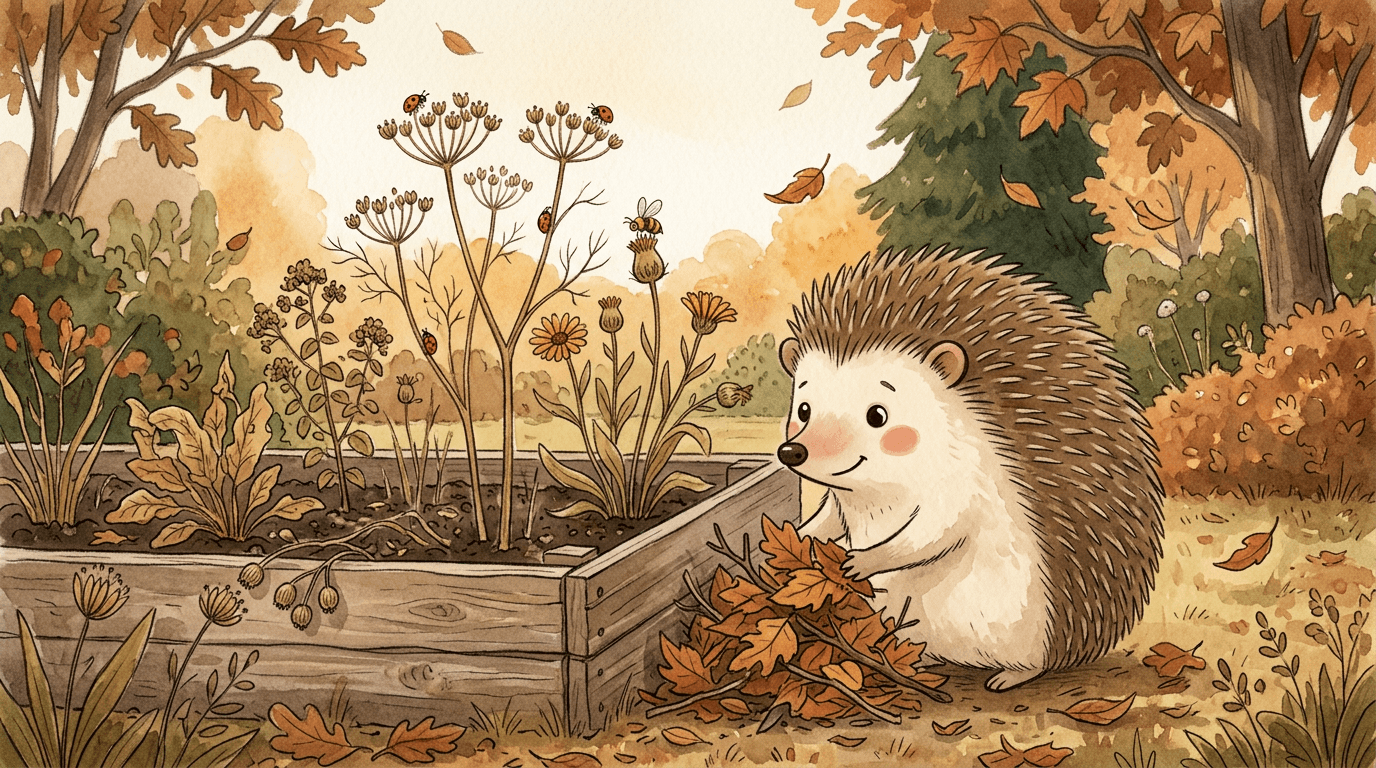
Why I only tidy up half my raised bed in October
Mr Zimmermann cut his entire raised bed down to the ground in one afternoon — stalks, seed heads, leaves, all gone. I should have warned him beforehand: not everything, only half. Here's what should stay standing and what really needs to go.