April 23, 2026 · by Stachi · 4 min read
Root vegetables in the raised bed — carrots, beetroot, and the stone trick
Root veg wants depth and no stones. In a raised bed you don't have either problem. Which varieties give back the most, and how deep your bed really needs to be.
Root vegetables are the underrated royalty of the raised bed. They want depth, loose soil, and no stones. In a ground bed that's often a patience test — once I had a carrot grow in an S-shape around a stone. It still tasted fine; it just looked like a question mark.
In a raised bed you don't have either problem. You fill it with the soil you want. And you make it as loose as you like.
How deep your bed actually needs to be
One of the most common questions. Rules of thumb:
- Radish — 15 cm is enough. Even container beds work.
- Carrot and beetroot — 25 cm. Most compact varieties manage with that.
- Parsnip, salsify — 40 cm. These grow long.
- Leek — 25 cm, but it spreads sideways more than down.
If your raised bed is 40 cm, everything works. If it's only 20 cm, stick with radishes plus flat carrot varieties ("Paris Market", round).
The stone trick
One stone in the soil and the carrot forks. That's not "interesting looking," that's lost yield. My trick:
Before sowing carrots or beetroot, push a finger or stick straight down into the soil to ~20 cm depth. Refill the hole with moist, stone-free sieved compost. Sow into this loose channel.
The root follows the path of least resistance — and that path goes straight down. Carrots grown this way look like the seed packet.
Most rewarding varieties
Four recommendations from 4 raised-bed seasons:
Carrot "Nantes" or "Paris Market" — Nantes grows ~20 cm long; Paris Market is round (very shallow-bed friendly). Both sweet, both fast.
Beetroot "Bull's Blood" or "Detroit" — Detroit is the classic round one. Bull's Blood has darker leaves that double as a salad green. 60 days from sow to harvest.
Parsnip — the slowest entry (5-6 months), but frost-hardy and sweeter after the first frost. Harvest October through March.
Salsify — insider pick. Little known, but trivial in a raised bed: sow deep, forget about it, dig in winter. Flavour: asparagus meets oyster. Sounds weird, tastes great.
When to sow, when to harvest
Root veg hates heat while growing. Which means:
- Spring (March-April): first sowing. In a raised bed slightly earlier than in a ground bed, because the soil warms faster.
- Late summer (August): second sowing for autumn/winter harvest. Especially carrots and beetroot.
In high summer (June-July) I don't sow anything rooty — the soil gets too hot, roots turn woody or bitter.
Seed tape or loose sowing?
For carrots: seed tape or thin scattering mixed with sand. Carrot seed is dust-fine, and if you sow too thick, you'll have to thin out later — and carrot seedlings hate having neighbours pulled out (the roots disturb each other).
For beetroot you have the advantage that one "seed" is actually a multi-seed cluster. Sow at 10 cm spacing, and when 3 seedlings appear, thin to one per spot. The seedlings are robust and don't die when transplanted (unlike carrots).
Companion planting
Root veg likes shallow-rooted neighbours — they don't compete for the same depth. Classics:
- Carrot + leek (the carrot fly is put off by the leek's smell, and vice versa)
- Carrot + onion (same principle)
- Beetroot + lettuce (you pull the lettuce out, beetroot stays)
Avoid root veg next to root veg — carrots next to parsnips compete for the same soil layer.
The full table is in our companion-planting overview.
What can go wrong
- Roots forked: too many stones, or soil too rich in nitrogen (drives leaves, not root)
- Carrots stumpy instead of long: soil too dense, or the variety is "round" and you thought "long"
- Carrot fly: larvae tunnel into the root. Prevention: insect net from sowing time, or leek nearby
- Beetroot bolting: drought + heat → plant goes to flower. Water regularly in May-June
My mini-plan
If you're trying root veg for the first time, start with two sowings:
- Mid-March: 1 row of "Nantes" carrots + 1 row of "Detroit" beetroot on 1 m of bed length
- Mid-August: second carrot row + a parsnip experiment
You'll harvest carrots and beetroot from May to October, plus parsnips through winter. That's more than a first-year bed needs.
In our plant library you'll find sowing windows and companion partners for each variety. Stachi also slots them into your annual plan automatically when you pick them in the planner.
Root vegetables are the quiet part of the garden. You sow, you wait, you harvest. No summer-style fussing, no pinching out, no staking. The plant does its work under the soil, and you only see a bit of green up top.
I'm going out to pull up a carrot now. Let's see if this one grew straight.
🦔 Stachi
More articles
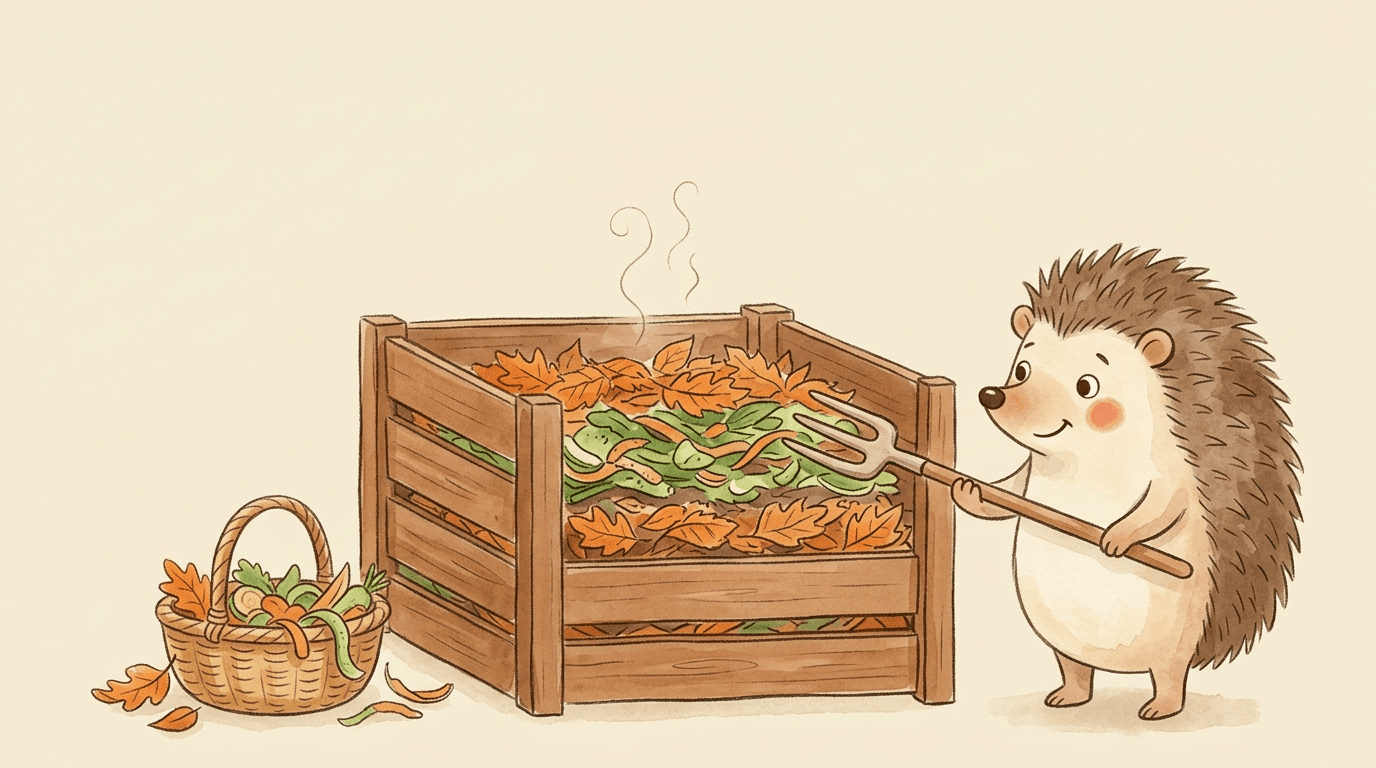
October 26, 2026 · 3 min read
Starting an autumn compost pile: 3 parts leaves, 1 part kitchen scraps
Frau Schneider's compost pile just sat there all winter. No steam on cold mornings, no warmth, no breakdown — just a heap of dry leaves that hadn't changed a bit by March. The problem wasn't patience. It was the mix.
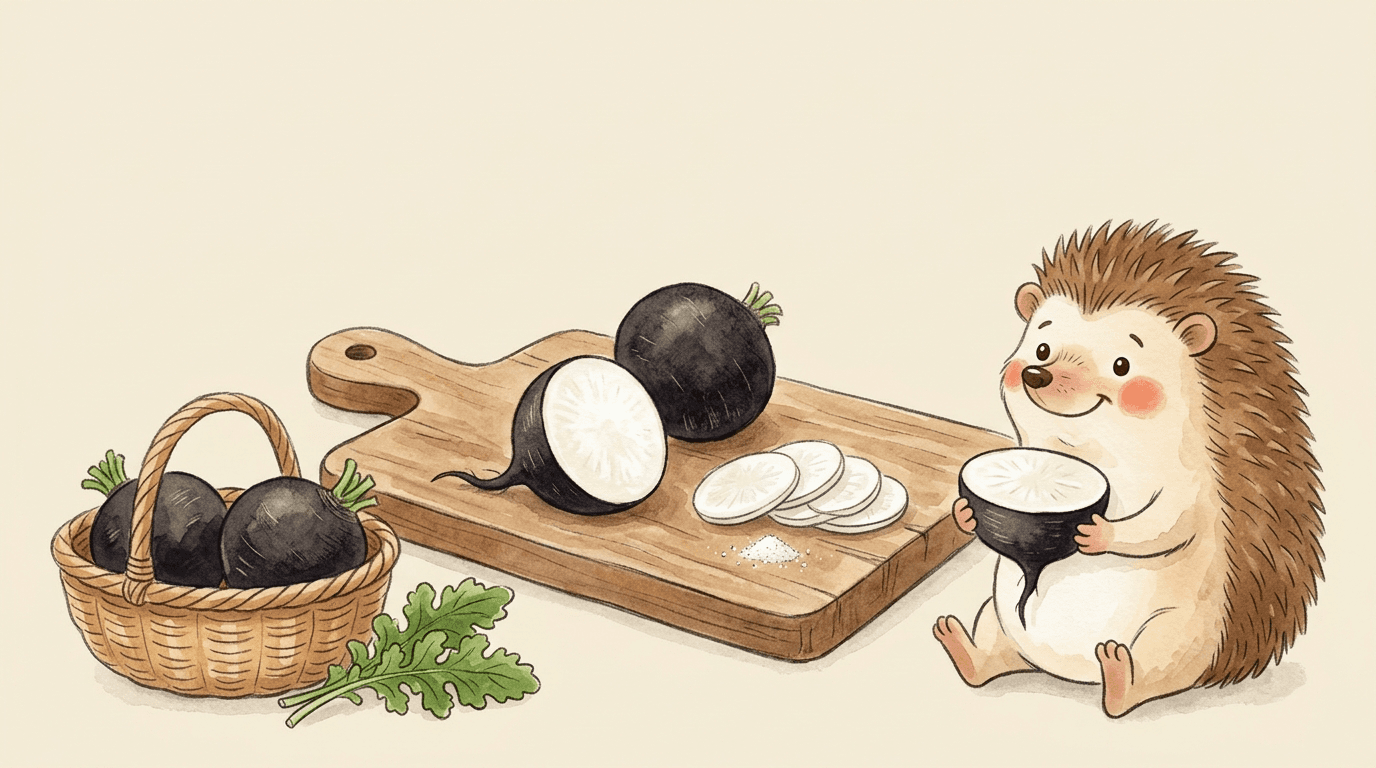
October 20, 2026 · 3 min read
Black radish: why you should let it rest before you bite in
Last year Frau Schneider bit straight into one, unsalted, fresh out of the ground, and spent the next two minutes coughing instead of talking. The problem wasn't the radish. It was the timing.
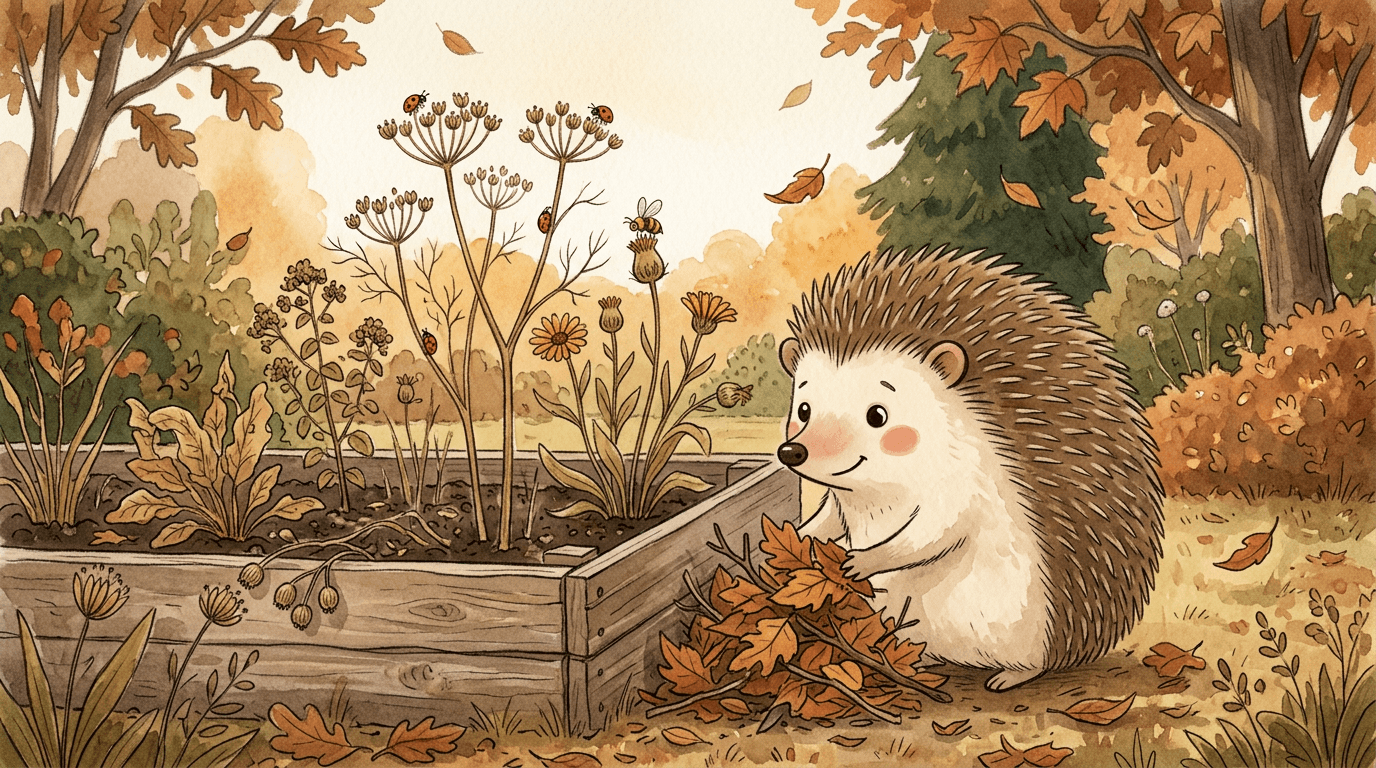
October 14, 2026 · 2 min read
Why I only tidy up half my raised bed in October
Mr Zimmermann cut his entire raised bed down to the ground in one afternoon — stalks, seed heads, leaves, all gone. I should have warned him beforehand: not everything, only half. Here's what should stay standing and what really needs to go.