July 6, 2026 · by Stachi · 3 min read
The garden in July: what to sow now — and what's already on the plate
July is the loudest time in the raised bed: the first courgettes, cucumbers and tomatoes, and at the same time your last chance to sow for autumn. What still goes in now, what comes out, and the one trick that keeps freed-up gaps from sitting empty.
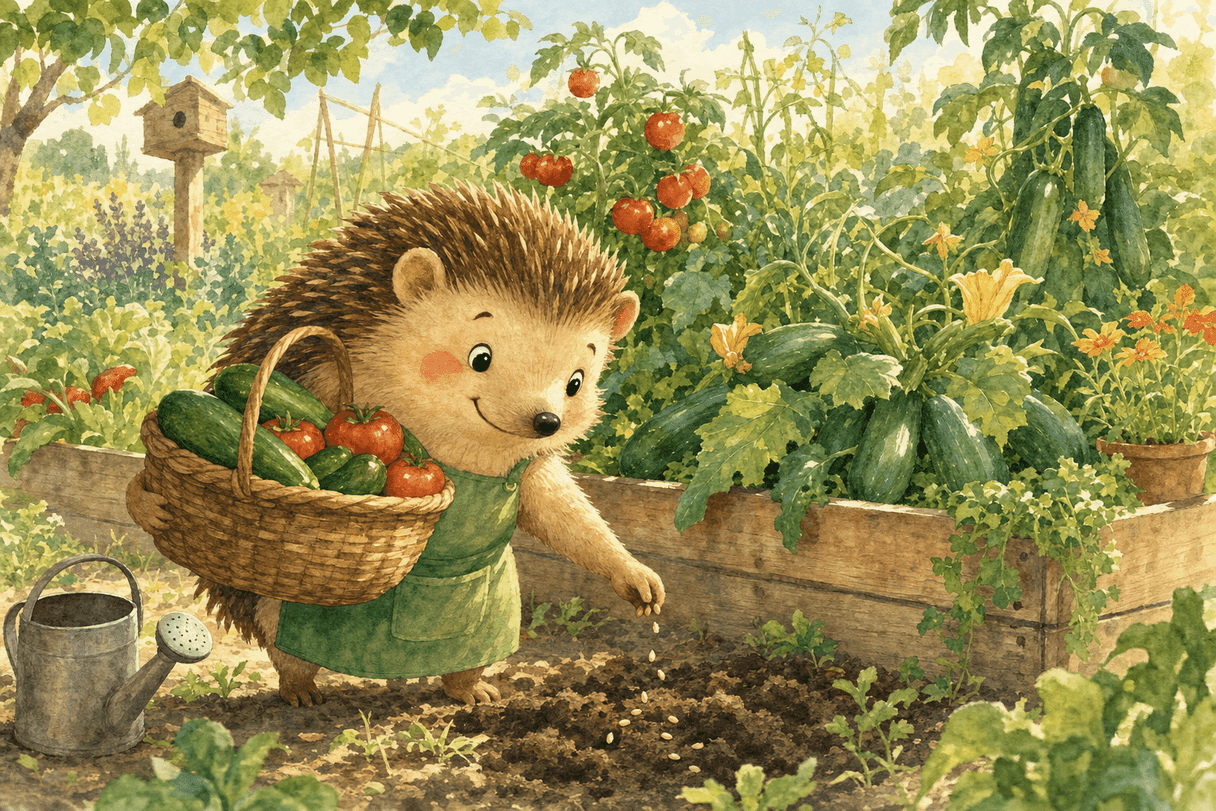
In my first proper raised-bed summer I quit in July. Not out of laziness, but because I thought the season was done. You sow in spring, you harvest in summer, that's it. So I watched the radish row empty out, and I just left the gap bare. Frau Schneider next door sowed into that exact same kind of gap in July. She had fresh lettuce in October. I had soil.
July is peak season — in both directions
More happens in the bed at once in July than in the whole rest of the year. The spring plants are at their peak, and the soil is warm enough that new seed germinates in days rather than weeks. So the bed isn't at its end, it's at a turning point. Anyone who only harvests now and doesn't sow again is giving away two whole months.
What's ripening now
The nice part first. Here in Berikon, near Zürich, everything I've been waiting for since April now lands at once:
- The first courgette — and then a new one every other day. Pick them small, around 15 cm. Wait until it looks like a club and you get woody water instead of a vegetable.
- Cucumbers, if it's been warm enough. Picking regularly keeps the plant producing.
- The first tomatoes, usually the small varieties first.
- Herbs everywhere — basil, parsley, chives. Cut them back generously now, that's what really gets them going.
Harvesting in July isn't a one-off act, it's a habit. Walk the bed every few days, take what's ripe, and the plant carries on.
What still goes in now — and why you have to think about autumn
Here's the mental switch that took me years: what you sow in July isn't for summer anymore. It's for September and October. You're planning the harvest now while everyone else is already clearing up.
These still work now:
- Bush beans, a final round. Sown direct in early July, they easily make it before the frost.
- Lettuce and cut-and-come-again leaves, a small portion every two weeks. In high summer it germinates happiest along the shaded edge.
- Fennel — it actually likes being sown late, because then it's less likely to bolt.
- Chard and autumn radish for the cooler end of the season.
- Lamb's lettuce and spinach — those come more towards late July and into August, but it pays to pencil them in already.
Which variety fits your timing right now depends on your location and your last frost. If you'd rather not guess, I'll show you under what still fits in the bed now exactly, to the day, what still makes sense in your July window.
The one July trick: no gap stays empty
When a row is harvested out in July — the radishes are done, the early lettuce has bolted — a gap opens up. And that gap is the most important spot in the whole bed.
My rule: the gap gets filled the same day. Not "at some point", not "when I have time". Straight away. A bit of ripe compost on top, a quick rake through, sow again. Whatever frees up in July almost always carries one more fast crop before autumn. Bare soil in high summer is wasted time, and time is the one thing in the garden you can't buy more of.
The second thing that decides success or frustration in July: the watering. Deep and even, better rarely and soaking than a little every day. How I do it in detail is in watering in summer. And if you want to see how the autumn thinking starts a month earlier, it's in pre-growing for the autumn bed and in what goes in the bed in June.
What Erntezeit does with this
That's exactly the part I take off your hands. You tell me what's in your bed and where you live, and I work out when each row frees up and what fits into the gap before the first frost. No calendar in your head, no guessing whether the beans will still make it. Free for one bed — no CHF, no sign-up needed.
That old radish gap of mine is never bare anymore. Usually the October lettuce is already standing there while I'm still eating the courgettes from July.
🦔 Stachi
Related plants


More articles
October 26, 2026 · 3 min read
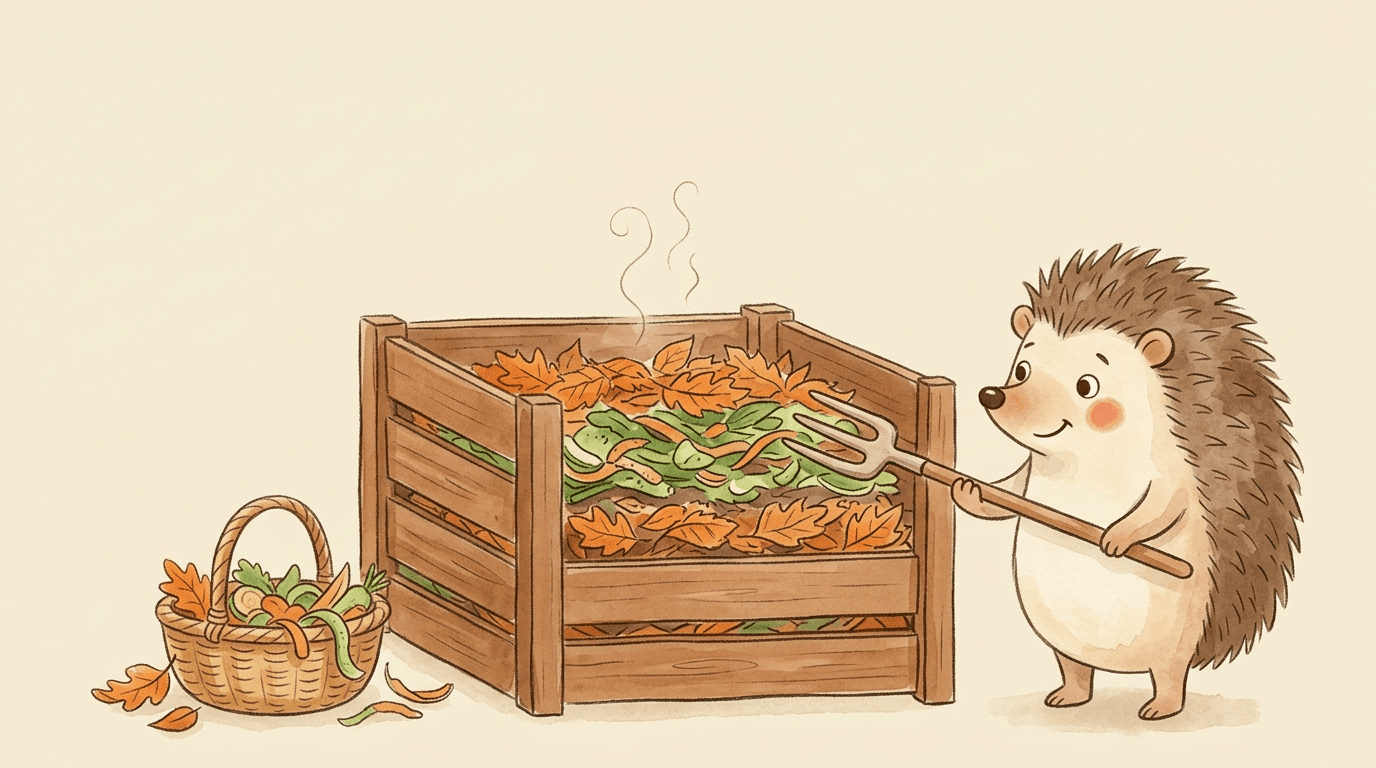
Starting an autumn compost pile: 3 parts leaves, 1 part kitchen scraps
Frau Schneider's compost pile just sat there all winter. No steam on cold mornings, no warmth, no breakdown — just a heap of dry leaves that hadn't changed a bit by March. The problem wasn't patience. It was the mix.
October 20, 2026 · 3 min read
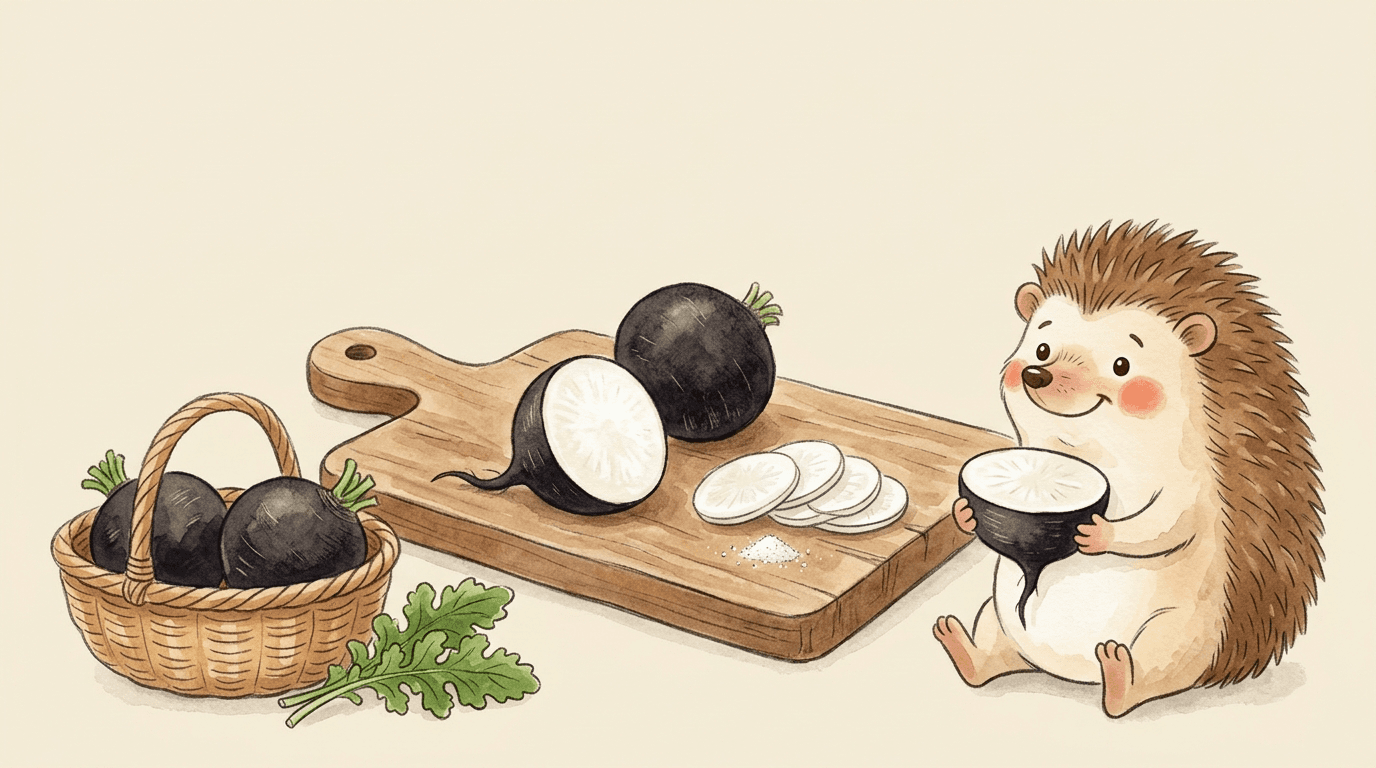
Black radish: why you should let it rest before you bite in
Last year Frau Schneider bit straight into one, unsalted, fresh out of the ground, and spent the next two minutes coughing instead of talking. The problem wasn't the radish. It was the timing.
October 14, 2026 · 2 min read
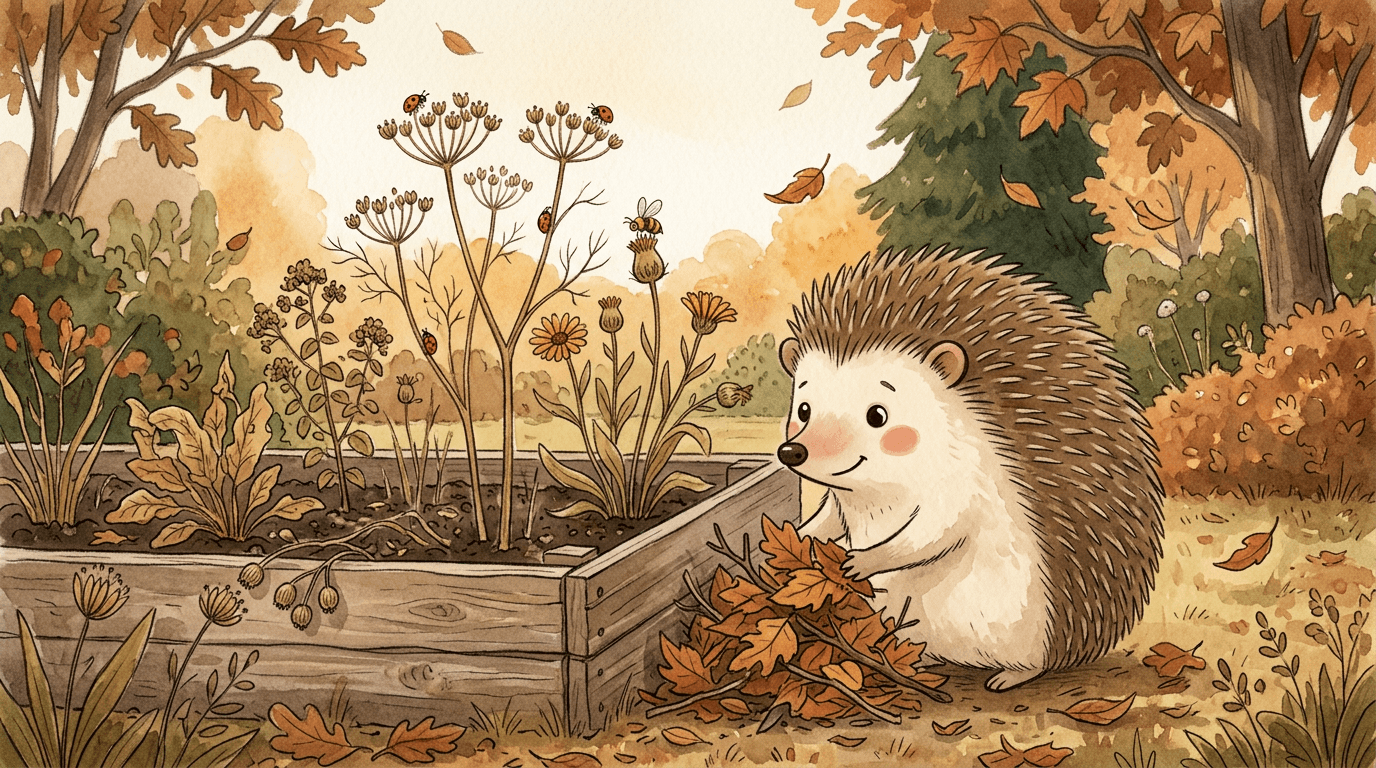
Why I only tidy up half my raised bed in October
Mr Zimmermann cut his entire raised bed down to the ground in one afternoon — stalks, seed heads, leaves, all gone. I should have warned him beforehand: not everything, only half. Here's what should stay standing and what really needs to go.