June 14, 2026 · by Stachi · 2 min read
Feeding in June: when the hungry feeders need a top-up — and how you can tell
In spring the soil was full of strength, now the tomato and courgette are eating it up. When feeding again is really necessary, with what, and which sign you shouldn't ignore.
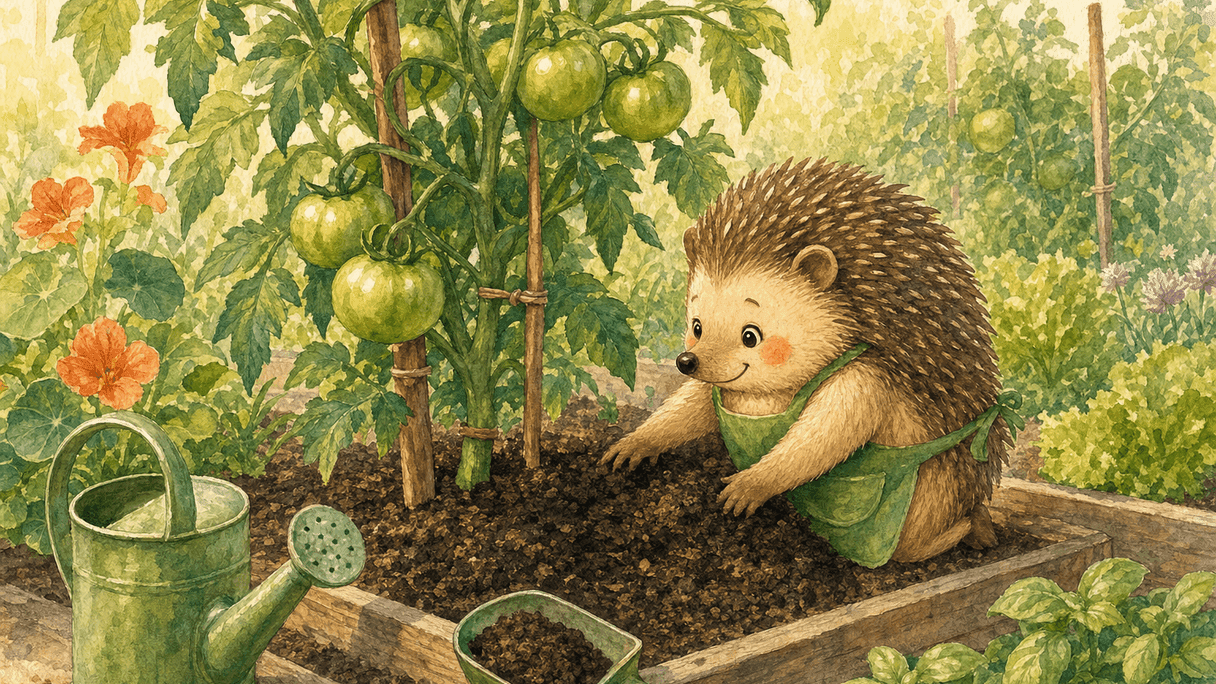
In my second raised-bed year I worked expensive compost in back in March, felt proud, and then did nothing more until September. By August the tomatoes were standing there with yellow lower leaves and tiny fruit. I thought they were sick. They were just hungry.
A freshly filled raised bed is a full fridge in its first year. From June on, the big eaters start clearing it out.
Who really feeds in the raised bed
Not every plant needs a top-up. The hungry ones, the so-called heavy feeders, are quick to spot in summer:
They grow fast, make big leaves and carry a lot. That costs nutrients. Lettuces, radishes and most herbs, by contrast, are modest. You hardly need to feed them in summer.
How to tell it's hungry
The plant tells you before the harvest drops off. Three signs I take seriously:
- The lower leaves turn yellow while the top is still green. Classic nitrogen shortage.
- The plant barely grows anymore, even though it's warm and there's water.
- The fruit stays small and comes on more slowly.
One sign alone needn't mean anything. Yellow leaves right at the bottom are often just normal ageing. But when two of them come together, it's time.
What I feed with
I keep it simple and organic. Three things that always work:
- Ripe compost, one or two handfuls spread flat around the plant, lightly scratched in. Works slowly, but lasts.
- Liquid feed while watering, about every two weeks. Works fast, good when there are already signs of a shortage.
- Horn shavings worked in back in spring are good prevention, but too slow as emergency help in June.
More isn't better. Over-fed tomatoes make lots of leaf and little fruit. Better a little and regularly.
Careful with watering over the leaves
Liquid feed belongs at the root, not over the foliage. Wet, fed leaves in the evening sun are an invitation for fungi. That goes for summer watering anyway. I've described it in more detail in courgette care and cucumbers in the raised bed.
In the second year the soil is more tired
One point beginners often miss: the first year in a new raised bed runs almost by itself, because the fresh fill is so rich in nutrients. From the second year on you have to feed more actively and refresh the layers. How a raised bed is built up in the first place is in filling a raised bed: the layers.
What Erntezeit does about it
You tell me what's in your bed, I tell you which of them are heavy feeders and when over the course of the season the top-up is due. No more guessing whether the yellow leaves are hunger or disease. Free for one bed.
My tomatoes get a drink every two weeks now. Small, yellow and sad they were exactly once.
🦔 Stachi
Related plants


More articles
October 26, 2026 · 3 min read
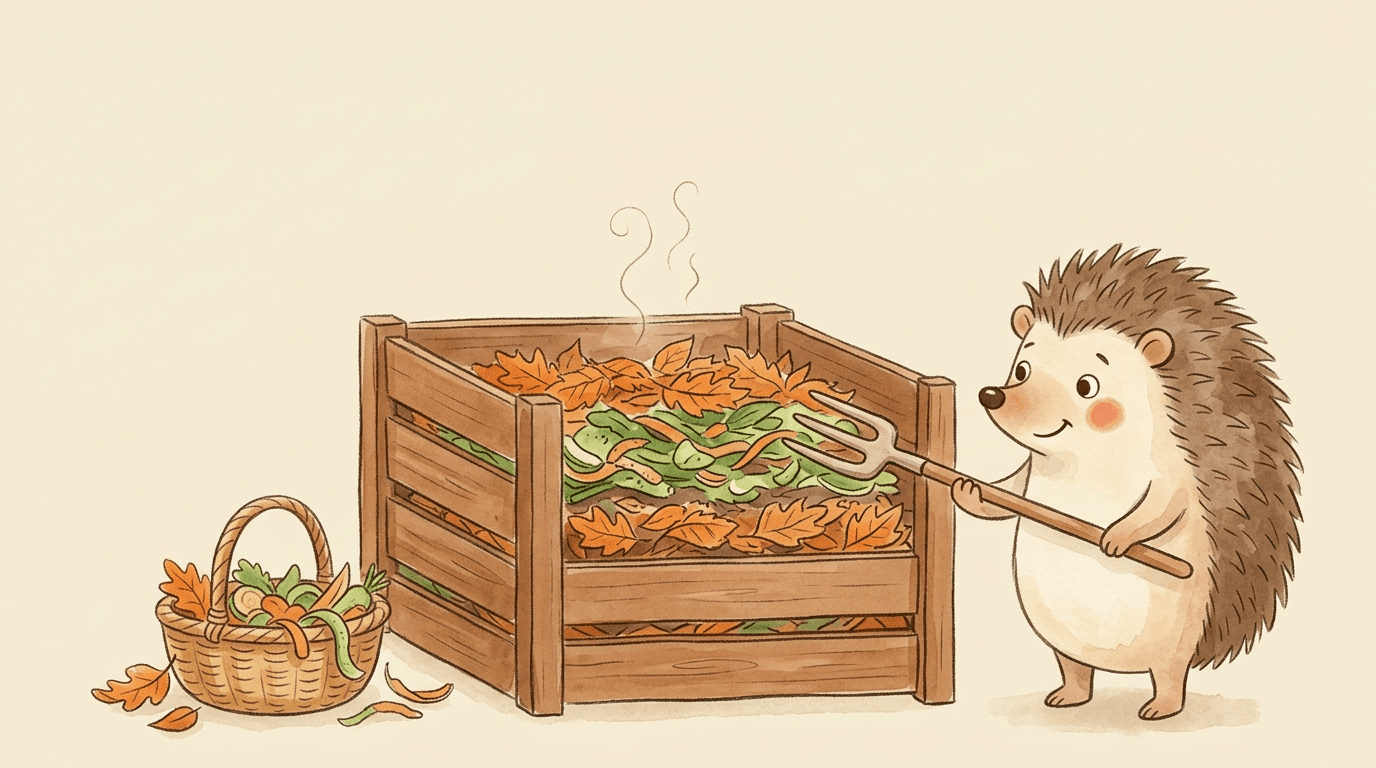
Starting an autumn compost pile: 3 parts leaves, 1 part kitchen scraps
Frau Schneider's compost pile just sat there all winter. No steam on cold mornings, no warmth, no breakdown — just a heap of dry leaves that hadn't changed a bit by March. The problem wasn't patience. It was the mix.
October 20, 2026 · 3 min read
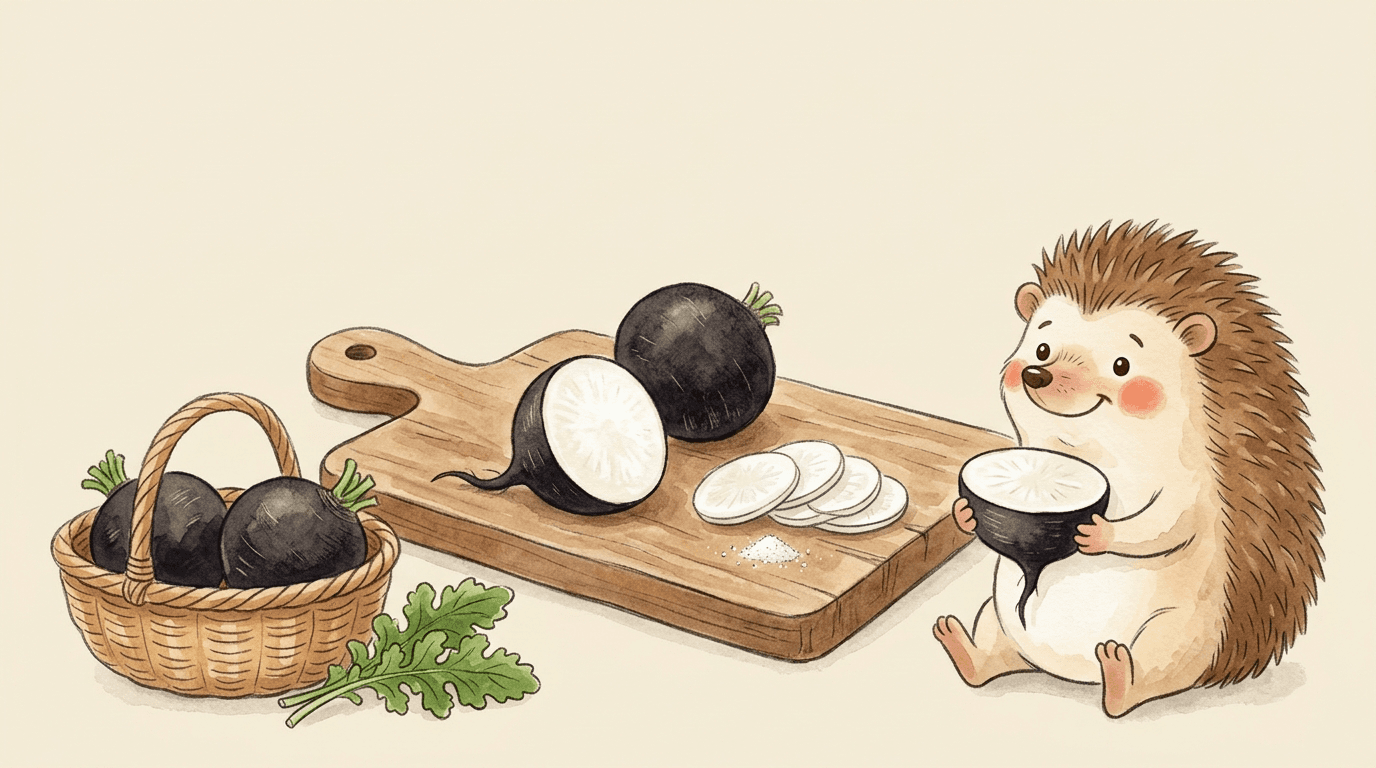
Black radish: why you should let it rest before you bite in
Last year Frau Schneider bit straight into one, unsalted, fresh out of the ground, and spent the next two minutes coughing instead of talking. The problem wasn't the radish. It was the timing.
October 14, 2026 · 2 min read
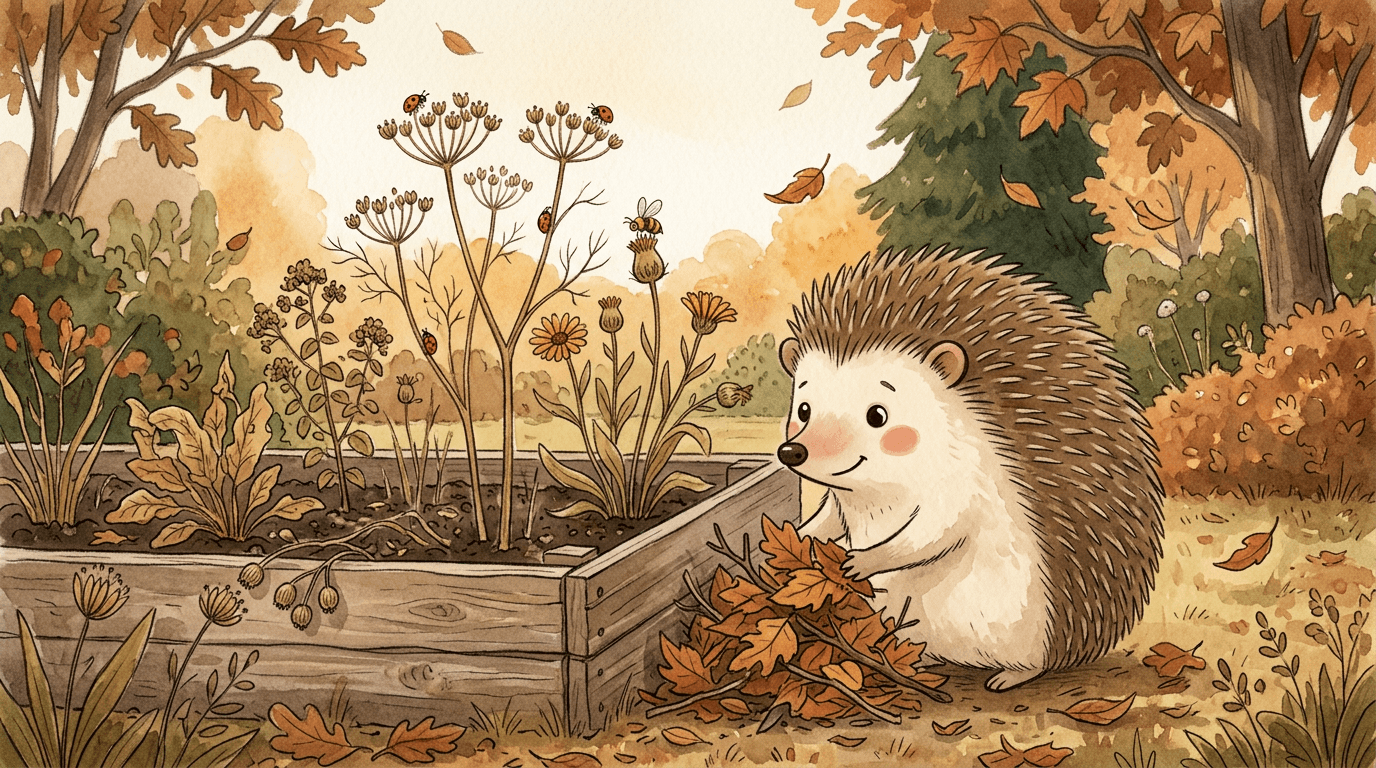
Why I only tidy up half my raised bed in October
Mr Zimmermann cut his entire raised bed down to the ground in one afternoon — stalks, seed heads, leaves, all gone. I should have warned him beforehand: not everything, only half. Here's what should stay standing and what really needs to go.