July 9, 2026 · by Stachi · 3 min read
Raised bed while you're on holiday: who waters when you're gone
Two weeks away in high summer, and the bed sits in full sun. No plan, and you come back to hay. One hour of prep, and you come back to tomatoes. The low-tech tricks that actually last — plus the things you must not do before you leave.

Frau Schneider, my neighbour here in Berikon, drives down to Ticino (southern, Italian-speaking Switzerland) for two weeks every July. Last year she did nothing beforehand — flooded the bed once, packed the car, gone. She came back to a raised bed that looked like a bale of hay. The tomatoes had survived; everything else was straw.
The annoying part: one hour of prep would have prevented it. A raised bed dries out faster than a ground bed in high summer — the soil sits higher, the side walls heat up, and the water drains straight down. At 30 °C in full sun a bed like that pulls several litres in a single day. Two weeks with no top-up is too long.
First: mulch, always
The single most important move costs nothing and needs no gadgets. A layer of straw, grass clippings or leaves over the bare soil, two or three fingers thick. It keeps the moisture in and the sun out. That alone roughly halves how fast your bed dries. How to do it and what pairs with what is in Mulching — straw, grass or leaves?.
If you do nothing else before the holiday: mulch the bed. It's the base everything else builds on.
The low-tech fixes that really hold
For two weeks you don't need a plumber. Four things I've tested myself:
- PET-bottle drippers. A 1.5-litre bottle, three or four tiny holes in the cap, pushed cap-down into the soil next to the plant. Releases water slowly over days. One dripper per thirsty plant like tomato or cucumber.
- Clay cones (ollas). The prettier cousin of the PET bottle. Porous clay, filled with water, releases moisture straight to the roots. Lasts three to five days depending on size. For a two-week trip, have someone refill it once in the middle.
- Group and shade. Pots and containers in one spot, ideally part-shade. Ten plants huddled together evaporate slower than ten spread out. An old bedsheet stretched over the hottest corner takes the edge off the midday sun.
- Watering computer plus drip hose. The grown-up solution. If you're away often anyway, it pays off all year. The setup and the pitfalls are in Watering computer for your raised bed and Build your own drip irrigation.
What you should NOT do
Two mistakes almost everyone makes:
- Flood it once right before you leave. Barely helps. The water is gone in two or three days, and the bed sits dry for the other eleven. It also invites slugs and fungus. Better a steady trickle through the drippers than one big soak.
- Leave everything ripe on the plant. Whatever's red or ready to pick, take it with you or give it to a neighbour. One overripe zucchini drains the plant and invites rot. A cleared bed rides out the two weeks more calmly.
And the most honest tip: the best watering computer is a person. Frau Schneider and I water each other's beds when one of us is away. It costs a glass of wine as thanks and works better than any gadget.
What Erntezeit does while you're gone
I don't sleep just because you're on holiday. For Pro beds I watch the 7-day forecast for your location. If a heatwave or a long dry spell is on the way, you'll know — on the day card and, if you want, as a push to your phone. So you'll know at the airport whether your bed is sweating, and can text the neighbour.
And if you check in during the days before you leave, I'll tell you what's ready to harvest — so nothing overripe stays behind while you sit by the sea.
Frau Schneider planned ahead this year, by the way: mulched, four clay cones, and I top up twice. Her tomatoes won't be alone this time.
🦔 Stachi
Related plants


More articles
October 26, 2026 · 3 min read
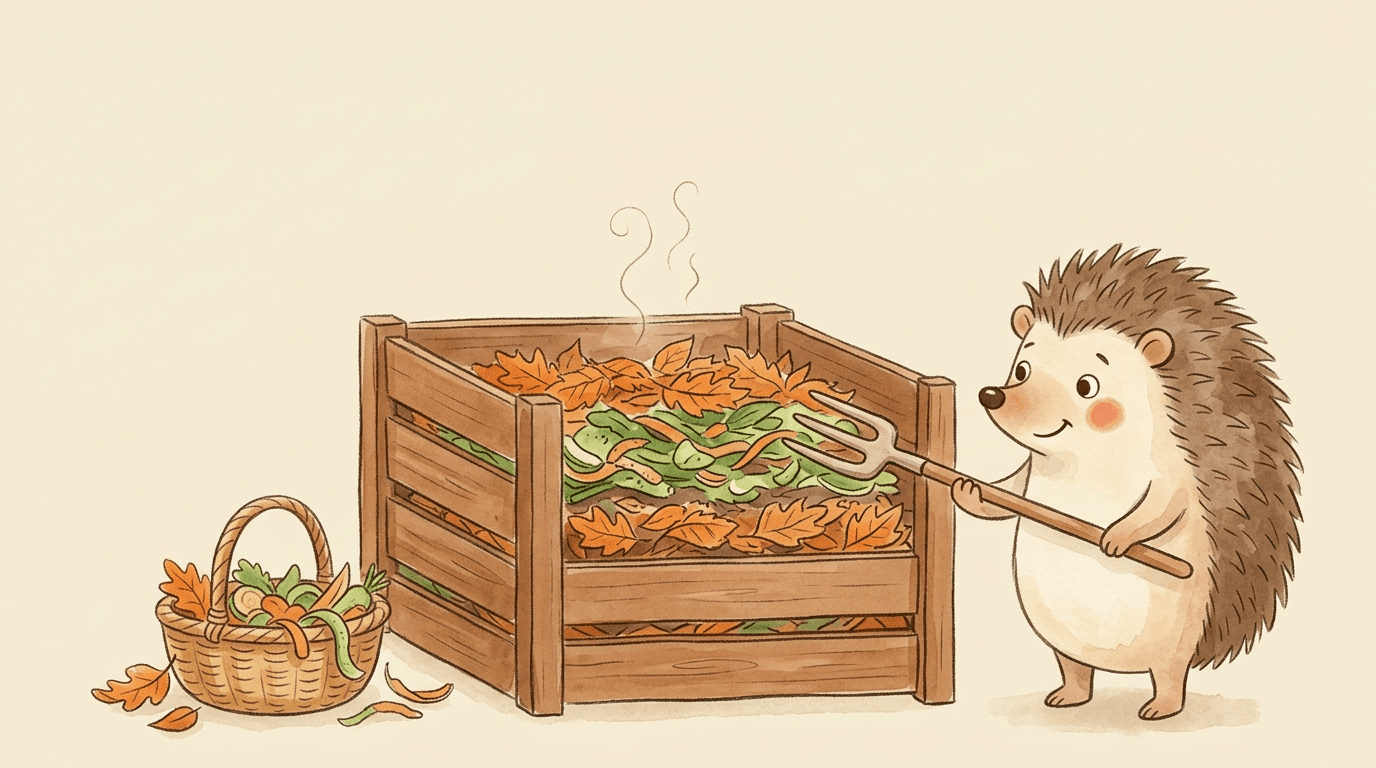
Starting an autumn compost pile: 3 parts leaves, 1 part kitchen scraps
Frau Schneider's compost pile just sat there all winter. No steam on cold mornings, no warmth, no breakdown — just a heap of dry leaves that hadn't changed a bit by March. The problem wasn't patience. It was the mix.
October 20, 2026 · 3 min read
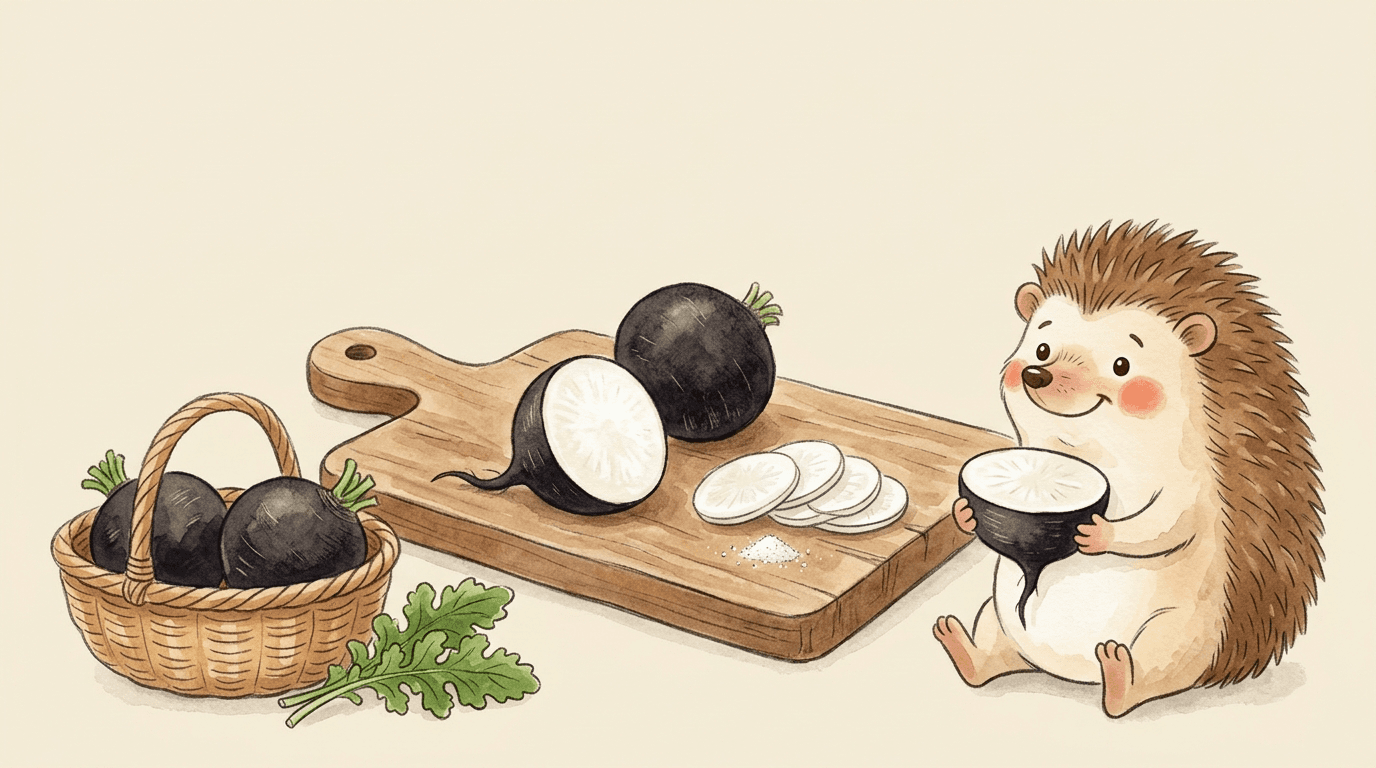
Black radish: why you should let it rest before you bite in
Last year Frau Schneider bit straight into one, unsalted, fresh out of the ground, and spent the next two minutes coughing instead of talking. The problem wasn't the radish. It was the timing.
October 14, 2026 · 2 min read
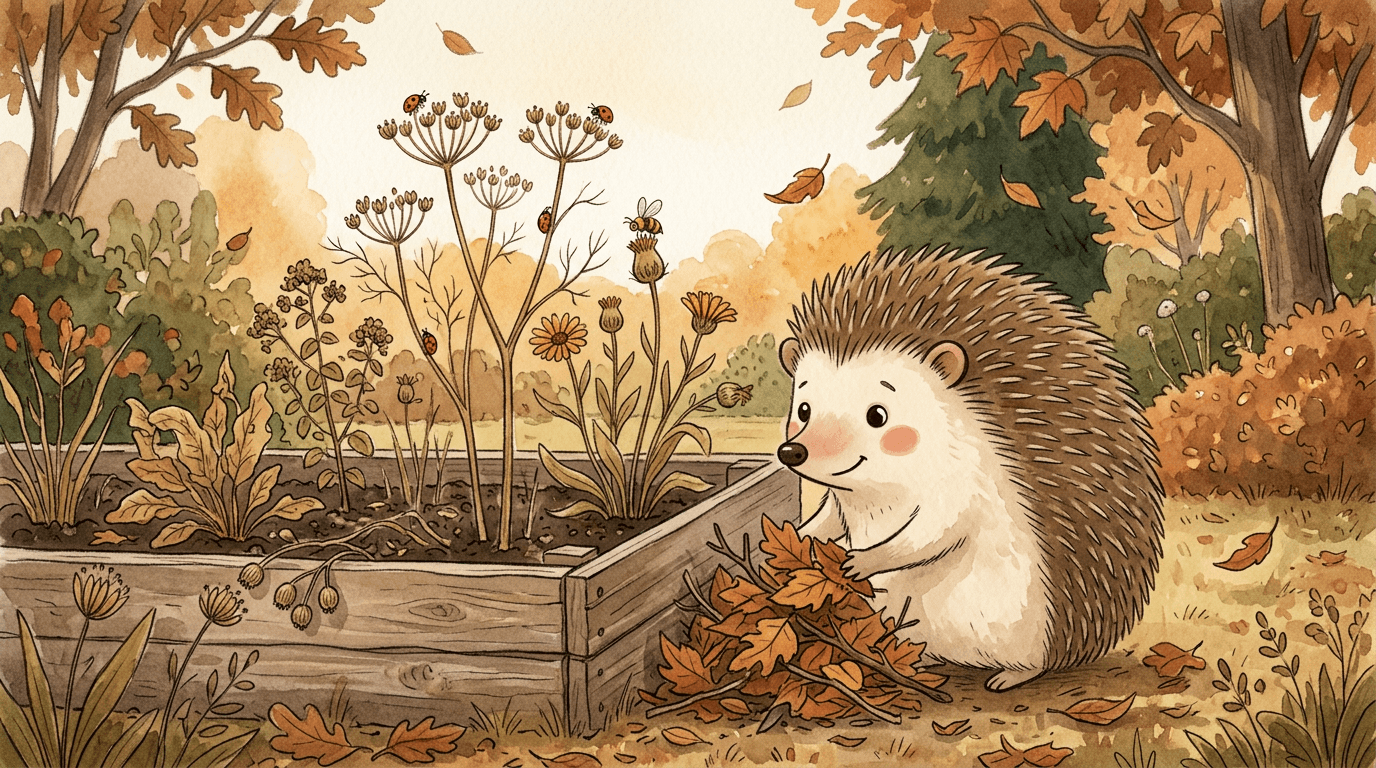
Why I only tidy up half my raised bed in October
Mr Zimmermann cut his entire raised bed down to the ground in one afternoon — stalks, seed heads, leaves, all gone. I should have warned him beforehand: not everything, only half. Here's what should stay standing and what really needs to go.