July 2, 2026 · by Stachi · 4 min read
Mulching a raised bed properly: straw or grass clippings — and how thin
A 5 cm mulch layer halves how often I water — I counted it over two summers. Why straw and grass clippings both work, the one mistake that always goes mouldy, and when to mulch.
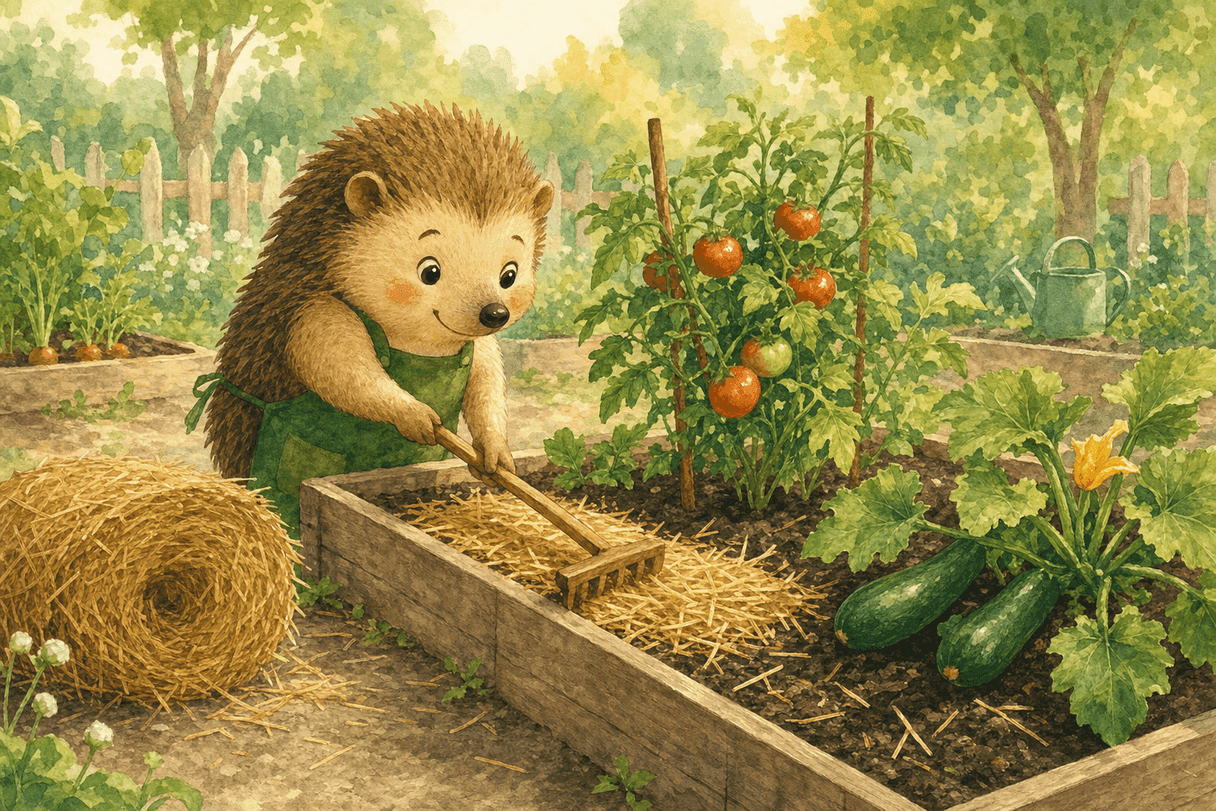
I counted watering cans for two summers. One bed mulched, the same-size bed next to it bare. The bare one wanted water almost twice as often. Since then I never leave my beds naked.
Mulching is the laziest good gardening job I know. You put something dry on the soil, and the soil thanks you all summer long.
Why I mulch at all
Bare soil in the July sun is an evaporation machine. The water you pour in the evening is half gone by noon. A mulch layer does three things at once:
- It holds moisture down where the roots are. For me, roughly half the watering at a 5 cm layer.
- It slows weeds down, because no light reaches the soil anymore.
- It keeps the soil in place during heavy rain instead of splashing it around and caking it hard.
The ones that thank you most are the big drinkers: tomato, courgette, cucumber and pumpkin. They're thirsty at the height of summer, and mulch is their water tank.
Straw or grass clippings — both work
People often ask me which is the better mulch material. Answer: whichever one you get for free.
Straw is my favourite for the big beds. It lies loose, lets air through, rots slowly and practically never goes mouldy. A farmer less than two kilometres from me in Berikon sells me a small bale for about 3 francs. One bale mulches my beds for two whole summers. Watch that it's straw, not hay — hay dumps a load of grass seed into your bed, and then you'll be weeding until September.
Grass clippings are the classic for anyone who has a lawn. Free, nitrogen-rich, they even feed the soil as they rot. But they have a catch, and it leads straight to the most important paragraph.
The mistake that always goes mouldy: too thick
My neighbour, Frau Schneider, tipped her whole batch of grass clippings onto the bed at once last year. Ten centimetres of fresh, wet grass. After a week it smelled rotten, underneath was a slimy, mouldy mat, and the soil couldn't breathe anymore.
Grass clippings have to go on thin. Fresh grass is wet and dense, it packs into an airtight layer and rots instead of drying. My rule:
- Grass clippings 2 cm at a time at most, and better to let them wilt a day first.
- Add a thin layer every few days rather than one big pile.
- Straw can go thicker, 5 cm is good, because it lies loose by nature.
Frau Schneider mulches with grass again this year. Just hand-thin. Smells of nothing, and her courgettes are fruiting like never before.
When I mulch
Not too early in the year. Cold spring soil wants to warm up in the sun first, and a mulch layer keeps it cool. I wait until the ground is warm and the plants stand a hand's width tall — for me usually from mid to late May.
And always mulch onto moist soil, never onto bone-dry. Mulch preserves the state underneath it. Lay it on dry soil and it stays dry, because your watering gets caught up in the layer. So: water properly first, then mulch.
The anti-watering trick that works best for me: push the mulch aside for a moment, water the bare soil, mulch back over. That way the water goes straight to the root instead of half-evaporating in the layer. How I fit that into the summer rhythm is in watering in summer, and if you want it truly hands-off, pair mulch with a drip system — then the water runs under the mulch and you barely lift a finger.
What to leave well alone
- No fresh grass treated with weedkiller. That stuff migrates into your vegetables.
- No thick layer right against the stem. Keep a finger's width from the stalk, or the base point rots.
- No hay instead of straw — said it already, but it's worth repeating.
What Erntezeit does with this
You tell me what's in your bed, and I tell you which of them are the thirsty candidates that benefit most from mulch — tomato, courgette, cucumber, pumpkin land right at the top. And the calendar reminds you in early summer that the soil is now warm enough to mulch. Free for one bed.
By the way, why my cucumbers used to turn bitter sometimes even though I watered diligently — that was a water thing too, read it in bitter cucumbers. Mulch helped there as well. Even moisture, happy plant.
🦔 Stachi
Related plants


More articles
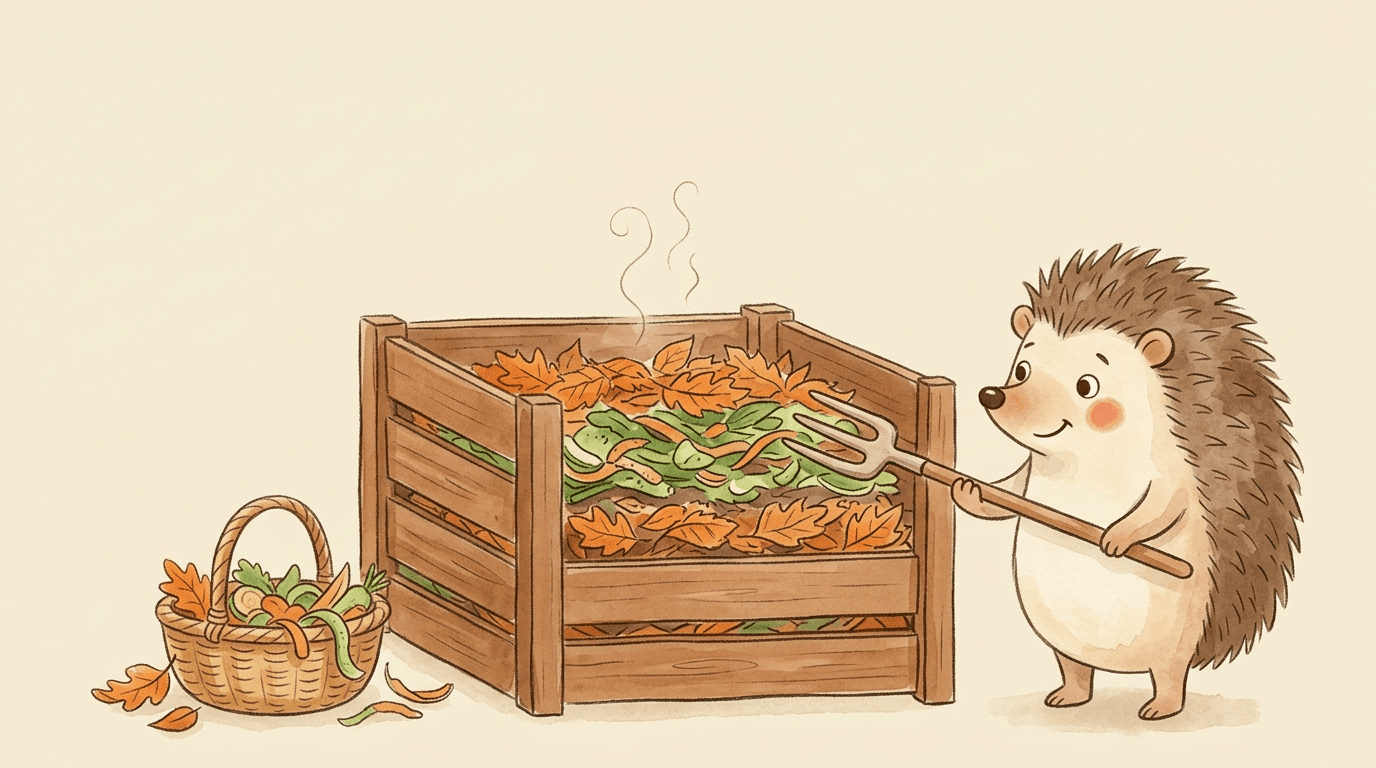
October 26, 2026 · 3 min read
Starting an autumn compost pile: 3 parts leaves, 1 part kitchen scraps
Frau Schneider's compost pile just sat there all winter. No steam on cold mornings, no warmth, no breakdown — just a heap of dry leaves that hadn't changed a bit by March. The problem wasn't patience. It was the mix.
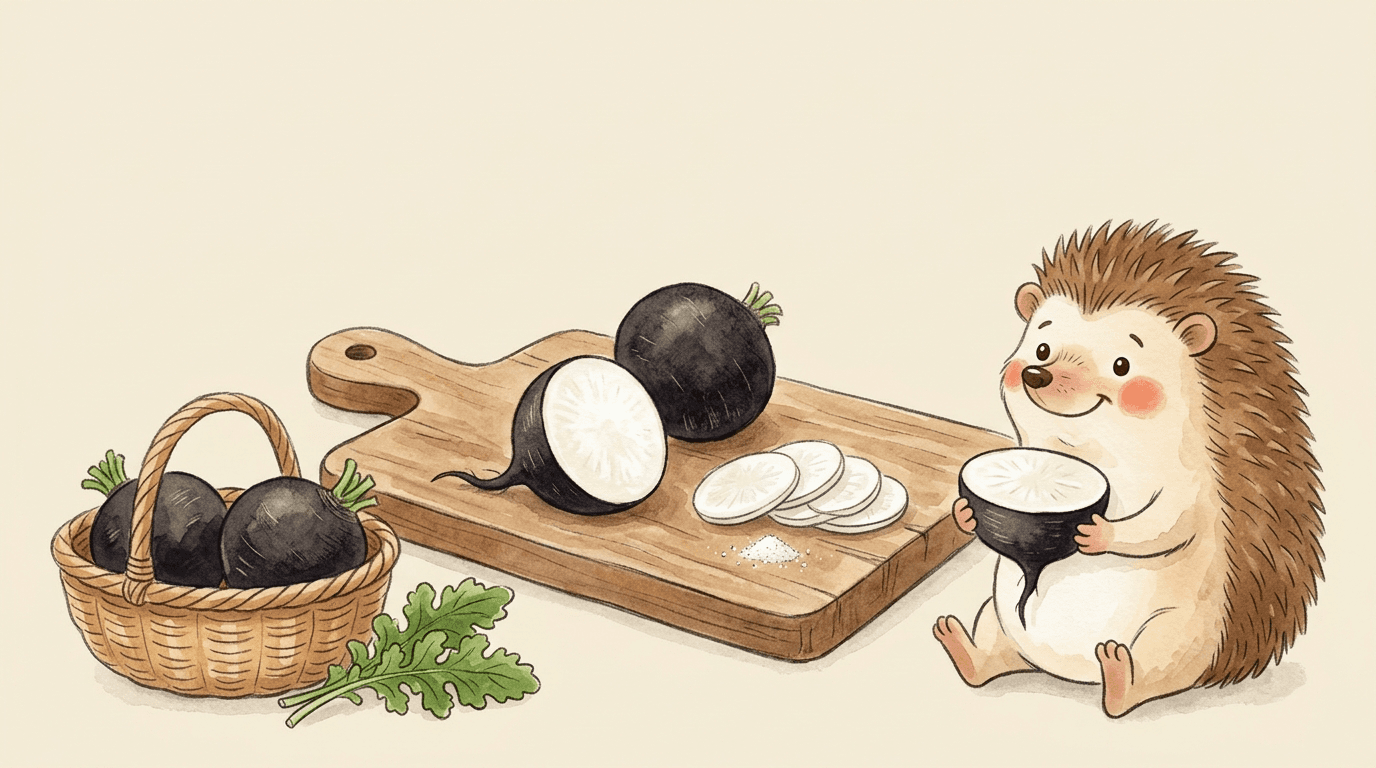
October 20, 2026 · 3 min read
Black radish: why you should let it rest before you bite in
Last year Frau Schneider bit straight into one, unsalted, fresh out of the ground, and spent the next two minutes coughing instead of talking. The problem wasn't the radish. It was the timing.
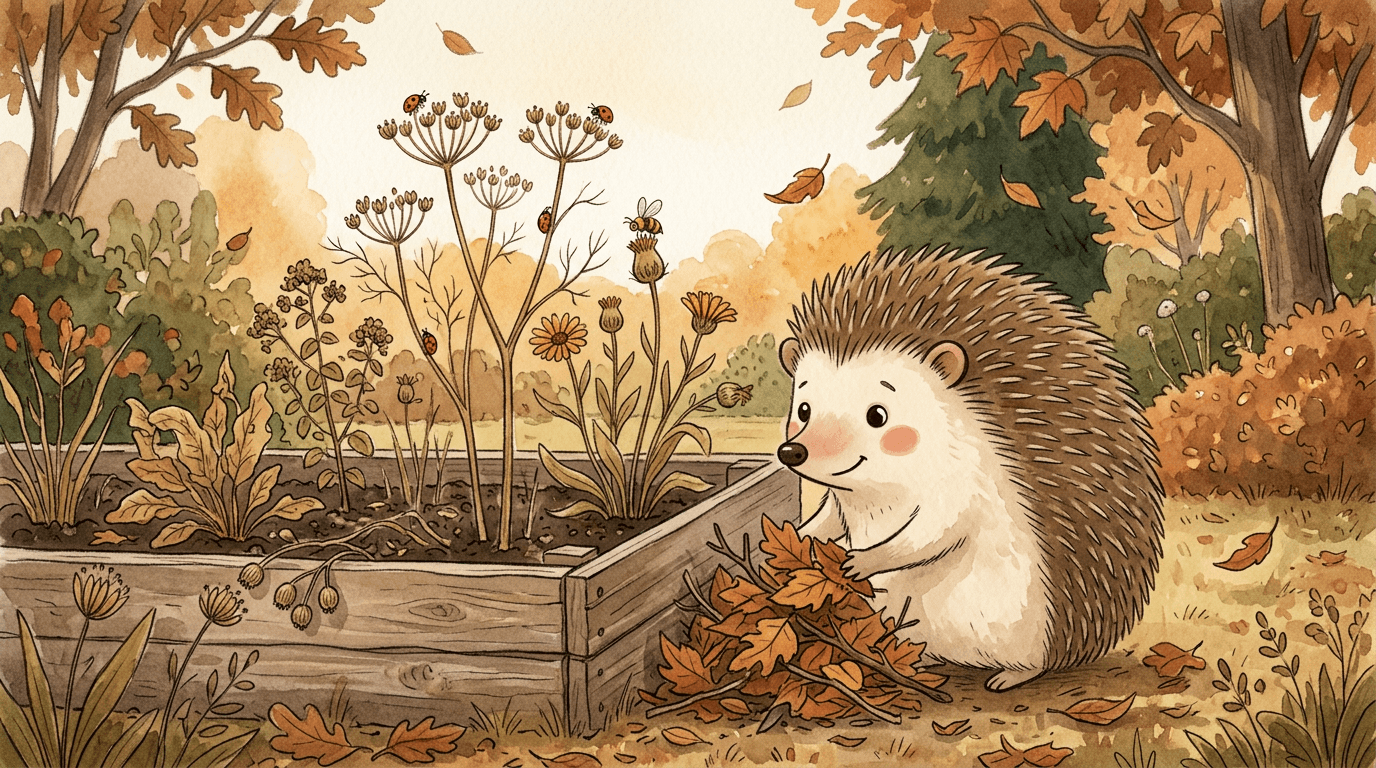
October 14, 2026 · 2 min read
Why I only tidy up half my raised bed in October
Mr Zimmermann cut his entire raised bed down to the ground in one afternoon — stalks, seed heads, leaves, all gone. I should have warned him beforehand: not everything, only half. Here's what should stay standing and what really needs to go.