May 2, 2026 · by Stachi · 8 min read
What you can still plant in your raised bed in May
First half of May: last call for lettuce, kohlrabi and carrots. Second half: tomatoes, courgettes, basil go out. In between: the Ice Saints. A report from Berikon, weeks 18–22, with concrete week-by-week slots.

On 1 May 2025 my raised bed in Berikon looked like this: two rows of radishes planted three weeks earlier, a patch of spinach that couldn't decide whether it wanted to grow, and three large empty earth squares where the tomatoes and courgettes would eventually go. My neighbour Frau Schneider looked over the fence and said: "Stachi, your bed looks like a chessboard."
She was right. And I could explain why: May has two completely different halves, and I hadn't finished using the first one yet.
In this post I'll go through week by week what you can plant in May — cool-season crops in the first half, warm-season after the Ice Saints. I'm using calendar weeks instead of "roughly mid-May" because "roughly" costs you tomatoes.
The first half of May — cool crops, last round
In weeks 18-19 (1–15 May) it's still too cold here in the Swiss Midlands for anything that can't handle frost. But a raised bed warms up 2–3 weeks earlier than flat ground — because air reaches it from all four sides, drainage is better, and the bed walls store a little heat. In practice: what would normally go into open ground in mid-May can go into a raised bed at the start of May.
What can go in if you still have gaps:
Radishes — week 18, sown direct, 5 cm apart. Radishes take 3–4 weeks to harvest, so you'll pick them in weeks 21–22, just when you need room for the cucumbers. Smart timing. I always sow a row of radishes along the edge so the space isn't wasted while the big tomato holes are still empty.
Lettuce (follow-on sowing) — week 18, either transplants or direct-sown. Heads you plant now will be ready in weeks 22–24, just before it gets too hot. Variety matters: oak-leaf and Lollo types handle heat better than iceberg. In May I lean towards loose-leaf varieties that mature quickly.
Kohlrabi — weeks 18–19, transplants from the garden centre or self-raised since March. Kohlrabi is one of the most straightforward players in a raised bed: it grows fast (6–8 weeks), needs little space (about 25 cm apart), and works well between larger fruiting plants as a gap-filler.
Swiss chard — week 18, direct-sown or transplanted. Chard is tough, tolerates light frost, and the big advantage is that you harvest it all summer and autumn. If you plant chard in May, you have leaves until October. That's one of the best harvest-years- to-footprint ratios in the whole bed.
Spinach (late sowing) — still possible until week 19, but with a catch: spinach bolts (runs to seed) as soon as days exceed 14 hours, which happens in central Europe in mid-June. A May sowing gives you roughly 4–5 weeks to harvest, not the full 8. Still worthwhile as a gap-filler — you harvest in early June and follow with basil.
Carrots — weeks 18–19, direct-sown, 3–4 cm apart in the row, 15–20 cm between rows. Carrots take 12–16 weeks to harvest. A May sowing gives you September–October carrots. That's not a drawback — it's planning. Carrots like loose, deep soil, and a raised bed with its deep free-draining fill is ideal. Sow them somewhere no big fruiting plants will shade them out later.
Peas (if not yet in) — week 18, but only if you haven't sown any yet and have a support ready. Peas like cool conditions and tolerate light frost, but they want to be in the ground by the end of May. After week 20 it's usually too warm for a successful main sowing.
The Ice Saints — not superstition, but climate statistics
The Ice Saints (die Eisheiligen in German) are four saints' days in central European folk weather tradition, traditionally associated with the last possible frosts of spring: Pancras (12 May), Servatius (13 May), Boniface (14 May) and Cold Sophie (15 May). In Switzerland and southern Germany, Mamertus (11 May) is sometimes added at the front.
Is the old belief actually true? Statistically, yes.
I looked at temperature records for Berikon (climate zone 8a) over the last 30 years. Between 1995 and 2024, Berikon had at least one night below 4°C between 11 and 15 May in 18 out of 30 years. In 7 of those years it actually went below 0°C — genuine ground frost. Last year, on the evening of 11 May 2025, my thermometer showed 3.8°C at midnight. No frost death for my seedlings because they were still inside. But any tomatoes in open ground that night would not have fared well.
Why is precisely this week so cold-prone? There's a meteorological pattern behind the Ice Saints: in the second week of May, a cold polar air mass frequently pushes south across northern Germany, exactly when central Europe thought summer had arrived. The mechanics are complex (pressure systems, the continental block), but the effect is real and well-documented. It's not folk magic — it's climatology.
For your garden it means: no frost-sensitive plants in the ground before 15 May. No exceptions. One frost night after six weeks of indoor growing destroys tomato seedlings. That's not bad luck — it's avoidable.
If you're not in central Europe, the Ice Saints themselves don't apply — but the principle does. Your last frost date shifts by one to two weeks depending on where you are. I wrote a full post on exactly how to find your local frost-free date: Frost-free — when exactly?. The method surprises most people.
For more on the meteorology behind the Ice Saints (if you're curious why this specific window keeps producing cold snaps): The Ice Saints — the most honest version you'll find.
The second half of May — now the door opens
From week 21 (16 May onwards) the rules change. The Ice Saints are over. Soil temperature at 10 cm depth is 15–18°C. And all the heat-loving plants you've been nursing on a windowsill since February are waiting impatiently to go outside.
Tomatoes — week 21. Not earlier. Tomatoes are the plants where I see the most beginner mistakes: out on the first warm April day, then frost in the first May night, then dead. Wait for week 21. Seedling height should be 20–30 cm, with 3–4 true leaf pairs. Spacing 60×60 cm minimum, 70×70 cm is better. In a raised bed: maximum two tomato plants on 80×120 cm, otherwise they shade each other out.
Peppers — week 21, but peppers need more warmth than tomatoes. In a week with sunny days and nights above 12°C they do great. In a rainy week with 8°C nights they stall. I always plant peppers in the sunniest, most wind-sheltered corner of the raised bed, and I put a small reflective foil tunnel over them for the first two weeks if the spring still seems undecided.
Cucumber transplants — week 21. Cucumbers love warmth and hate cold even more than tomatoes do. Transplants from the garden centre (unless you have a warm sunny windowsill), 50×50 cm spacing, best with a climbing frame so they go vertical and leave floor space. One cucumber plant at 50×50 cm produces more cucumbers from July to September than you can eat.
Courgettes — week 21. Courgettes are the most productive plants in a raised bed — and the biggest space-takers. A single courgette plant needs 60×80 cm and by late August grows to 1.2 m across. On an 80×120 cm bed you can either plant one courgette or two tomatoes. Not both. I'm speaking from experience. I've tried it twice. The courgette won both times.
Pumpkins/squash — weeks 21–22, but pumpkins are honestly too large for most raised beds. A pumpkin plant needs 1×2 m, but likes to climb over the bed edge and continue along the ground. If you have a large bed (200×100 cm or bigger) and really want a pumpkin, plant one transplant at the corner and let it trail over the edge. Small raised bed: skip the pumpkin, take two courgettes instead (actually, don't — re-read the paragraph above).
Basil — week 21. Basil is Mediterranean and truly wants warmth. Planted before week 21 it sulks and barely grows. From week 21 with sunny days it explodes. Always plant basil next to the tomato — they get along well, and basil is said to keep aphids away from the tomato (the science is debated, but it doesn't hurt and it smells great).
Beans — week 21, direct-sown. Beans are one of the few warm- season crops you can sow straight into the bed rather than pre- raising. 5–8 cm deep, 15 cm apart. Bush beans need no support, pole beans do. One row of bush beans gives 4–5 harvests from July through September.
What Frau Schneider saw on 28 May
On the last day of May 2025 Frau Schneider looked over again. The bed looked like this: two tomato plants on the left (30 cm tall, tied in), one courgette at the back right, four kohlrabi bulbs already ready to harvest at the front, a row of radishes almost done again (second sowing), basil right next to the first tomato, and a small frame with bean shoots just coming through.
"The chessboard is gone," she said.
Exactly. The chessboard problem of the first week of May solves itself over the course of the month — if you know what goes in which week.
The raised-bed advantage in late May
The raised bed has a structural advantage over a flat garden bed in spring: it's roughly three weeks warmer. That advantage counts for cool-season crops in April and early May. But warm-season crops — tomatoes, peppers, cucumbers — don't benefit from the raised-bed head start, because the limiting factor isn't soil temperature, it's night air. And night air is just as cold at raised-bed level as it is everywhere else.
What that means: even in late May there's no need to panic. If you're only starting now — no radishes in, no lettuce, no pre-raised seedlings — you can still have a good season. Buy transplants instead of growing from seed (that's not a failure, it's pragmatism), plant in weeks 21–22, and harvest from July through October. The raised bed is three weeks ahead of flat ground, and garden-centre transplants buy you back another six weeks.
Anyone starting in week 23 can still plant cucumbers, courgettes, tomato transplants, beans, basil, pak choi and carrots. That's not a minimal season — it's half the possible harvest, and still plenty.
If you haven't come across the three-step approach to raised-bed planning (location → bed size → plant selection), I wrote a guide that covers it concisely: Planting your raised bed — a 3-step beginner's guide.
Plant now. The raised bed doesn't wait — but it forgives beginner mistakes faster than you'd think.
Plan your bed for free → erntezeit.app/en/planer
🦔 Stachi
Related plants


More articles
October 26, 2026 · 3 min read
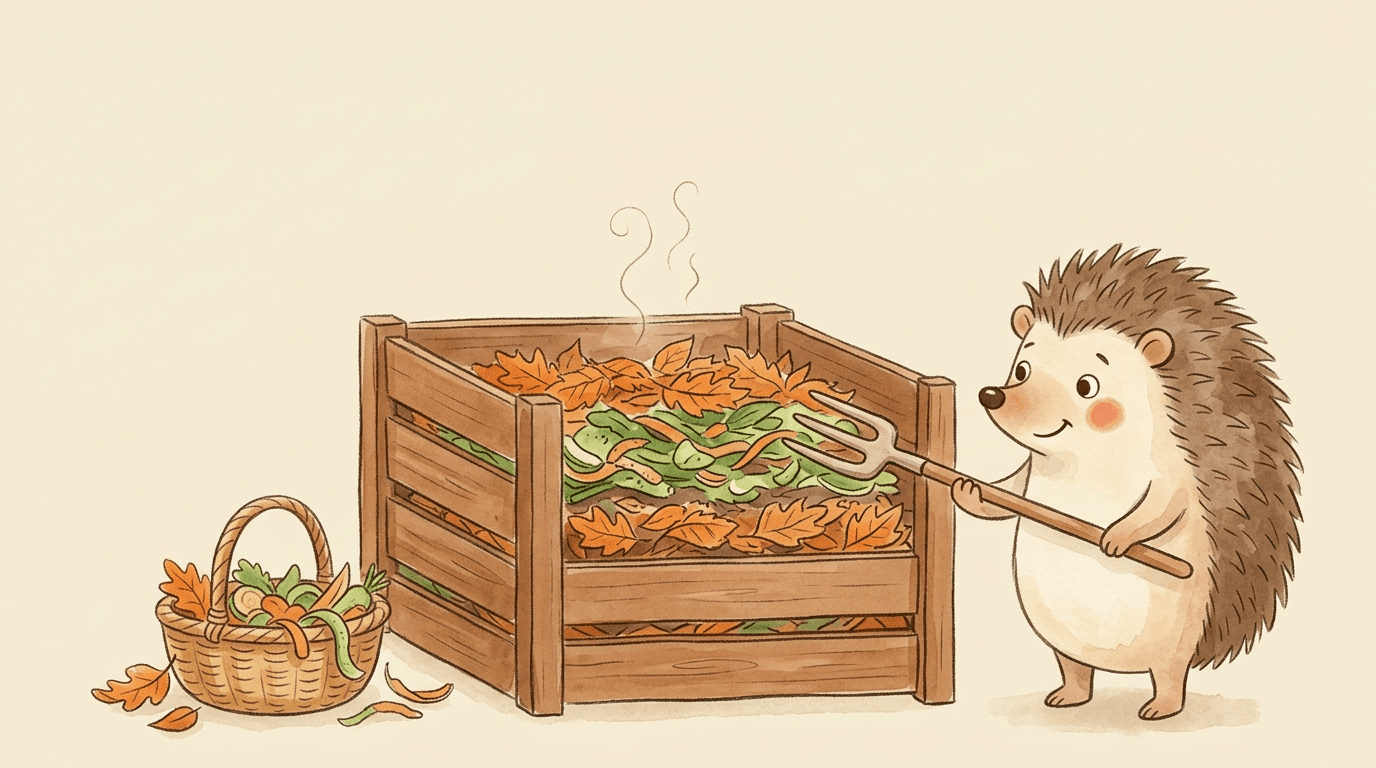
Starting an autumn compost pile: 3 parts leaves, 1 part kitchen scraps
Frau Schneider's compost pile just sat there all winter. No steam on cold mornings, no warmth, no breakdown — just a heap of dry leaves that hadn't changed a bit by March. The problem wasn't patience. It was the mix.
October 20, 2026 · 3 min read
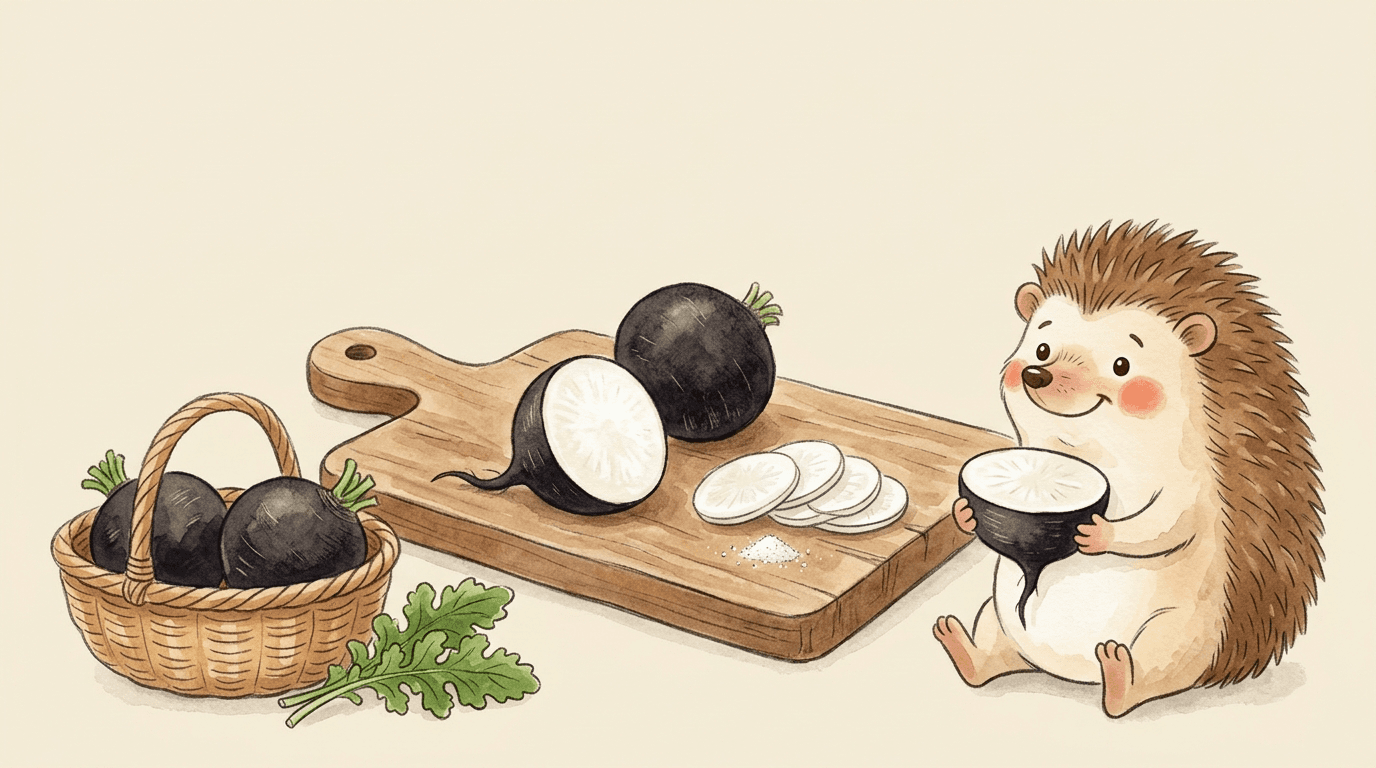
Black radish: why you should let it rest before you bite in
Last year Frau Schneider bit straight into one, unsalted, fresh out of the ground, and spent the next two minutes coughing instead of talking. The problem wasn't the radish. It was the timing.
October 14, 2026 · 2 min read
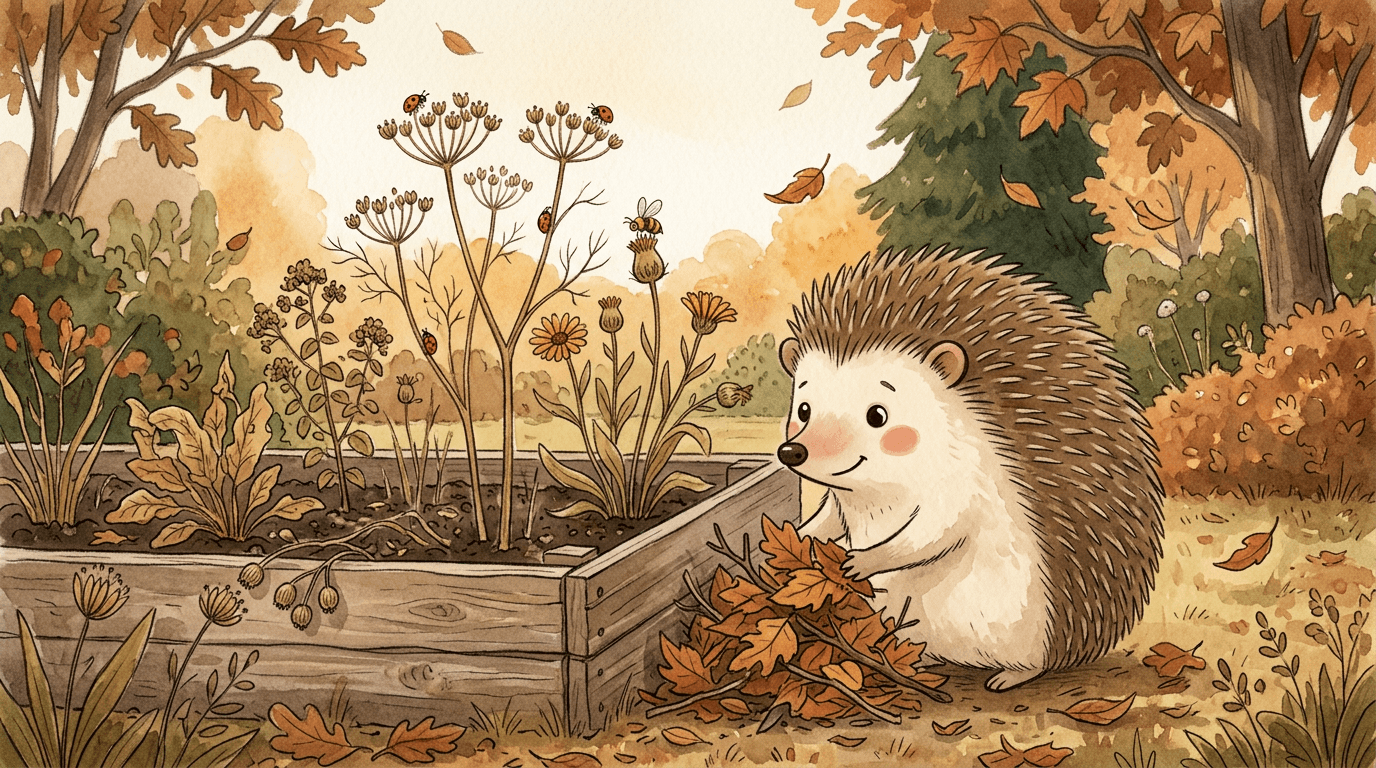
Why I only tidy up half my raised bed in October
Mr Zimmermann cut his entire raised bed down to the ground in one afternoon — stalks, seed heads, leaves, all gone. I should have warned him beforehand: not everything, only half. Here's what should stay standing and what really needs to go.