June 29, 2026 · by Stachi · 4 min read
Why Cucumbers Turn Bitter — and What to Do About It
Bitter cucumbers are almost never bad luck. Usually it's water stress, sometimes the variety. How to spot it at harvest and how to stop it.

My first cucumber harvest was inedible. August, three weeks without rain, and I watered on and off — sometimes in the morning, sometimes not for two days. The fruit looked great. I took a bite and spat it straight back out. Bitter like half an aspirin. Frau Schneider next door just nodded: "Too little water, my dear." She was right.
Bitter cucumbers aren't bad luck. They're almost always the plant telling you something.
Why cucumbers turn bitter in the first place
Every cucumber contains a compound called cucurbitacin. It's naturally bitter — the wild cucumber used it to fend off anything that wanted to eat it. In today's varieties it's been bred way down. As long as the plant grows relaxed, you won't taste it.
But when the plant gets stressed, it ramps production back up. The bitter compound then collects mainly in one spot: at the stem end and just under the skin. That's why sometimes only one end of a cucumber is bitter and the rest is fine.
My trick ever since: I cut a slice off the stem end first and taste exactly that. If it's bitter, I peel generously and cut off the top third. If the stem end is mild, the whole cucumber is mild.
Water stress is the main cause
By far the most common trigger is water stress. And it comes in two forms:
- Too little water. Dry soil in the raised bed, especially in July and August when the sun sits on it all day.
- Irregular water. This is the underrated part. If you water heavily once and then nothing for three days, the swing itself is the stress — even if the total amount is right.
Add heat to that. Above 30 °C the cucumber pauses its growth in spells, and stress plus heat is the classic combination for bitterness.
The good news: the plant warns you first. When the cucumber droops at midday and only picks itself back up in the evening, that's the moment the bitter compound forms — not at harvest. Wilting leaves around noon are, for me, the clearest signal that it got too dry.
I've written up how to water evenly and deeply in watering your raised bed in summer. If you're away on holiday or just can't keep the watering regular, drip irrigation is the most honest fix for bitter cucumbers. Nothing keeps the soil as evenly moist as a hose that does the same thing every single day.
Variety or care?
Both play a part, but the weighting surprises people.
Modern F1 varieties are almost all bred to be bitter-free. With those you'd have to work hard to make them bitter — the route through severe water stress still exists, but the threshold is high. Older varieties and open- pollinated types, especially old-stock snake cucumbers, react far more sensitively.
So if you get bitter cucumbers every year despite watering properly: check the packet. If it says "bitter-free" or "F1", it's the water. If it says nothing or carries an old variety name, the variety is part of the story.
My advice for starting out: pick a bitter-free F1. Half the failure sources drop away, and you can focus on watering.
What helps — short and practical
- Water evenly and deeply, rather rarely and a lot than a daily sip. Mornings beat evenings.
- Mulch. A layer of straw or dried grass clippings keeps the soil cool and moist and damps exactly the swings that cause bitterness. How to do it right is in mulching your raised bed.
- Harvest young. Small cucumbers are milder. Leave the fruit hanging too long and you risk more bitter compound and tough seeds.
- Choose a bitter-free variety if you want to play it safe.
- Taste the stem end before you ruin a whole bowl of salad.
More on ongoing care — trellising, siting, common mistakes — is in caring for cucumbers in a raised bed. The same principle applies, by the way, to zucchini, which belongs to the same family and reacts similarly under drought stress.
What Erntezeit does with this
You tell me cucumbers are in your bed, and I flag the critical weeks in your calendar — the hot, dry ones in high summer when cucumbers slide into stress fastest. With the weather link you get a reminder before three dry days arrive, not after. That keeps the watering even, no mental arithmetic. Free for one bed.
My cucumbers taste like cucumber now. They were bitter in exactly that one dry August — and since then I know they'd have told me beforehand, if I'd only looked at them at midday.
🦔 Stachi
Related plants


More articles
October 26, 2026 · 3 min read
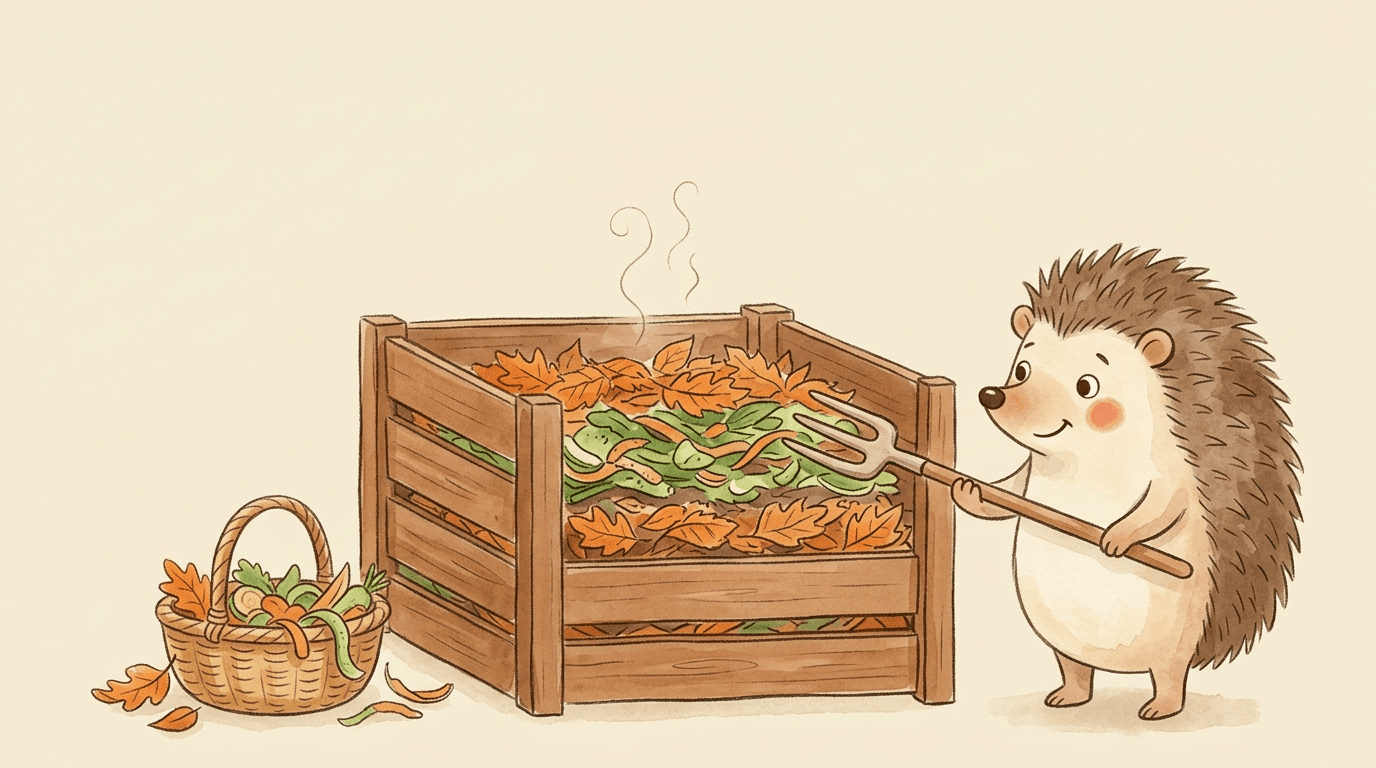
Starting an autumn compost pile: 3 parts leaves, 1 part kitchen scraps
Frau Schneider's compost pile just sat there all winter. No steam on cold mornings, no warmth, no breakdown — just a heap of dry leaves that hadn't changed a bit by March. The problem wasn't patience. It was the mix.
October 20, 2026 · 3 min read
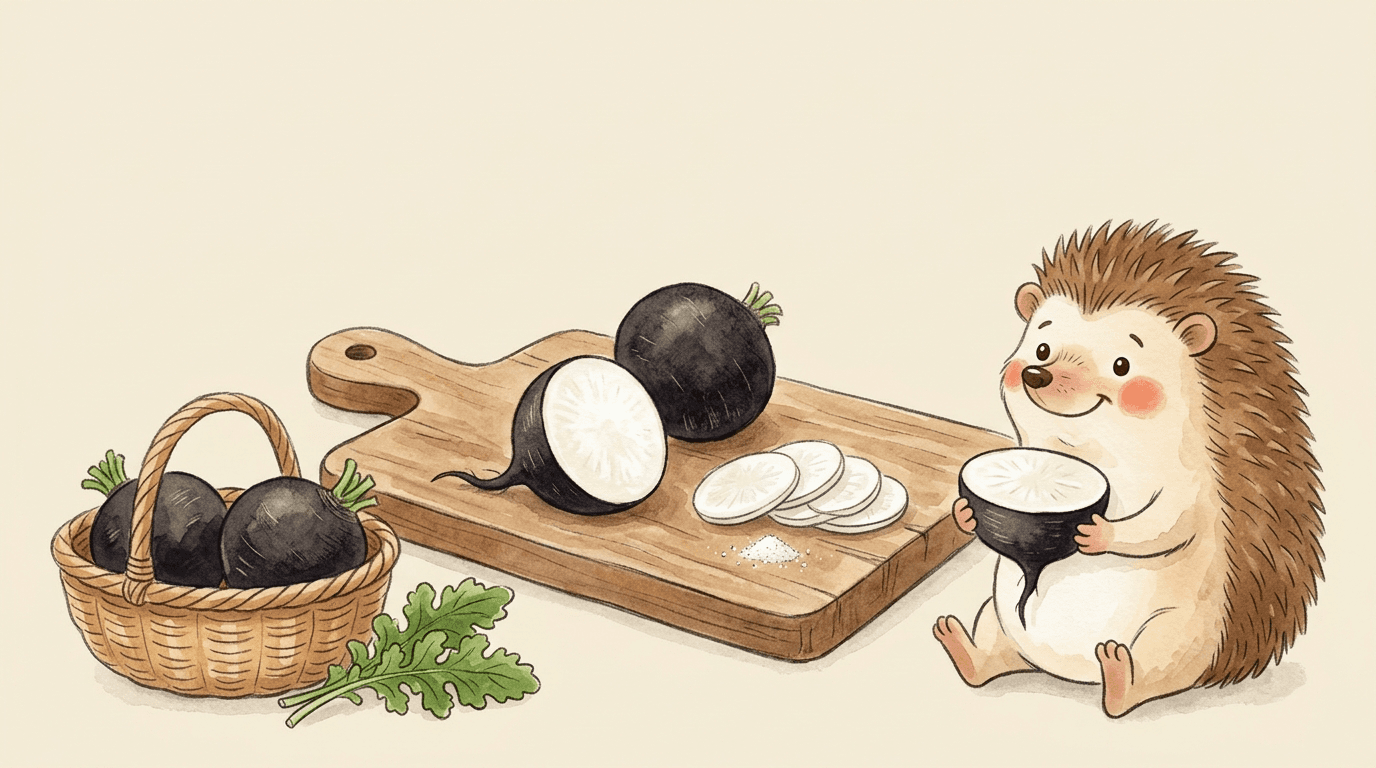
Black radish: why you should let it rest before you bite in
Last year Frau Schneider bit straight into one, unsalted, fresh out of the ground, and spent the next two minutes coughing instead of talking. The problem wasn't the radish. It was the timing.
October 14, 2026 · 2 min read
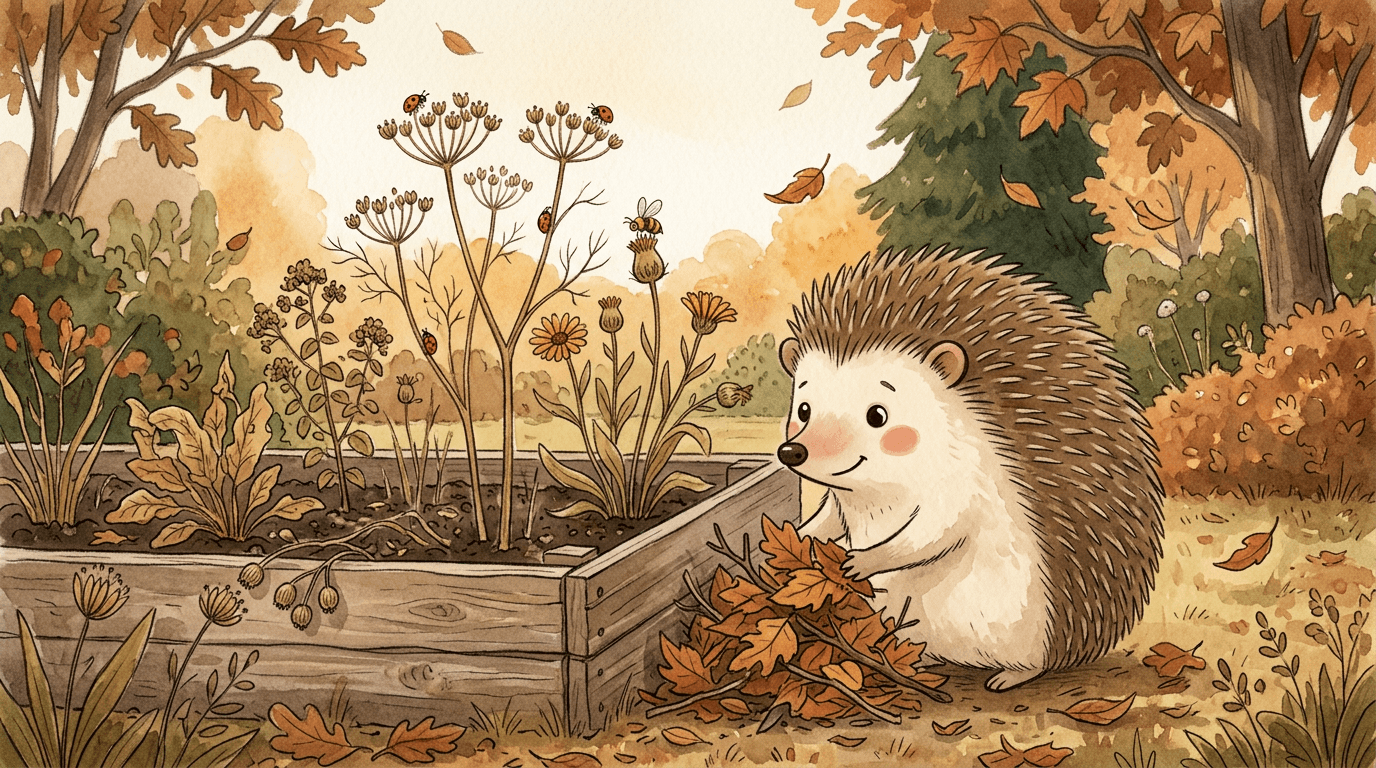
Why I only tidy up half my raised bed in October
Mr Zimmermann cut his entire raised bed down to the ground in one afternoon — stalks, seed heads, leaves, all gone. I should have warned him beforehand: not everything, only half. Here's what should stay standing and what really needs to go.