May 5, 2026 · by Stachi · 6 min read
Plant Spacing for Raised Beds: the Table for 25 Vegetables You'll Use Every Season
Planting too close together is the most common beginner mistake — and it costs you half your harvest. Here are the exact spacings for 25 typical raised-bed plants, compact in one table.
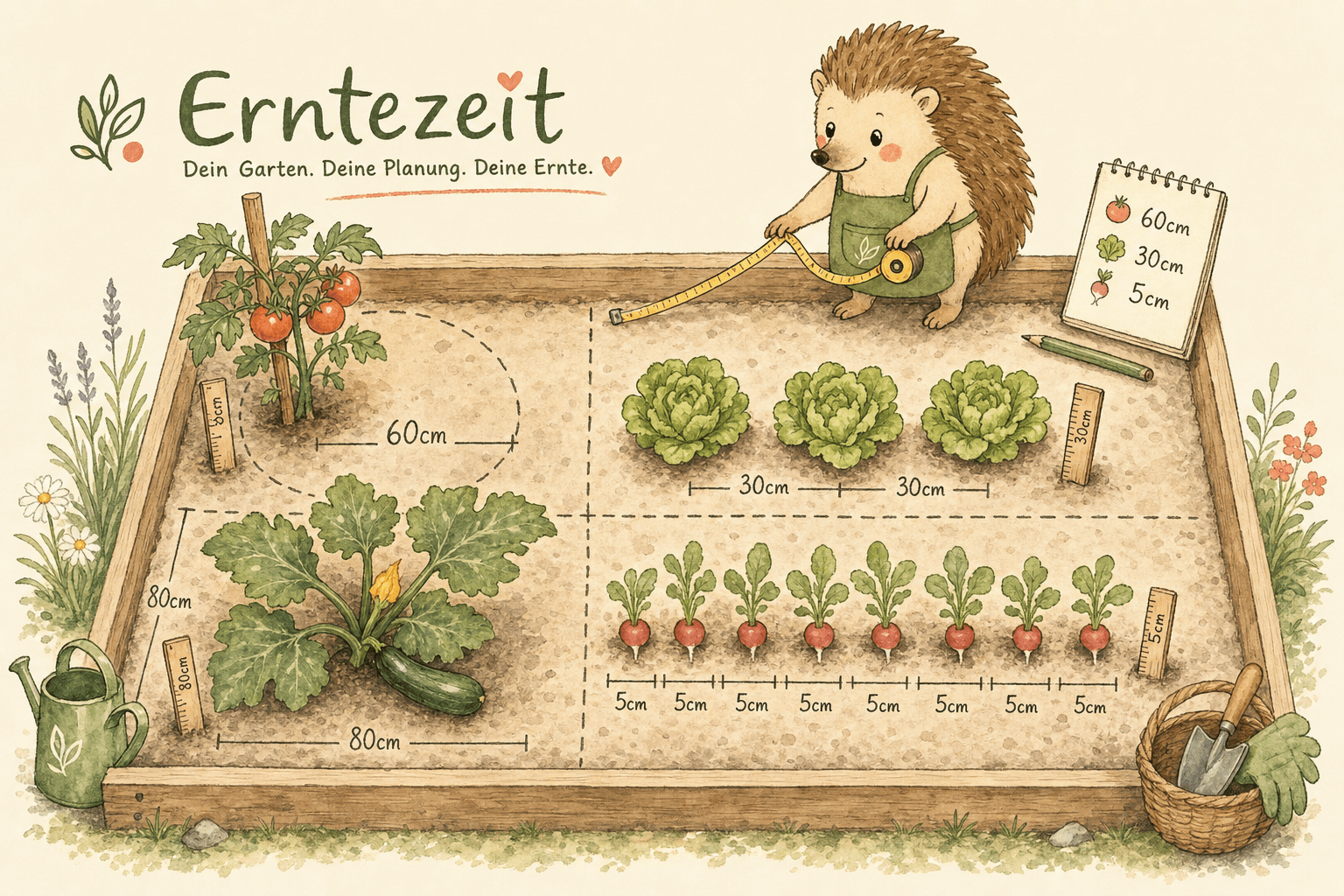
The most expensive mistake in raised-bed gardening costs nothing at the garden centre and everything at harvest time: planting too close together.
Last season a gardener from Basel told me she had planted four tomatoes in a 60×80 cm raised bed. Four tomatoes. By August the whole block was a dark, airless thicket — the plants in the middle had never received enough light, and two of them had brown rot on the fruit, moisture that had pooled in the tunnel from lack of airflow.
The tragic part: she had the best intentions. She wanted a big harvest and assumed more plants meant more food. The opposite is true.
Why plant spacing matters
Four reasons, and all four cost you yield if you ignore them:
Light competition. Plants too close together shade each other. That sounds obvious, but photosynthesis is literally energy. Less light = less sugar in the plant = smaller fruit, less of it.
Root volume. What you see above ground mirrors what happens below. A tomato plant needs 20–30 litres of soil for a healthy root system. Pack two of them into a 40-litre block and both fight for survival instead of growth.
Airflow. The most underestimated argument. Fungal diseases — powdery mildew, blight, botrytis — need moisture and stagnant air. A well-ventilated bed where leaves dry out quickly in the morning is far more resilient than a jungle where humidity lingers for hours.
Clean harvesting. You want to pick your tomatoes, not fight through walls of leaves while accidentally snapping the neighbouring plant. Planted with room to breathe, you can reach in, harvest cleanly, and actually see what's ripe.
The table: 25 raised-bed plants with exact spacings
Values are based on averages from Kreuter's bio-gardening guide, the Kosmos garden calendar, and hands-on experience. For raised beds the rule of thumb is: you can go 10–15 % tighter than open-ground recommendations, because the soil is looser and richer. But no more than that.
| Plant | In-row spacing (cm) | Between rows (cm) | Plants per m² | Note |
|---|---|---|---|---|
| Tomato | 60 | 70 | 2 | Stake or trellis required |
| Cucumber | 60 | 100 | 1–2 | Climbs vertically, saves space |
| Courgette / Zucchini | 80 | 100 | 1 | Budget 0.8 m² per plant |
| Pumpkin | 100 | 150 | 1 | Huge footprint — consider spilling into next bed |
| Bell pepper | 50 | 60 | 3–4 | Warm and sheltered from wind |
| Aubergine / Eggplant | 60 | 70 | 2 | Heat is non-negotiable |
| Lettuce (head) | 30 | 30 | 9–12 | Tighten to 25 cm for cut-and-come-again |
| Cut lettuce | 25 | 25 | 16 | Succession-sow every 3 weeks |
| Spinach | 15 | 25 | 25 | Direct-sow in rows |
| Chard | 30 | 40 | 6–8 | Perennial in mild winters |
| Radish | 5 | 15 | 60–80 | Sow thinly, harvest fast |
| Carrot | 4–5 | 25 | 100–120 | Thin to 5 cm after germination |
| Parsnip | 10 | 30 | 30 | Long growing season, be patient |
| Kohlrabi | 30 | 40 | 6 | Good before main crops |
| Broccoli | 50 | 60 | 3–4 | Similar footprint to tomato |
| Cauliflower | 60 | 60 | 2–3 | Like broccoli, slightly more space |
| Leek | 15 | 30 | 20 | Plant deeply for a long white shaft |
| Onion | 10 | 25 | 35–40 | Set in spring |
| Garlic | 15 | 25 | 25–30 | Set in autumn |
| Pea | 5 | 40 | 40 | Add climbing support from 40 cm height |
| Bush bean | 10 | 40 | 25 | Direct-sow in rows |
| Runner bean | 10 | 60 | 16 | Stake or wigwam |
| Strawberry | 30 | 35 | 8–10 | Perennial — control runners |
| Basil | 20 | 25 | 16 | Perfect companion to tomatoes |
| Parsley | 25 | 25 | 16 | Perennial, frost-hardy |
How to use the table in practice
Three steps, nothing more:
Step 1: measure your bed. Length × width in metres. A standard raised bed is 1.2 × 0.8 m = 0.96 m². Call it 1 m².
Step 2: plan large plants first. Tomatoes, cucumbers, courgettes, pumpkins — these are the space consumers. Each large plant needs roughly 0.5–1 m², depending on variety. In a 1 m² bed that means: one courgette, OR two tomatoes, OR two cucumbers (vertical). Not one courgette and two tomatoes. One large plant per 0.6–0.8 m² is the rule I give everyone.
Step 3: fill gaps with small crops. Lettuce, radishes, herbs need little space and grow happily under and beside large plants as long as they still get some light. Radishes between carrot rows is a classic: radishes are done in four weeks, the carrots need another ten. Same ground, used twice.
The five spacings worth memorising
If you only hold five numbers in your head, you're already ahead of most first-season gardeners:
- Tomato: 60 cm — between stems, not between leaves
- Cucumber: 60 cm — climbing vertically; 100 cm if sprawling on the ground
- Courgette: 80 cm — it grows wide, genuinely wide
- Lettuce: 30 cm — for head lettuce; cut lettuce can go to 25 cm
- Radish: 5 cm — in the row, with 15 cm between rows
What happens when you go tighter
I tested this. Two tomato plants at 40 cm instead of 60 cm: yield was 35 % lower than the same varieties at 60 cm spacing in the same bed. The close- planted ones had more aphids, more signs of mildew, and the fruit stayed smaller. Three extra weeks of season didn't fix it.
A rule I don't forget: if you plant two plants tighter than the table says, you cut both their yields in half. Better to put in one fewer plant and get twice as much from the others.
Succession planting: even more from the same ground
The table shows spacings for plants growing at the same time. But a raised bed can use the same patch of soil two or three times in a season. Radishes are done in four weeks. Then sow spinach. Then lamb's lettuce in autumn. The spacings stay the same — only the timing shifts.
I explain this in more detail in my beginner's guide to planting raised beds and in the post about filler plants that use every gap. Not sure which plants to grow at all? Five plants that always work is a good starting point.
The short version
Plant spacing isn't expert knowledge. It's the single most important decision you make before the season starts. The table above isn't theory — it reflects what plants actually need in root and air space to be productive.
A raised bed with the right spacings isn't half-empty. It's a bed that uses its area fully — just at different points in the season.
If you want to plan your bed without doing the maths in your head: Plan your bed for free → /en/planer/standort
Plant boldly — just not too close.
🦔 Stachi
Related plants


More articles
October 26, 2026 · 3 min read
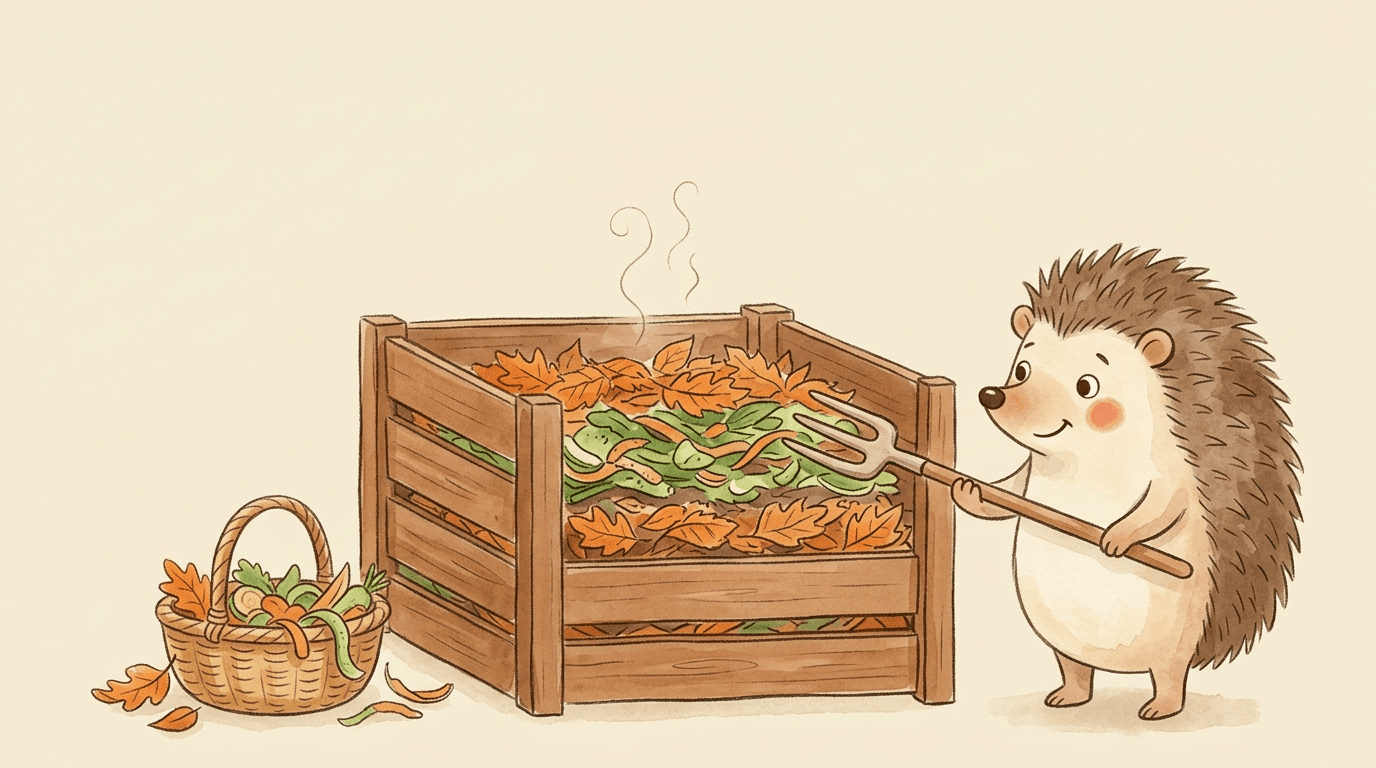
Starting an autumn compost pile: 3 parts leaves, 1 part kitchen scraps
Frau Schneider's compost pile just sat there all winter. No steam on cold mornings, no warmth, no breakdown — just a heap of dry leaves that hadn't changed a bit by March. The problem wasn't patience. It was the mix.
October 20, 2026 · 3 min read
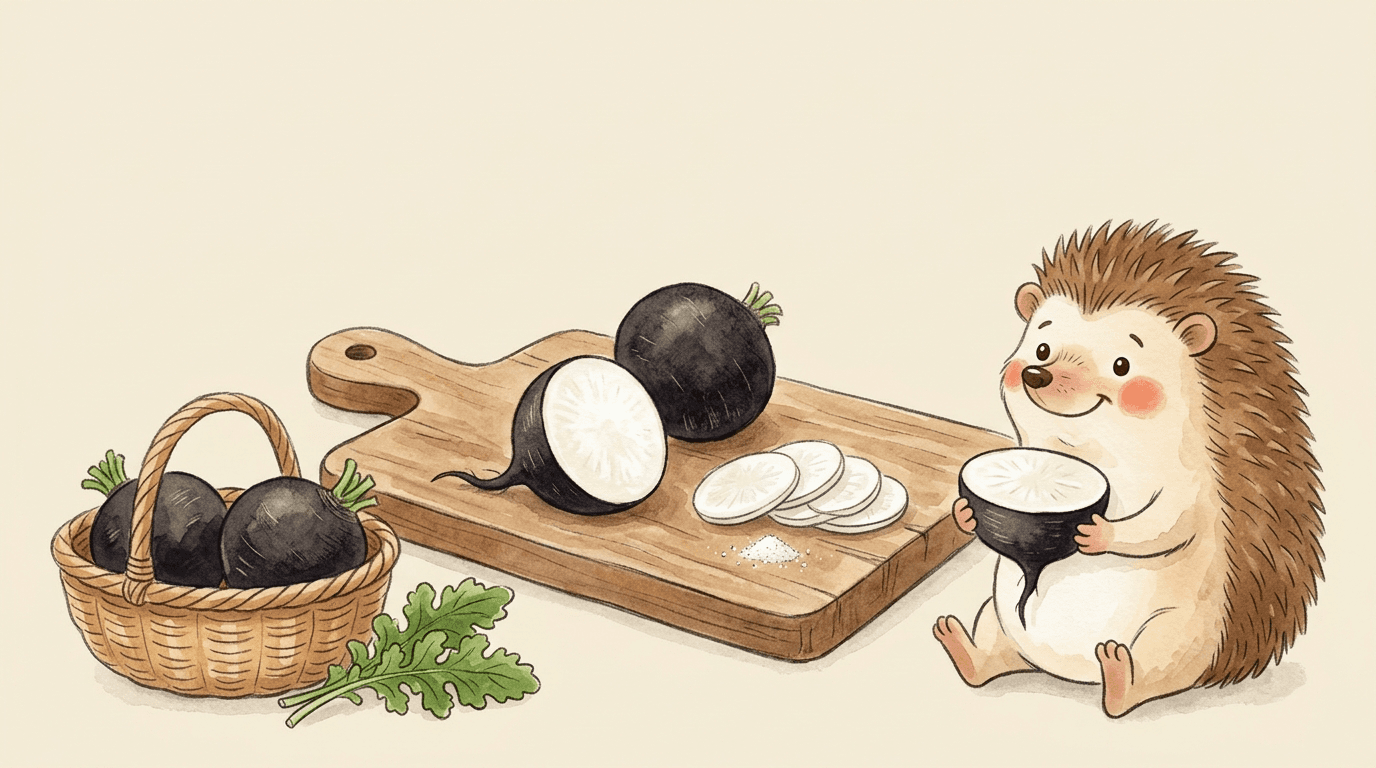
Black radish: why you should let it rest before you bite in
Last year Frau Schneider bit straight into one, unsalted, fresh out of the ground, and spent the next two minutes coughing instead of talking. The problem wasn't the radish. It was the timing.
October 14, 2026 · 2 min read
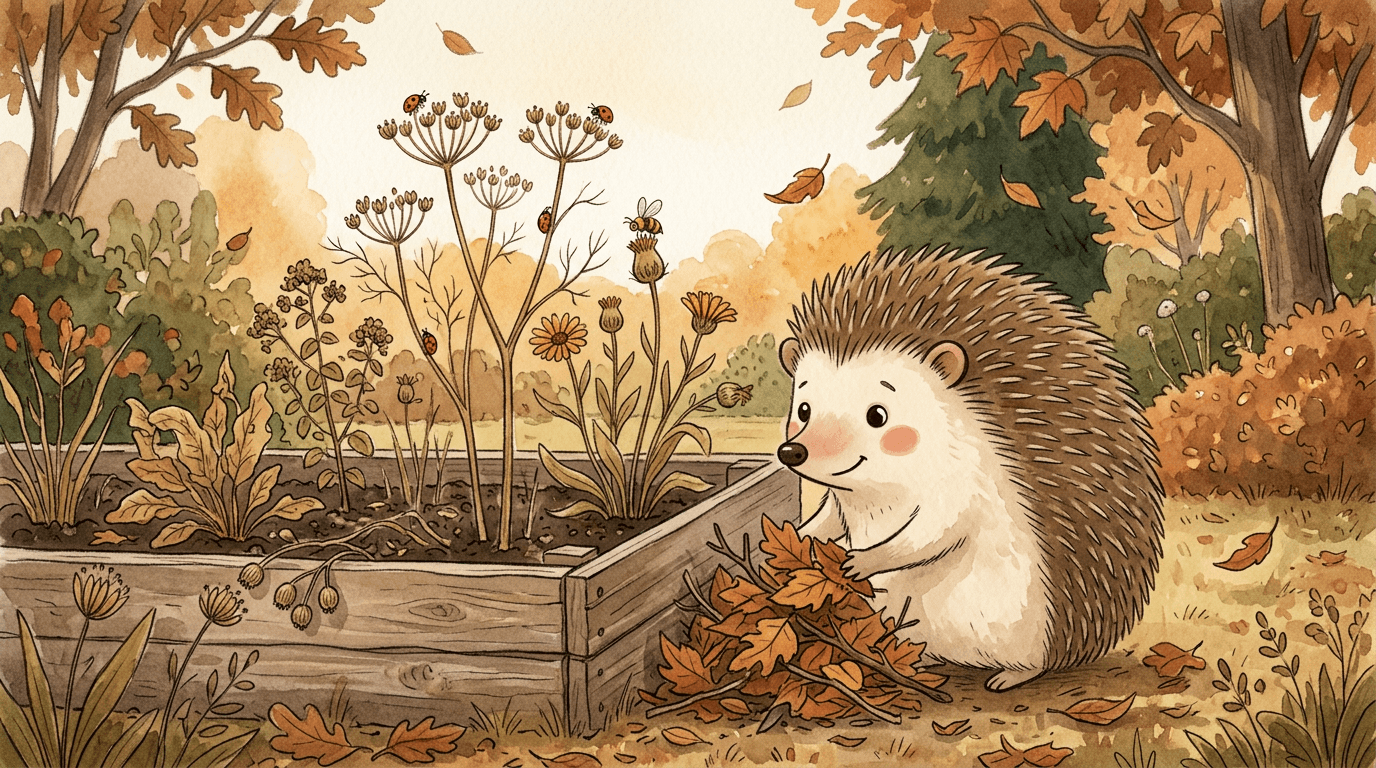
Why I only tidy up half my raised bed in October
Mr Zimmermann cut his entire raised bed down to the ground in one afternoon — stalks, seed heads, leaves, all gone. I should have warned him beforehand: not everything, only half. Here's what should stay standing and what really needs to go.